Brands
Tata Motors posts Q3 loss as JLR cyber incident hits results

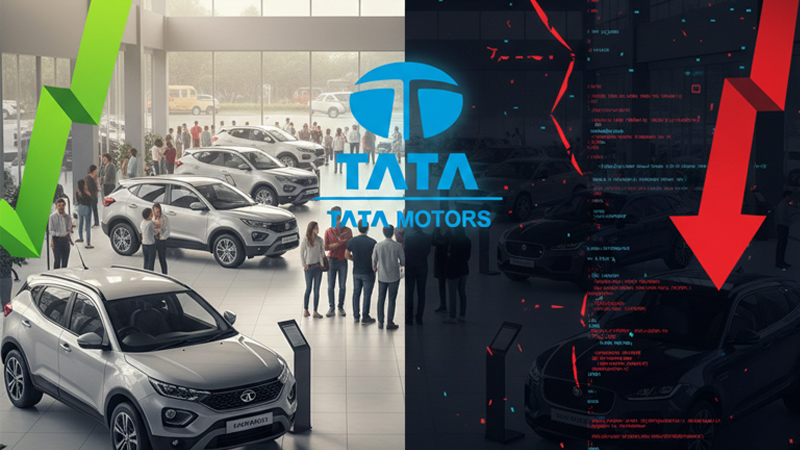
MUMBAI: Tata Motors Passenger Vehicles Limited (TMPVL) had a quarter of two very different moods. Back home, the showrooms were busy, the order books thick, and the festive glow lingered. Overseas, however, a cyber incident at Jaguar Land Rover pulled the plug on profits and dragged the group into the red.
For the third quarter of FY2026, Tata Motors posted a consolidated net loss of Rs 3,483 crore. A year ago, it had reported a profit of Rs 5,485 crore. Revenue also slipped sharply, down 25.8 per cent year on year to Rs 70,108 crore. Earnings before interest and tax fell into negative territory, with margins dropping to minus 4.7 per cent.
Strip away exceptional items and the picture still looked bruised. Profit before tax stood at a loss of Rs 3,136 crore, while earnings per share from continuing operations came in at minus Rs 9.47.
For the nine months to December, the company reported a net loss of Rs 7,255 crore from continuing operations, with revenue down 14 per cent year on year to Rs 2.3 lakh crore. Free cash flow for the quarter was also negative at Rs 17,900 crore.
Most of the damage came from Jaguar Land Rover. The luxury carmaker saw revenue plunge 39.4 per cent year on year to £4.5 billion. Ebit margins slid to minus 6.8 per cent, and profit before tax before exceptional items stood at a loss of £310 million.
The reasons were a perfect storm: a cyber incident that disrupted production, the wind-down of legacy Jaguar models, a weakening China market, and tariff pressures in the United States. The result was a free cash outflow of £1.5 billion for the quarter and net debt rising to £3.3 billion.
Still, the company has held on to its guidance, expecting Ebit margins of 0 to 2 per cent for the full year.
Back home, the domestic passenger vehicle business offered a more cheerful read. Revenue rose 24 per cent year on year to Rs 15,317 crore. Profit before tax before exceptional items stood at Rs 302 crore, while market share climbed to 13.8 per cent, securing the number two spot.
The company’s electric vehicle play also stayed strong, with a commanding 43.6 per cent share of the EV market and cumulative sales crossing the 2.5 lakh mark. The domestic unit ended the quarter with a net cash position of Rs 5,100 crore.
It was also a record quarter on the ground. Tata clocked its highest-ever quarterly wholesales at 171,000 units, up 22 per cent year on year, while retail sales crossed the 200,000 mark for the first time. The Nexon led the charge as the country’s best-selling model for the quarter, supported by the Punch and the newly introduced Sierra.
The quarter carried Rs 1,597 crore worth of exceptional losses. These included Rs 800 crore tied to the JLR cyber incident, Rs 400 crore linked to the new labour code, and another Rs 400 crore in stamp duty charges.
Yet on the restructuring front, the company booked a windfall. The demerger of the commercial vehicles business delivered an exceptional gain of Rs 82,616 crore. That helped push the nine-month net profit, including these gains, to Rs 76,767 crore.
Chief financial officer Dhiman Gupta called the quarter “challenging as anticipated” due to the cyber incident at JLR, while highlighting the domestic business’ revenue growth and margin improvement quarter on quarter. He added that performance is expected to improve significantly in the fourth quarter as JLR recovers.
JLR chief executive PB Balaji said production returned to normal by mid-November after the shutdown triggered by the cyber incident, and the company is now focused on rebuilding momentum.
Meanwhile, TMPVL managing director and CEO Shailesh Chandra pointed to record wholesales and strong festive demand as key drivers of the domestic business.
As of December 31, 2025, the group’s net debt stood at Rs 39,400 crore, with a debt-equity ratio of 0.61 times. Net worth was reported at Rs 1.07 lakh crore.
In short, Tata’s quarter read like a tale of two garages: one humming with orders and electric optimism, the other grappling with a digital breakdown. If the cyber clouds lift and the domestic engine keeps firing, the next quarter could look far less bumpy.