iWorld
Prime Video hits 315 million ad-supported viewers
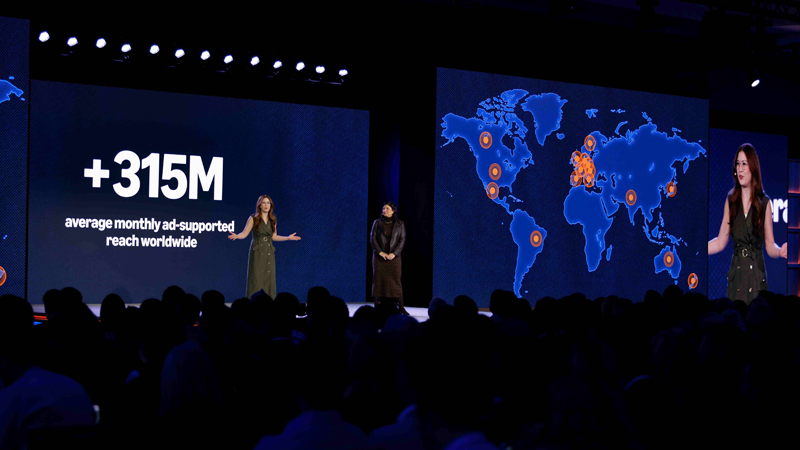
MUMBAI: Prime Video is turning up the volume on ad-supported streaming. The platform now reaches an average of 315 million ad-supported viewers globally every month, up from 200 million in April 2024, Amazon revealed at its annual flagship event.
This figure represents the unduplicated monthly audience across original and licensed series, films, live sports and events, and free ad-supported live channels on Prime Video. The estimate is based on Amazon’s internal data from September 2024 to August 2025, with some variation depending on local launch dates.
Prime Video Advertising vice president Jeremy Helfand said, “Reaching more than 315 million average monthly ad-supported viewers globally marks a transformative milestone for Prime Video. This expanded audience across 16 countries demonstrates our customer-obsessed approach to enhancing the viewing experience while delivering powerful opportunities for brands. We’re just beginning to unlock what’s possible when premium entertainment, engaged viewers, and innovative ad-tech converge with relevant and performant advertising at this unprecedented scale.”
Advertising on Prime Video is now available in 16 countries, including India, U.S., U.K., Germany, France, Japan, and Brazil. The milestone underscores Prime Video’s growing role as a global advertising destination, allowing brands to connect with highly engaged audiences through premium content.
With streaming and ad-tech combining like never before, Prime Video is proving that premium content can be both entertaining and commercially powerful, offering brands a stage to reach viewers at scale across the globe.

iWorld
Netflix cuts jobs in product division amid restructuring
Layoffs hit creative studio unit as leadership and strategy shifts unfold.
MUMBAI: The streaming wars may be fought on screen, but the latest plot twist is unfolding behind the scenes. Netflix has reportedly begun laying off several dozen employees from its product division as part of an internal reorganisation, according to a report by Variety. The cuts are believed to have primarily affected the company’s creative studio unit, which works on marketing assets such as in app trailers, promotional visuals and live experience content for the streaming platform.
The company has not disclosed the exact number of employees impacted.
According to the report, the layoffs were not tied to employee performance. Instead, the restructuring eliminated certain roles while other employees were reassigned to different teams within the organisation.
The roles affected are understood to include designers, producers and creative specialists responsible for marketing and brand experience initiatives.
The job cuts come as Netflix adjusts its leadership structure and reshapes its product and creative teams. Last month, Elizabeth Stone was promoted from chief technology officer to chief product and technology officer, giving her oversight of product, engineering and data operations across the company.
Earlier, in December 2025, Netflix also appointed Martin Rose as head of creative for global brand and partnerships, a move seen as part of a broader restructuring of the company’s brand and product functions.
Despite the layoffs, Netflix remains one of the largest employers in the streaming sector. The company is estimated to employ around 16,000 people globally, with roughly 70 percent of its workforce based in the United States and Canada. In 2023, the company reported approximately 13,000 employees, indicating that its headcount had grown significantly before the latest restructuring.
The workforce changes arrive at a time when Netflix is navigating a shifting financial and strategic landscape in the global entertainment industry.
The streaming giant recently secured $2.8 billion in additional cash after receiving a breakup fee from Paramount Skydance following its withdrawal from a deal involving Warner Bros. Discovery.
Speaking to Bloomberg, Netflix co chief executive Ted Sarandos explained that the company had evaluated multiple scenarios during the negotiations but chose not to match the competing offer once it learned that a higher bid had been submitted.
Netflix had capped its offer at $27.75 per share and ultimately stepped back rather than pursue Paramount’s $111 billion acquisition deal, which included a personal guarantee.
Sarandos also cautioned that the financing structure behind the Paramount Skydance transaction could have ripple effects across the entertainment industry.
According to him, the debt heavy deal could trigger significant cost cutting, with David Ellison, chief executive of Paramount Skydance, expected to eliminate about $16 billion in costs and potentially cut thousands of jobs as part of the integration process.
For Netflix, the current restructuring appears to be part of a broader attempt to streamline operations while continuing to invest in product, technology and global content even as the streaming industry enters a new phase of consolidation and financial discipline.