MAM
Protein with your cutting chai as Instamart’s tapri flex fuels a campus frenzy
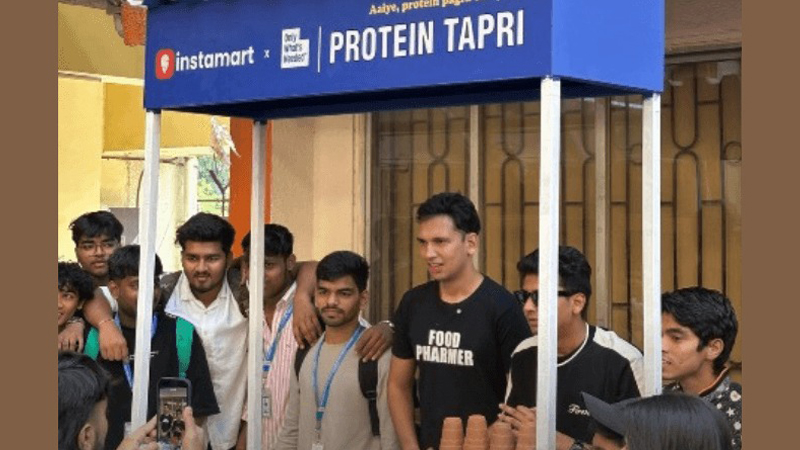
MUMBAI: If you thought Mumbai tapris only served kadak chai, Instamart just slipped in a scoop of whey and stirred up mayhem. In a campus stunt that blended meme culture with Mumbai’s tapri nostalgia, Instamart rolled out a ‘Protein Tapri’ at VESIT College, and the result was a full-blown Gen Z stampede thanks in part to an unexpected cameo by FoodPharmer (Revant Himatsingka) and his protein brand Only What’s Needed (OWN).
The pop-up, designed as a classic chai stall with a high-protein upgrade, flipped everyday college favourites into gym-bro-approved fuel. Students queued up for:
● kullad protein shakes,
● protein bhel made with sprout-loaded crunch,
● and protein-packed cookies that turned tea-time into gain-time.
The twist landed perfectly with a generation that jokes about creatine scoops the way older batches joked about cutting chai.
But the crowd truly erupted when FoodPharmer and Gen Z favourite Sahil Mehta stepped behind the counter together shaking drinks, shooting videos, and sending the turnout into chaos. Overnight, the tapri became less of a pop-up and more of a pilgrimage for fitness-loving students.
One LinkedIn user summed up the vibe in true Gen Z fashion, “Out of all the things I expected to see outside a college today, a protein tapri was not on the list but I am here for it. The gym bros went wild and started competing for protein.”
Instamart didn’t just serve protein, it tapped into two fast-moving cultural currents.
First, the brand has quietly built a curated protein ecosystem, including a dedicated protein section on the app and super-fast delivery of OWN products in under 10 minutes. That makes protein less of a commitment and more of an impulse buy perfect for the “lift first, think later” crowd.
Second, FoodPharmer’s rising influence in India’s nutrition conversation brought built-in credibility and meme energy. His sharp, relatable nutrition content has made him a cultural touchpoint for young Indians trying to decode food labels and stay fit without losing their sense of humour.
Together, this wasn’t just sampling, it was scroll culture meeting street culture, a meme jumping off the screen and into the real world. Students didn’t just taste the products; they participated in a moment.
By the time the tapri wrapped up, it was clear, Mumbai just got its newest food moment and this one absolutely passes the vibe check.

Brands
Wipro hires 7,500 freshers, withholds FY27 hiring outlook
Profit rises to Rs 3,522 crore, Rs 15,000 crore buyback announced.
MUMBAI- Hiring may be on, but visibility is off, Wipro is adding talent even as it pauses the crystal ball. The company hired 7,500 freshers in FY26 but stopped short of offering any hiring outlook for FY27, underscoring the uncertainty gripping the IT services sector as it pivots towards an AI-led operating model.
The disclosure came alongside its fourth-quarter earnings, where management flagged volatile demand conditions and refrained from committing to future workforce expansion. Chief human resources officer Saurabh Govil noted that over 3,000 of the total hires were onboarded in the March quarter alone, signalling continued intake despite a lack of clarity on deployment pipelines.
This divergence active hiring without forward guidance reflects a broader industry pattern where talent acquisition continues even as deal conversions remain uneven and client spending cycles stretch. Wipro expects its IT services revenue for the June quarter to range between a decline of 2 per cent and flat growth sequentially in constant currency terms, reinforcing near-term caution.
Chief executive officer Srini Pallia pointed to artificial intelligence as both a disruptor and an opportunity. He said evolving client priorities are pushing the company towards outcome-driven engagements, with Wipro increasingly focusing on a services-as-software model through its AI Native Business and Platforms unit. The shift marks a structural change from traditional headcount-led growth to AI-enabled delivery frameworks.
The company has already committed over $1 billion to its AI ecosystem, with investors closely watching how these investments translate into revenue. For now, the numbers present a mixed picture. Net profit rose sequentially to Rs 3,522 crore, while revenue grew 3 per cent to Rs 24,236 crore. However, core IT services performance remained under pressure, with full-year revenue declining 0.3 per cent in dollar terms and 1.6 per cent in constant currency.
Large deal bookings offered a counterpoint, rising 45.4 per cent year-on-year to $7.8 billion, highlighting a widening gap between deal wins and actual revenue realisation. On a quarterly basis, IT services revenue slipped 1.2 per cent sequentially, signalling continued softness in execution.
Margins, however, told a more optimistic story. Operating margins expanded to 17.3 per cent in the fourth quarter, up from 14.8 per cent in the previous quarter, reflecting improved cost discipline. That said, the company cautioned that upcoming wage hikes and the ramp-up of large deals could exert pressure going forward.
Attrition stood at 13.8 per cent in the March quarter, indicating stabilisation after periods of elevated churn. Alongside its earnings, Wipro also announced a Rs 15,000 crore share buyback, reinforcing its focus on shareholder returns, with a payout ratio of 88 per cent over the past three years.
Taken together, the numbers capture a company in transition investing in AI, maintaining hiring momentum, but navigating a demand environment where growth is uneven and visibility remains limited.