Hindi
Ra.One lacks in the script department

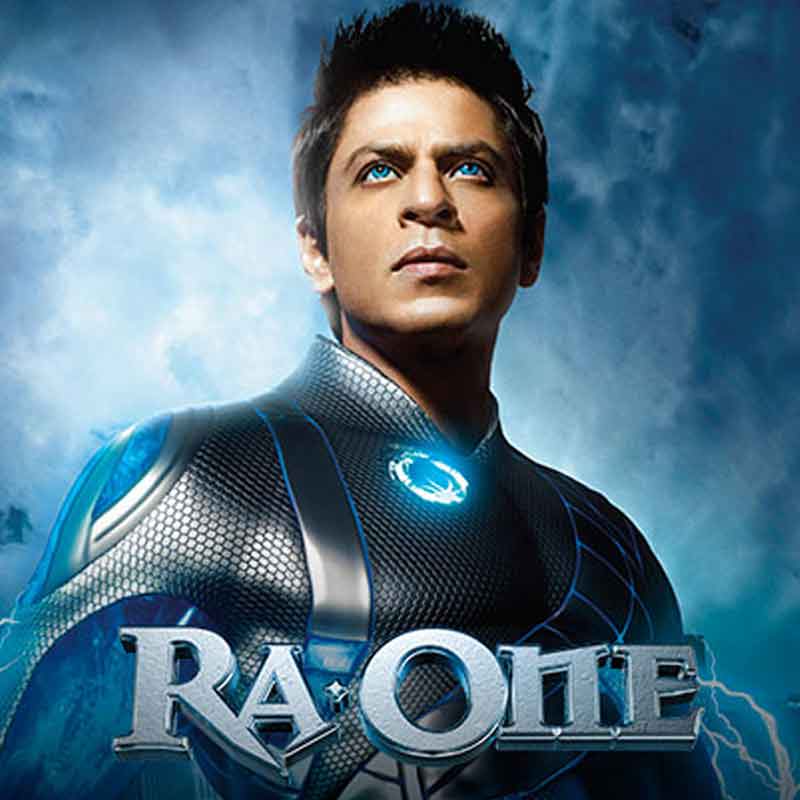
MUMBAI: When you have done just about everything and still find yourself at a stage where you want one box office blockbuster to retain the top spot, you want to do something different. So here we have Ra.One, which is purported to serve that purpose.
 |
|
Producer: Gauri Khan. |
TheThe intentions are noble enough. It is the execution and the content which don’t comply! A few reels into the film and you wonder “where is this all leading?”

We have had a few films about super human – Mr X, Mr India, Krrish– but Ra.One is about bringing a videogame superhero to life.
Shah Rukh Khan is a computer geek. He and his team are asked to develop a blockbuster video game since the company’s last one flopped badly. If he fails, the office will be converted into a restaurant and Khan and his team will be waiting on the guests; so much for being wizards of the virtual world.
Shah Rukh plays a docile, meek man whose cute and almost-whiz kid son, Armaan, does not think much of his father, while his wife, Kareena Kapoor, just loves him for what he is.
The thinking is that to be a computer nerd one has to be a South Indian, so that is what Shah Rukh is cast as while Kareena is supposed to be a Punjabi, for whatever reason.
The son thinks super heroes are not cool anymore and wants the super villain to be more powerful. With this idea, Shah Rukh begins work on his next video game where the villain is all powerful. This is Ra.One, ArjunRampal, in his final avatar (there being many since he can morph in to anyone’s identity). The hero is a good-hearted G.One, who stands a 0.01 per cent chance of survival against the villain. It is here that the film begins to sag.
The process of developing the video game and computer lab gizmos make for tedious watching and accounts for almost the entire first half. When the programme is eventually ready and being launched in a grand ceremony, things start going haywire elsewhere as Armaan tries his hand at the game in the lab. He is forced to leave it halfway, which drives Ra.One mad and he decides to emerge out of the virtual world into the real world to destroy Lucifer, Armaan’s video game ID.
The villain is out on the loose and kills Shah Rukh Khan, who designed him. The mother-son duo go on the run with Ra.One chasing them, first on the trot and later on the bike. One wonders why a villain who can almost fly, leap miles or materialise anywhere out of thin air needs to chase them like a normal human being. But then, this helps provide some thrill, destroying a few cars in the name of entertainment. Meanwhile, Armaan has also managed to bring out G.One to life in the shape and size of Shah Rukh Khan, a protector for the pair. In the end, as it should be, even with 0.01 per cent odds, good wins against the evil. It is a shame that you are too mentally fatigued to understand the intricacies of how and why.
Ra.One is a technical and special-effects treat if you care for that sort of thing as entertainment. But the fact that it is carried a bit too far is a deterrent. Also, in the absence of decent contribution from the script department, this technical triumph eventually comes to nothing. Dialogue is routine and funnier lines are mostly of the below-the-belt variety. Musically, while, Chhammak Chhalo… has been much hyped, the pick of the lot is Dildaara dildaara. Action is well choreographed but gets repetitive after a point, thereby losing its novelty. Direction is average with many scenes stretched beyond utility point.
As for performances, Shah Rukh does what he has been doing all along. He is cute and playful when in normal role but when he enacts the video game character, the ghost of My Name Is Khan seems to possess him and he acts as if he is affected by Aspergers syndrome again. Kareena Kapoor is good. Master Armaan steals the show. Rest have limited scope.
On the whole, Ra.One opened to below expectations response due to wrong release day (Diwali). Having picked up handsomely on second day, it started its slide on third day. The appreciation being poor, the film’s box office potential stand hugely challenged.
Tell Me O Khuda is a good idea treated in an old- fashioned way
Tell Me O Khuda is meant to be a re-launch vehicle for the almost forgotten Esha Deol. Mother Hema Malini is the one to do the needful. In what seems like a wise move, the story chosen needs three veteran actors, all stars to reckon with in their own heydays, in Dharmendra, Vinod Khanna and Rishi Kapoor.
 |
|
Producer: Hema Malini. |
Hema Malini herself puts in a cameo along with some critically acclaimed oldtimers such as Faroooq Sheikh, Deepti Naval and Madhu. Further, to make it pleasant to the movie watchers‘ eyes, this three episode drama is shot in three of the most picturesque locations, Rajasthan, Turkey and Goa. The packaging is near perfect.
Esha Deol is a writer who has been brought up by Farooq Sheikh and Deepti Naval with all the love and affection in the world, until one day she finds out that she is their adopted child.
Esha decides not to rest until she finds her real parents and discovers why they deserted her.
It has been 24 years and the municipal hospital is not sure it has all the records since a day after Esha was born; the hospital had caught a major fire. Esha‘s search leads her first to Vinod Khanna, a Rajasthani royal whose wife had a baby girl (though one wonders why a Rajasthan royal‘s wife should be delivering a baby in a Mumbai‘s municipal hospital!). She died in child birth but instructed her maid not to take the baby girl home since the thakur, Vinod Khanna, believed in and wanted only a male heir.
This section of the film also has some interesting behind-the-scene royal politics between Vinod Khanna‘s nephew and heir apparent. Esha wins over Vinod Khanna while proving she can do anything as well as or better than any son and makes him change his steadfast beliefs about a girl child. But then the maid who was a witness to the child‘s birth 24 years back reveals that it is not Esha but the girl she has brought up as her own who is his daughter.
Back to square one, Esha pays another visit to the municipal hospital‘s records department. This is quite enjoyable as Johny Lever is the clerk in charge (so what if his desk sports a symbol of Ashok Chakra!). The clerk has another father for Esha to visit, this time in Turkey, where Rishi Kapoor has shifted from his Bandra residence. Rishi Kapoor‘s wife, Turkish actor Meltem Cumbul, has taken her newborn‘s death in the hospital fire badly and gone into a shell ever since. When he sees that his wife is warming up to Esha, Rishi Kapoor goes along with her belief that finally she had found her parents. Meltem Cumbul is cured and Esha realises that these are not her parents but she was only used by Rishi Kapoor for his wife‘s sake.
It is third time lucky for Esha when her beau, Arjan Bajwa, finds out that there was one more possibility, Dharmendra, who is now a don in Goa. A love child of Dharmendra and Hema Malini, she had been abandoned by the latter to keep her away from her lover‘s illegal ways. Hema Malini herself became a nun!
Dharmendra‘s being a don also offers scope for an action climax. It all ends happily as all her ‘four fathers‘ are present for her wedding with Arjan Bajwa.
Tell Me O Khuda swings between the story of a girl in search of her antecedents and a do-gooder, a girl always in hurry to call every next person she traces as daddy.
It is a good idea treated in an old- fashioned way. The absence of a single director‘s vision is obvious. The film never touches you as nowhere does it make you feel sympathetic towards Esha‘s plight or cause. Esha Deol is as much to blame as is the treatment as both fall short of delivering. Music is of little help. Rest of the aspects are routine. Tell Me O Khuda is a poor contender at the box office.






Hindi
GUEST COLUMN: Why film libraries & IPs are the new engines of growth
Unlocking value through catalogue strength and IP synergy
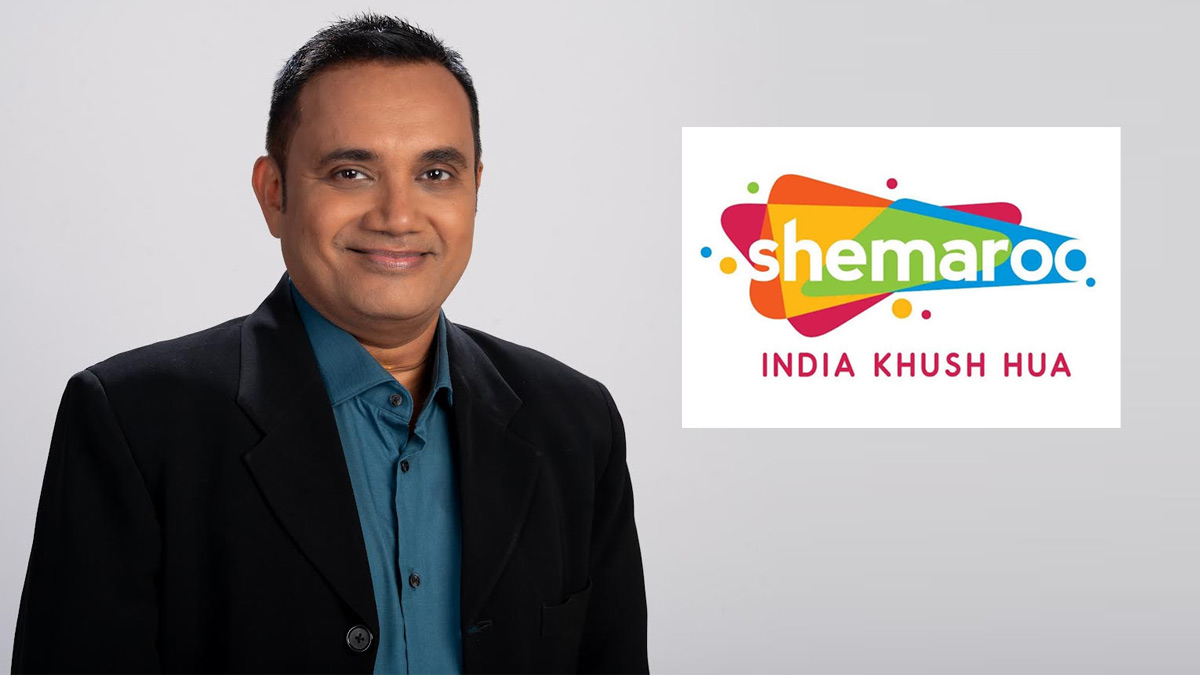
MUMBAI:In a media landscape defined by fragmentation, platform proliferation, and ever-evolving audience behavior, the economics of filmmaking are undergoing a fundamental shift. No longer confined to box office performance, a film’s true value is now measured across an extended lifecycle that spans digital platforms, syndication networks, and global markets. As content consumption becomes increasingly non-linear and algorithm-driven, film libraries and intellectual properties (IPs) are emerging as strategic assets, capable of delivering sustained, long-term returns. For Mohan Gopinath, head – bollywood business at Shemaroo Entertainment Ltd., this transformation signals a decisive move from hit-driven models to portfolio-led value creation. In this piece, Gopinath explores how legacy content, when intelligently repurposed and distributed, can unlock recurring revenue streams, why the interplay between catalogue and original IP is critical, and how media companies can build resilient, future-ready entertainment businesses.
For all these years, we thought that a film is successful if it performs well in theatres. There are opening weekend numbers, box office milestones, and distribution footprints that gave a good picture of how the movie has done commercially and also tell us about its cultural impact. However, there are multiple platforms today, always-on content ecosystem, which has caused a shift. Today, the theatrical performance is not the culmination of a film’s journey but merely the beginning of a much longer and more dynamic lifecycle.
Film libraries today are emerging as high-value, constantly evolving assets that deliver sustained returns well beyond initial release cycles. This becomes a point of great advantage for legacy content owners with diverse catalogues, to shape long-term business outcomes.
According to FICCI-EY, the media and entertainment industry of India achieved a valuation of Rs 2.78 trillion in 2025 which is expected to reach Rs 3.3 trillion by 2028 through a compound annual growth rate of approximately 7 per cent and digital media will bring in more than Rs 1 trillion to become the biggest sector which generates about 36 per cent of overall market revenues.
This shift is the expansion of distribution endpoints. We know how satellite television was once the primary secondary window but today, it coexists with YouTube, OTT platforms, Connected TV, and FAST channels. Each of these platforms caters to distinct audience demographics and consumption behaviors, helping content owners to obtain more value from the same asset across multiple formats.
For instance, films that had great reruns, now find continuous engagement across digital platforms. On YouTube, classic Hindi cinema continues to attract significant viewership, reaching audiences across generations and geographies with remarkable consistency. At Shemaroo Entertainment, this is reflected in our film library shaped over decades as part of a long association with Indian entertainment. From classics such as Amar Akbar Anthony to much-loved entertainers like Jab We Met, Welcome, Dhamaal, Phir Hera Pheri, Dhol, Golmaal, and Bhagam Bhag, many of these titles continue finding new audiences while retaining their place in popular memory. Their enduring appeal reflects how culturally resonant stories can continue creating value over time. Similarly, FAST channels have created curated, always-on environments where catalogue content can continue to thrive through star-led and genre-based programming.
This multi-platform approach has very well transformed films into long-tail IP assets which are capable of generating recurring revenue across advertising, subscription, and syndication models.
The evolution of audience behavior is equally important. Nowadays, it’s more important to find what’s more relative than what’s recent as viewers are more influenced by mood, memories, and algorithmic suggestions than by release schedules. Even if a movie was released decades ago, it can trend alongside a newly released movie, if surfaced in the right context. Thoughtful packaging, whether through festival-based playlists, actor-driven collections, or genre clusters, allows catalogue content to remain dynamic and continuously discoverable. Shemaroo Entertainment has built extensive film libraries over decades and its focus has mostly been on recontextualizing content for the consumption of newer environments. This process doesn’t just include digitization and restoration, but also re-packaging of films as per platforms.
Syndication itself has evolved into a key growth driver. In perspective, when looking at the domestic market, curated content packages continue to find strong demand across broadcast and digital platforms. Meanwhile, in the international market, especially in markets like Middle East, North America and Southeast Asia, the appetite for Indian content is opening up new monetization avenues. Here, the ability to package and position catalogue content effectively becomes as important as the content itself.
Importantly, the need to re-package catalogue content does not diminish the role of new content. In fact, originals and fresh IP are essential to sustaining the long-term value of a film library because they act as discovery engines that bring audiences into the ecosystem, while catalogue content drives depth, retention, and repeat engagement.
This interplay between the “new” and the “known” is what defines a robust content strategy today. While new films generate spikes in consumption, catalogue titles offer familiarity and comfort. These are factors that are increasingly valuable in an era of content abundance and decision fatigue. This is also shaping our strategy, drawing value from both a deep catalogue assets and a growing focus on original IPs to strengthen long-term audience engagement and build more predictable revenue streams.
There is growing recognition that long-term value in entertainment will be shaped not only by how intelligently existing content continues to live, travel and find relevance, but also by how consistently new stories are created to renew that ecosystem. In that sense, film libraries and original IP are not parallel bets, but reinforcing engines of growth. For media companies, the opportunity lies in making these two forces work together, because that is increasingly where more resilient and predictable businesses are being shaped.
Note: The views expressed in this article are solely the author’s and do not necessarily reflect our own.