Connect with us

Hindi

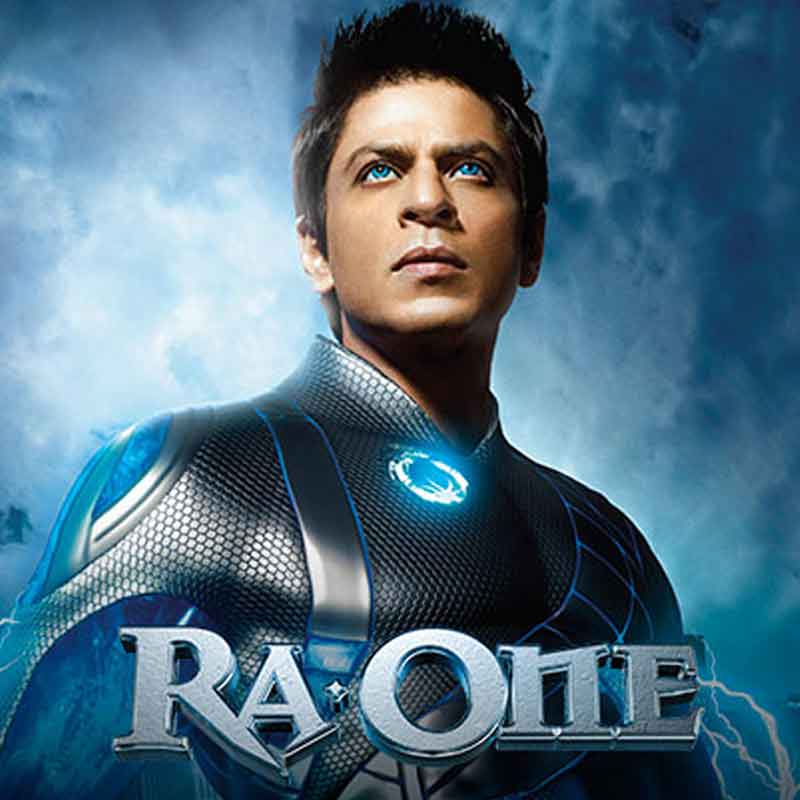
SRK says he fulfilled life-long dream with Ra.one

Published

on

NEW DELHI: Bollywood star Shah Rukh Khan a.k.a. King Khan said he had always wanted to play the superhero in films, though he admitted he may be too old to play the role at the age of 45.

“The idea was that if I could muster enough resources, enough talent, the best in the world, then perhaps I would attempt it and Ra.One is a step in that direction,” Khan said.

Ra.One, one of the most expensive films ever made in India, had a special screening at the Indian Film Festival of Los Angeles (IFFLA), in collaboration with Eros International and Red Chillies Entertainment in Los Angeles on the eve of its release in North America.

Advertisement

The event was held at the Academy of Motion Pictures Arts and Sciences, and the screening was attended by IFFLA patrons, sponsors, and Hollywood media and entertainment executives.

Khan was accompanied by the movie‘s director Anubhav Sinha, Oscar winning sound designer Resul Pookutty, and Red Chillies Entertainment VFX COO Keitan Yadav. They addressed the audience before the screening and later participated in a Q&A session.

IFFLA Chairman Arnold Peter said that Red Chillies VFX, a division of Red Chillies Entertainment, founded by Khan and his wife Gauri, “was making waves both in Bollywood and Hollywood with its fine-cut innovations. It is really the spirit, the
inspiration and the muscle behind today‘s film.”

Advertisement

IFFLA, the premier Indian film festival in North America, will celebrate its 10th anniversary from 10 to 15 April next year.


Click to comment

Leave a Reply

Your email address will not be published. Required fields are marked *

Hindi

Remembering Gyan Sahay, the lens behind film, television and advertising

From a puppet rabbit selling poppadums to Hindi cinema, he framed it all.

Published

on

MUMBAI: There are careers, and then there are canvases. Gyan Sahay, the veteran cinematographer, director, and producer who passed away on 10 March 2026 in Mumbai, had one of the latter. Over several decades in the Indian film and television industry, he turned lenses, lights, and the occasional puppet rabbit into something approaching art.

A graduate of the Film and Television Institute of India (FTII) in Pune, Sahay built his reputation as a director of photography across a career that stretched from the early 1970s all the way to the digital age. He was the kind of craftsman who understood that a well-composed shot is not merely a technical achievement but a quiet act of storytelling.

For most Indians of a certain age, however, Sahay will forever be the man behind the rabbit. His direction of the iconic long-running television commercial for Lijjat Papad, featuring its now-legendary puppet bunny, gave the country one of its most cheerfully persistent advertising images. It was the sort of work that sneaks into the national subconscious and takes up permanent residence.

Advertisement

His big-screen credits as cinematographer include Anokhi Pehchan (1972), Pagli (1974), Pas de Deux (1981), and Hum Farishte Nahin (1988). In 1999, he stepped behind a different kind of camera altogether, making his directorial debut with Sar Ankhon Par, a drama that featured Vikas Bhalla and Shruti Ulfat, with a cameo by Shah Rukh Khan for good measure.

On television, Sahay was particularly prized for his command of multi-camera production setups, a skill that made him a go-to technician for large-scale shows and reality programmes. In an industry that has never been especially patient with complexity, he was the calm hand on the rig.

In later life, Sahay turned teacher. He participated regularly in masterclasses and Digi-Talks, often hosted by organisations such as Bharatiya Chitra Sadhna, sharing hard-won wisdom on cinematography, the comedy of timing in a shot, and the sweeping changes brought by the shift from celluloid to digital. He was also said to have been involved in a project concerning a biographical film on Infosys co-founder N.R. Narayana Murthy.

Advertisement

Tributes from the film industry poured in following the news of his passing, with colleagues remembering him as a senior cameraman who served as a rare bridge between two entirely different eras of Indian cinema. That is, perhaps, the finest thing one can say of any craftsman: he kept up, and he brought others along with him.

Continue Reading

Advertisement News18
Advertisement All three Media
Advertisement Whtasapp
Advertisement Year Enders

Copyright © 2026 Indian Television Dot Com PVT LTD

This will close in 10 seconds

×