MAM
Colors and Zee TV: close fight for no 2
MUMBAI: In week 41 of TAM TV ratings, all the Hindi general entertainment channels (GECs) have seen a drop in their ratings. What was interesting though, was the close fight between Colors and Zee TV for the number two position in the TV ranking. Colors, won the race, with a slight margin, to claim its number two position with 407,337 GVTs after it shed 68,726 TVTs from last week’s rating. Not so far is Zee TV that recorded 406,987 GVTs (415,793).
Star Plus continues to lead the panel with 464,989 GVTs (501,683). At number four is Life OK that maintains its stability with 344,750 (347,291) GVTs. Sony Entertainment Television ranks fifth this week with 313,411 GVTs (323,337). Sab goes to number six with 291,781 GVTs (317,170). Sahara one continues to be at the bottom with 33,705 GVTs (33,222).
Star Plus, the chart topper, has seen a drop in the ratings for all its fiction shows. Thus, its popular show Diya aur Baati Hum scored 9,243 TVTs (9,911), Yeh Rishta Kya Kehlata Hai scored 6,032 TVTs (7,614), Pyar Ka Dard Hai reported 6,250 TVTs (7,708) and Saathiya registered 6,314 TVTs (7,237). Epic series Mahabharat too witnessed a drop in its fourth week and scored 4,523 TVTs (4,909).
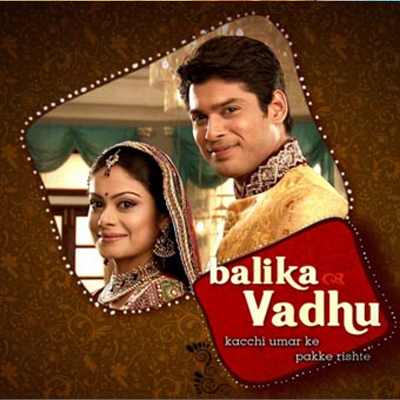
Second placed, Colors’ long running fiction series Balika Vadhu saw a slight drop in its ratings and marked 6,624 TVTs (6,759), Madhubala – Ek Ishq Ek Junoon scored 4,157 TVTs (4,519) and Uttaran reported 3,252 TVTs (4,056). Comedy Nights with Kapil reported 6,518 TVTs (4,462). Much hyped reality show 24, too saw a drop and scored 2,625 TVTs (3,134).
Third placed, Zee TV’s fictional offering Qubool Hai witnessed a drop and scored 5,676 TVTs (6,003). Pavitra Rishta generated 4,196 TVTs (4,646). Sapne Suhane Ladakpan Ke secured 5,085 TVTs (6,490). The channel’s historical show Jodha Akbar noted 8,777 TVTs (9,337). Drama series Do Dil Bandhe Ek Dori Se registered 5,104 TVTs (5,696). Its dance reality DID – Dance ka Tashan took its tally to 3,172 TVTs (3,870) on a Saturday and 3,056 TVTs (3,707) on a Sunday.
Fourth placed, Life OK’s top mythological series Mahadev scored 3,416 TVTs (4,009). Do Dil Ek Jaan stood at 1,669 TVTs (1,884), Savdhan India rated 2,566 TVTs (2,479). Shapath generated 3,470 TVTs (3,637). Ek Boond Ishq noted 2,551 TVTs (2,635).
Fifth placed, Sony’s long running crime series CID witnessed a drop and recorded 5,292 TVTs (7,048), Crime Petrol too saw a drop and registered 3,423 TVTs (3,882). The channel’s historical show Maharana Pratap generated 2,772 TVTs (3,057). KBC has maintained its score and garnered 3,960 TVTs (3,911). Other fiction shows either held on to their viewership or dipped marginally during the week.
Sixth placed, Sab’s fiction show Taarak Mehta Ka Ooltah Chashmah continues to be the channel leader with 6,945 TVTs (8,485). Chidiya Ghar saw a drop as it rated 3,096 TVTs (3,817). Lapataganj reported 2,090 TVTs (2,380) and Baalveer registered 2,600 TVTs (2,925). It was a roller-coaster ride for other fictional shows as well.
In the movie channel genre, Zee Cinema reported 196,371 GVTs (198,401); Star Gold witnessed a rise taking its tally to 192,339 GVTs (174,671) and Movies OK scored 115,017 GVTs (126,462). On the other hand, &pictures garnered 62,839 GVTs (61,530), Zee Anmol notched up and rated 47,173 GVTs (38,080) and Max scored 177,170 GVTs (220,318).
Seems like the festive season has not proved too fruitful for the channels! We wonder if Navratri has eaten away on the TVTs.

MAM
India’s experience economy grows as live events market hits Rs 17,000 crore
EY-Parthenon and BookMyShow report finds 78 per cent Indians prefer experiences over products
MUMBAI: India’s live entertainment scene is no longer just about music, comedy or festivals. It is increasingly becoming a powerful stage for brands seeking deeper connections with consumers.
A new report titled Beyond Attention, Into Immersion by EY-Parthenon and BookMyShow suggests that India’s experience economy is entering a strong growth phase, driven by consumers who are choosing memorable moments over material purchases.
According to the study, the country’s live events ecosystem, which includes concerts, comedy tours, festivals and immersive exhibitions, is estimated to reach around Rs 17,000 crore in 2025. The growth reflects a broader cultural shift in how Indians spend their time and money.
The report finds that 78 per cent of Indian consumers now prefer spending on experiences rather than physical products. From attending concerts and festivals to participating in interactive brand installations, audiences are increasingly seeking engagement, community and shareable moments.
This change in consumer behaviour is particularly evident among younger audiences who want to participate rather than simply watch. Instead of passively consuming entertainment, many now look for experiences that allow them to interact, express themselves and connect with like minded communities.
For marketers, this shift has turned experiential marketing into a strategic priority rather than a promotional add on. Brands are moving away from interruption driven advertising and towards immersive formats that allow consumers to discover, test and emotionally connect with products.
The report suggests that experiential marketing now plays a role across the entire consumer journey. It can spark brand discovery, strengthen storytelling, encourage product trials and ultimately influence purchase decisions and loyalty.
The impact is already visible. Post event surveys conducted among 7,450 attendees at major events including Lollapalooza India and concerts by Ed Sheeran and Guns N’ Roses highlight the effectiveness of these experiences.
Around 59 per cent of attendees recalled brands they interacted with during the events, while 55 per cent said those interactions increased their likelihood of purchasing from the brand. A further 63 per cent reported that brand activations actually enhanced their event experience rather than distracting from it. Nearly 29 per cent also said the interaction improved their perception of the brand.
Brands are also changing the way they approach events. Instead of simply putting logos on stages or banners, companies are building experiences into the fabric of the event itself.
Financial services brands, for example, are offering early ticket access, exclusive lounges and curated event experiences for cardholders. Fashion and beauty companies are using festivals to showcase products through pop ups, interactive installations and social media friendly spaces that encourage visitors to share their experiences online.
The scope of experiential marketing now stretches far beyond live entertainment. Retailers are designing experiential stores where customers can explore products in lifelike environments. Entertainment platforms are extending popular intellectual properties into immersive exhibitions and fan events. Technology is also playing a growing role through augmented reality and virtual try on tools that blend digital discovery with physical interaction.
Cultural festivals remain one of the most powerful platforms for such engagement in India. Celebrations such as Navratri and Holi bring together large communities, emotional participation and heightened consumer spending. For brands, these moments offer an opportunity to become part of the celebration rather than simply advertise around it.
Despite the momentum, the report notes that some companies still hesitate to adopt experiential marketing at scale. Budget constraints, limited expertise and uncertainty around measuring return on investment remain common concerns.
However, the growing body of data around consumer engagement and brand impact is gradually addressing these challenges. More marketers are expected to allocate a larger share of their budgets to experiential formats over the coming years.
Taken together, the findings point to a clear trend. As consumers seek meaning, memories and moments worth sharing, live experiences are emerging as one of the most powerful ways for brands to stay relevant in a crowded media landscape.