MAM
GroupM estimates 11.6% increase in AdEx in India in 2014
MUMBAI: GroupM, the leading media investment planning conglomerate in India, today released their annual estimated advertising expenditure report called the This Year, Next Year (TYNY) 2014. Along with the Advertising Expenditure (AdEx) numbers, GroupM India also released the mTrends, the list of the biggest media and communication trends in the country.
As per GroupM’s in-depth research of the Indian media industry, the projected AdEx growth estimate is 11.6%. Digital media shows the maximum growth with 35%. This is followed by 12% in TV, a drop from 13.6% in 2013. Cinema remains constant at 12% for this year as well. The print medium shows a significant increase by 8.5% as against the 2013 estimate of 4.6%, owing to growth in vernacular print publications across the country.
CVL Srinivas, CEO, GroupM South Asia said, “We are cautiously optimistic about the media industry in 2014. Sectors like FMCG, Auto and Retail will continue a stable increase in ad spends. We will see an increase in rural spending by FMCG and Telecom.” He added, “The first half of the year will continue to be uncertaingiven the general economic &political environment, and ambiguity surrounding the measurement system. However advertising by political parties is expected to give a boost to the AdEx by upto +2.5%. We envisagea stronger second half with an upsurge in ad spends.”
The TYNY report is the most comprehensive understanding of the estimated media spends by advertisers in the current year. It also highlights some of the industry sectors that will have a major effect on advertising spends across media.This year GroupM also launched mTrends, a quick reference book of the hottest media and communications opportunities in 2014. This list of 20 trends is a derivative of the TYNY 2014 report and has been put together by the team at GroupM India, including the agencies and specialist units.
About GroupM
GroupM is the leading global media investment management operation. It serves as the parent company to WPP media agencies including Mindshare, Maxus, MEC, MediaCom, and Motivator in India. Our primary purpose is to maximize the performance of WPP’s media communications agencies on behalf of our clients, our stakeholders and our people by operating as a parent and collaborator in performance-enhancing activities such as trading, content creation, sports, digital, finance, proprietary tool development and other business-critical capabilities. The agencies that comprise GroupM are all global operations in their own right with leading market positions. The focus of GroupM is the intelligent application of physical and intellectual scale to benefit trading, innovation, and new communication services, to bring competitive advantage to our clients and our companies. www.groupm.com
For further information, please contact:
Ishita Mookherjee
GroupM India
Email: ishita.mookherjee@groupm.com
Phone: +919819838566
Business category overview for key advertising sectors
Elections
- With general elections and 5 state elections on the anvil, Government spending and political party election spending adding significantly to the ADEX of all media
FMCG
- Volume growth back for FMCG companies on the back of good monsoon and hence good rural income
- Raw material prices benign and hence more flexibility with advertisers
- Ad spends of most FMCG companies on the rise to ride on the back of higher disposable income due to election spending
Retail
- Category growth story continues
– More players getting into the food & beverage segment
– E-commerce making inroads into small town India
– Regional players expanding getting into national arena
Auto
- Despite slowdown in the 4wheeler segment, bullish on entry level cars, sports utility vehicles and multi utility vehicles.
- 2wheelers to continue the focus on small town and rural India. Competiitve intensity on the back of recent market developments leading to more launches by existing players and subsequently higher ad spends
Telecom
- Smartphones penetration rising. Stiff competition in the segment to continue
- Phablets & connected devices gaining popularity
- Cellular phone service providers witnessing growth in revenue and ARPU. With service providers slashing prices for 3G schemes competitive activity expected to pick up in this segment
Banking, Financial Services & Insurance
- Revival expected in the segment on the back of likely rate reduction.
- IPO market to pick up pre-election owing to better market sentiments
- Recent RBI policies leading to a more favourable business environment
New bank licenses likely to push ADEX of the category

MAM
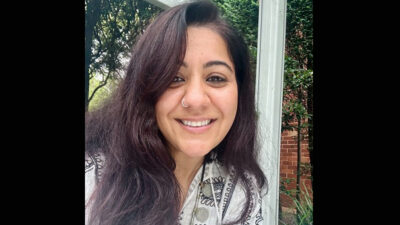
Never put a ceiling on yourself: Edstead CBO Charu Budhiraja’s bold advice to the next generation of women
Edstead’s CBO on trading the hard sell for human truth, and why ‘let the work do the talking’ is more than just a mantra
MUMBAI: There is a particular kind of storytelling that does not announce itself. It does not interrupt your evening with a jingle, or flash a logo at you every thirty seconds. It simply pulls you in, holds you there, and leaves you thinking long after the screen goes dark. Charu Budhiraja has spent over two decades figuring out how to make that happen, and she will tell you, with the ease of someone who has learned this the hard way, that the secret is disarmingly simple: be real.
As chief business officer at Edstead, a Mumbai-based purpose-first content studio, Budhiraja sits at the intersection of creative instinct and commercial strategy. It is a position she has built towards across a career that winds through Ogilvy, Endemol, and Warner Bros. Discovery, and one that has seen her make films for Unilever and PepsiCo, shepherd long-form documentary partnerships, and watch the entire language of branded content change around her. She has sat in rooms where the brief was to sell, and in rooms where the brief was to mean something. Her life’s work, in a sense, has been making the case that those two rooms are the same room.
Ask Budhiraja what two decades in the industry have actually taught her, and she does not reach for the expected answer about strategy or scale. She reaches for empathy. “Over the last two decades, one thing I’ve learnt clearly is that storytelling works best when it connects with real human insights,” she says. “As a woman leader, I believe empathy naturally becomes a stronger part of the process. It helps you listen more carefully to people, experiences, and emotions behind a story.” This, she argues, is not a personality trait dressed up as a professional skill. It is a craft advantage, one that shapes how you enter a story, what you choose to stay with, and how you decide what a brand should and should not say.
That perspective, she says, is what allows a narrative to feel both authentic and commercially purposeful at once. “When storytelling balances both human insight and brand intent, that’s when it truly resonates.” The balance sounds elegant in theory. Getting there, as anyone who has ever tried to align a marketing department with a documentary filmmaker will know, is rather less tidy in practice. But Budhiraja makes it sound like something you can actually plan for, which is perhaps the most useful thing about the way she thinks.
She sees this same quality reflected in how women leaders more broadly approach the documentary space. There is, she observes, a natural inclination among them to look beyond the surface of a story and into its emotional and social architecture. “This lens helps brands tell stories that are not only strategically relevant but also authentic and impactful,” she explains. “When purpose-led storytelling is rooted in real experiences and voices, the narrative aligns more organically with a brand’s larger values and purpose.” It is not that men cannot do this, she is too careful a thinker to make that argument. It is that women in leadership have often had more practice doing it, and that the results tend to show.
The story of how branded content got to where it is today is one Budhiraja has watched from the inside, and in some stretches helped to write. The early days of the format were campaign-driven and product-led. Films for brands like Unilever and PepsiCo were, by her own account, “creatively exciting” but built around a marketing message and measured in short cycles. The audience, in that model, was a target. The story was a vehicle. The logo was the destination.
That model has not aged well. “Audiences are far more aware and selective about what they watch,” Budhiraja says plainly. “They engage with content that feels meaningful rather than promotional.” The shift is not simply aesthetic. It reflects a deeper change in the relationship between audiences and the media they consume, one accelerated by streaming, by social platforms, and by a general collapse of patience for anything that feels like it is wasting your time. Brands that have not adapted to this are finding out the hard way that money spent on content people skip is not really money spent at all.
What has replaced the old model, at least in the work Edstead does, is something considerably more ambitious. “Research-led, purpose-driven documentaries and series allow brands to participate in larger conversations and tell stories that feel authentic, relevant, and culturally grounded,” Budhiraja explains. The word ‘participate’ is doing a lot of work in that sentence. Not dominate. Not sponsor. Participate. It implies a certain humility about where the brand sits in the story, and a willingness to let the story be bigger than the brand. That is, it turns out, exactly the point.
“It’s less about advertising and more about creating stories people genuinely want to engage with.”
At Edstead, the philosophy takes shape as a very specific way of working. Partnerships are built not around visibility or reach, but around shared purpose, and the process begins not with a client brief but with culture itself. “The process begins with identifying stories that already exist within culture and society, and then collaborating with brands whose values naturally align with those narratives,” Budhiraja explains. The idea is that a brand should never feel grafted onto a story. It should feel like it was always part of the landscape the story is set in.
Long-form storytelling is central to this. A documentary or a branded series gives a brand the room to breathe inside a narrative, to become part of it rather than an interruption of it. “We rely heavily on research and long-form storytelling formats, which allow brands to integrate into the narrative more organically rather than feeling like an add-on,” she says. “When a partnership is genuinely aligned with the story, it creates a far deeper connection with audiences while delivering meaningful value for the brand.”
Edstead’s role in all of this, as Budhiraja frames it, is that of a bridge. On one side sits brand intent, which arrives with commercial objectives, a communications strategy, and a board that wants to see results. On the other sits authentic storytelling, which arrives with a subject, a point of view, and an audience that can smell inauthenticity from the other side of a streaming platform. Bringing those two sides together without either losing its integrity is the studio’s founding proposition. “In many ways, our role is to bridge that gap between brand intent and authentic storytelling, ensuring that the narrative remains culturally relevant and impactful,” she says.
Making meaningful content is, of course, only half the challenge. The other half is making sure it actually reaches people. Edstead approaches this by designing content to travel from the outset, building stories that can move across platforms and formats and find different kinds of audiences along the way. “The idea is to create stories that are culturally relevant and emotionally engaging, so audiences feel invested in them,” Budhiraja says. “When a story connects on that level, it naturally sparks conversation.” That conversation is ultimately what converts emotional engagement into brand value. It cannot be bought. It can only be earned by getting the story right in the first place.
On the question of what authentic narrative does for a brand, Budhiraja is at her most direct, and her answer cuts through a good deal of industry noise in a single breath. Years of watching what sticks and what does not have given her a clear view on the matter, and it has very little to do with production values or the size of the media buy behind a campaign. “I can tell you with certainty that the content that stayed with people was never about the biggest budget or the most perfect execution. It was about truth,” she says. “When a brand has the courage to step back and let an authentic story lead, audiences feel it immediately. That shift from watching to feeling is what no media plan can engineer. It has to be earned. And in my experience, the only way to earn it is to be real.”
“That shift from watching to feeling is what no media plan can engineer. It has to be earned.”
Looking ahead, Budhiraja sees the trajectory of branded storytelling continuing to move away from the world of campaigns and into the world of culture. The most impactful branded content, she argues, is already indistinguishable from meaningful storytelling, and the gap between the two will only narrow further. “Branded storytelling today is moving beyond campaigns and entering the realm of culture,” she says. “The most impactful branded content doesn’t feel like marketing at all, it feels like meaningful storytelling.”
The implication for marketers is significant. The skills that built careers in traditional advertising are not the same skills that will build the next generation of brand stories. Budhiraja is direct about this shift. “Going forward, marketers will need to think more like creators and storytellers rather than traditional advertisers,” she says. “Purpose-led narratives, creative collaborations, and platform-native content will shape the future, especially as audiences expect more personalised and culturally relevant stories.” The industry, she suggests, is not quite there yet. But it is moving, and the direction is clear.
Budhiraja’s own journey through this industry has not been without friction. Across media networks, agencies, and now a purpose-first studio, she has encountered the quiet, persistent scepticism that can follow women into leadership roles, moments where being a woman meant being questioned more than the work warranted. She does not dramatise this, but she does not skip past it either. “There have definitely been moments where you feel questioned more because you are a woman,” she says. “Those experiences are not uncommon in leadership roles across industries.”
Her response has been consistent, and it is, characteristically, a storyteller’s response. Do not get louder. Get better. Let the work make the argument you cannot make in a meeting room. “Over time, I realised that the strongest response is not louder words but stronger work,” she says. “When a story connects and creates impact, it speaks for itself. My approach has always been simple: let the storytelling and your work do the talking.” It is advice she has lived by long enough that it no longer sounds like advice. It sounds like fact.
For the next generation of women trying to build careers at the intersection of creativity, strategy, and business growth in purpose-driven media, Budhiraja has a lot to say, and none of it is soft. She is not interested in offering comfort. She is interested in offering clarity. “Experiment relentlessly, and never let anyone, including yourself, put a ceiling on what you can do,” she begins. “Ask questions, and make sure they’re the right ones. Say yes to learning, say yes to adapting, and always learn beyond the boundaries of your current role, because the moment you stop, you limit yourself.”
The women who thrive at this intersection, she believes, are the ones who understand all three disciplines deeply and are not afraid to move fluidly between them. Specialism has its place, but it is versatility paired with conviction that builds careers with staying power. “The women who thrive at the intersection of creativity, strategy, and partnerships are the ones who understand all three deeply and aren’t afraid to move between them,” she says. Then she adds what is, perhaps, the most personal piece of counsel she offers: “And above everything: trust your instincts, hold your opinions, and own your perspective.”
It sounds simple. It is not. But then, most of the truest things about storytelling are like that. They look obvious from the outside and turn out, on closer inspection, to be the product of a great deal of practice, patience, and a willingness to keep asking whether the story you are telling is the one that actually needs to be told. Budhiraja has been asking that question for over two decades. The industry, catching up slowly but surely, is beginning to understand why it matters.