MAM
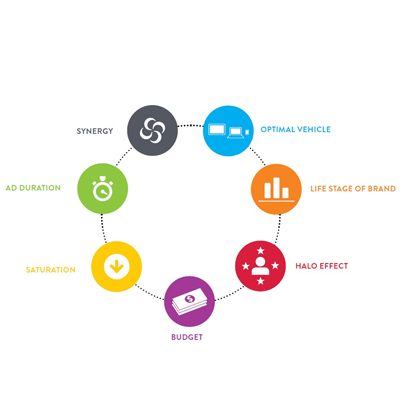
Nielsen’s seven-step Media Compass

MUMBAI: Imagine spending all your time and effort on a project, which doesn’t even give a chance for a second glance? Well, this is what is happening in case of advertising, as per Nielsen’s insights.
The research goes on to say that in the highly volatile market today, marketers face tough competition to make a customer choose a certain brand out of many available to them. In India, marketers spend over $5 billion each year out of which up to 30 per cent i.e. $1.5 billion is wasted as it misses its mark.
One might look at various media landscapes to reach out to its TG but the report says that the fragmented media landscape isn’t helping anyone. According to it, companies are finding it progressively difficult to capture mind share in the segments they serve.
To make things easier and to guide marketers on their budget allocations to increase their returns on investment, Nielsen has developed a seven-step framework to help them battle today’s challenges.
The framework, christened as media compass, shares uncommon ways in which one can optimise seven steps that helps determine a marketer’s choice of media, timing of exposure and the size of investment. While every brand has its own unique dynamics, the research agency designed the framework to provide clear guidance for any brand. The framework is based on nearly 1,100 studies across 98 categories carried out globally in the area of marketing mix.
Choosing the optimal media mix
Marketing spend varies across industries and regions depending on where messaging resonates most with consumers, so evaluate current ROI for your brands across media platforms.
Supporting new brands beyond early launch
Adequate support for a new launch is required even in the second year of the launch in order to generate incremental trials and ensure repeat purchase behaviour. Ideally a new product should be thought of as ‘New’ for two years.
Maximising the halo effect
Advertising drives volume for the brand being directly promoted. However, such advertising may also drive volume for a sister brand if there is a connection between the two brands in the consumer’s mind. Such indirect effects are called Halo Advertising Effects, contrary to what one might expect, the halo effect from parents to the portfolio is much lower than the halo effect from extensions to the parent. Shifting a larger portion of the media support to extensions would result in higher total impact for the portfolio.
Brand budgets – incorporate sponsorship for building equity
Bigger budget brands can afford higher levels of advertising spend. If the budget allows, they should consider sponsorships as part of their media plans. Gross Rating Points (GRPs) spent on sponsored programmes, or impact GRPs, generate very high sales volume, and are generally three times as effective as regular GRPs. However, there’s a high cost involved in sponsorships. Brands with smaller budgets should maximise efficacy of their spends by executing within optimal GRP ranges, considering shorter length copy and ensuring good copy quality.
The flighting opportunity
The economic principle of diminishing returns exists in media planning too. The volume response due to TV advertising is not linear, and shows a pattern of diminishing returns beyond a certain point, leaving considerable scope for GRP optimisation.
Timing it right
Longer-duration ads are needed to convey a new or complex message, while shorter ones can suffice as reminder messages. The most critical question for the marketer therefore is – which parts of the copy can be cut out, and which parts are essential to the message?
Synergy
Synergy is the improved effectiveness of various drivers when executed together. A study conducted to test synergies between ATL & BTL activities among 25 categories revealed that a vast majority of companies do not integrate their ATL and BTL efforts. The 20 per cent companies who do integrate ATL and BTL efforts witnessed about 5-8 per cent extra sales growth. Integrate your marketing and sales efforts to benefit from synergies.