MAM
VAMA.app strengthens leadership with new CTO, CBO appointments

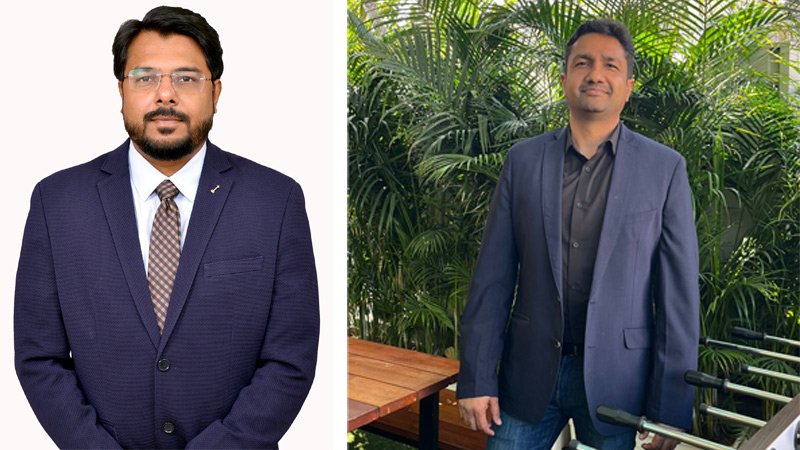
Mumbai: VAMA.app, a virtual platform transforming the traditional offline Mandir ecosystem into a digital realm, announces the expansion of its leadership team with the appointment of Divick Kishore as chief technology officer (CTO) and Nitin Saxena, previously instrumental within the organisation, ascends to the role of chief business officer- operations & partnership. These strategic hires mark a significant milestone for VAMA.app as it endeavours to fortify its technological infrastructure and propel innovation.
As the CTO of VAMA.app, Divick will leverage his extensive expertise to drive technological innovation, enhance product offerings, and accelerate the platform’s evolution in the digital spiritual services landscape. Nitin, in his elevated role as chief business officer of operations & partnership, will continue to drive operational efficiencies to new heights, enrich VAMA.app’s strategic partnerships, and spearhead initiatives that will solidify the platform’s presence in the market and fuel its ascent.
Commenting on bolstering the leadership team, VAMA.app co-founder Manu Jain said, “The future of the astrology and Religious Tech market in India is on a trajectory of exponential growth. The foundational shift in consumer behaviour towards digital spirituality, bolstered by our innovative platform, sets the stage for this expansion. With Divick and Nitin’s impressive backgrounds and visionary leadership, we are poised to propel VAMA.app into its next phase of expansion. Our aim is to enhance the technological infrastructure and business strategies to better serve the digital and spiritual needs of our growing user base.”
Speaking on his appointment at VAMA.app, Divick Kishore said, “Joining VAMA.app marks the commencement of an exciting chapter where the confluence of opportunity and innovation beckons. I am committed to steering our technological vision towards realising efficiencies and enhancing productivity through the adoption of cutting-edge solutions. Our goal is to elevate the spiritual experience for our users, setting new benchmarks in the digital spirituality realm.”
Further adding to this, Nitin Saxena, said, “It’s exhilarating to further my journey with VAMA.app in this enhanced capacity. The digital transformation of spiritual services offers a unique landscape to innovate and expand. I look forward to deepening our business strategies, cultivating meaningful partnerships, and driving growth that is both sustainable and impactful. Together, we are set to redefine the spiritual journey for our users, ensuring value creation for all stakeholders involved.”
Divick brings over two decades of invaluable experience as a tech entrepreneur, showcasing expertise across diverse technological domains. Divick arrives at VAMA.app with a notable background, including a significant tenure as co-founder and former CTO of InstaAstro, where he was pivotal in scaling the platform’s operations significantly since its inception. Divick’s entrepreneurial prowess is evident in his role in establishing GoRapid Technologies, steering it to significant success before its acquisition by PhonePe. This further highlights his exceptional ability to develop, scale, and lead technology-driven enterprises to triumph. His career journey also includes a leadership stint at Times Internet Limited.
Nitin brings to VAMA.app over two decades of extensive experience spanning various industries including Power, Telecom, ITES, and International Business. He will assume responsibility for overseeing Business Operations and Partnerships. His comprehensive understanding of the D2C business, Go-to-Market Strategy, Mass Retail landscape, Customer Experience Excellence & New Geography Commercial Launches cultivated through extensive engagements across India, Nitin’s distinguished tenure as the Head of Business Development & Expansion to New Geographies at Adani Group driving GTM for launches, streamlining business operations & creating state-of-the-art business processes, coupled with notable accomplishments at Vodafone, underscores his adeptness in driving substantial growth and operational excellence.
Established in late 2020 by visionaries Aacharya Dev, Himanshu Semwal and Manu Jain, VAMA.app has rapidly evolved to redefine the spiritual landscape for its users. With an impressive roster of partnerships that includes over 250 temples and a network of more than 300 astrologers, VAMA.app stands as a beacon of innovation in the faithtech domain. By offering a comprehensive suite of services such as e-pujas, e-darshans, and astrology consultations, VAMA.app caters to a wide array of spiritual needs, firmly establishing itself as a pivotal platform for those seeking to connect with their faith in the digital age.