English Entertainment
Piracy notwithstanding, English Entertainment genre charts growth story

MUMBAI: That there are as many as 20 English entertainment channels in India today is alone testament to the fact that there is a chunk of audience out there who are happily lapping up English shows and movies on television. In a country where Hindi and regional general entertainment channels (GECs) account for almost 49 per cent of the total viewership pie, the English GECs and movie channels genre survive on a measly 0.9 per cent.
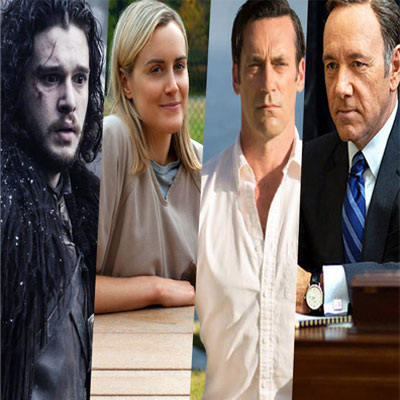
Notwithstanding, overhear snatches of conversation of today’s youngsters and you’re most likely to hear show names such as Orange is the New Black, Homeland, House of Cards and Game of Thrones. However, a couple of pertinent questions to ask here are: Where are they consuming this content from and whether there is much scope for a genre like this to grow in a country as diverse as India?
Even as piracy is rampant specially for English entertainment content, Indian broadcasters are going around with a fine-tooth comb in order to offer viewers the best content in order to feed their insatiable demand.
The English Entertainment Growth Story
According to the FICCI-KPMG 2015 report, English entertainment genre, which includes both English GECs and English movie channels, accounted for 0.9 per cent viewership in 2014 as compared to the 1.1 per cent in 2013.
With the recent addition of Viacom18’s Colors Infinity and Colors Infinity HD, the number of English entertainment channels in India today has touched 20, as per TAM Media Research data. Of these, there are seven HD channels with the first half of 2015 alone seeing as many as five HD launches.
Speaking to Indiantelevision.com, Times Network CEO and managing director MK Anand says, “With DAS phase I and II complete, as we go to phase III and IV, the potential to launch more and more niche channels and to reach out to specific people has become better and cheaper. With analog one could reach 100 channels through a network, whereas with digital we can technically and theoretically reach 500 channels.”
While the niche English entertainment genre has seen content acquisition cost rising almost three-fold in the last couple of years, the fact remains that the advertising rates are nothing to write home about. Even as media planners suggest that there has been close to 43 per cent jump in the commercial time sold on English entertainment channels, the ad rate for the genre ranges from Rs 500 to Rs 2,500, which is considerably below the rates that Hindi GECs command. In a scenario like this, the question that looms large is whether it is even profitable to enter the space?
Viacom18 EVP head – English Entertainment Ferzad Palia says that close to 250 million Indians now are English literates, which was anywhere between 25-30 million, 10 years ago. Not just this, English entertainment genre currently reaches to 200 million consumers, with close to 60 per cent of English entertainment consumption coming from non-metros. While currently, the genre has only 4.6 per cent AdEx share of the whole television pie, Palia feels that the genre is lucrative from an advertiser’s perspective, as English entertainment consumers have 35 per cent higher disposable income.
While the above figures and the liking for high quality content by youngsters justifies the many new launches in the English entertainment space, what is interesting to note is that networks today are investing not just on an English entertainment channel, but are also looking at catering to their HD audiences, by simultaneously launching the HD feed of the channel or only coming up with an HD channel.
The HD Push
GroupM head – trading & partnerships Jai Lala believes that there is scope for more HD channels in the market as the viewing pattern is changing. “With better TVs, and better availability of content, people want to watch the content in HD. The way we had SD, over a period of time, people would want to move to HD and that is where the opportunity exists,” he says.
Digitisation and the growing emphasis of direct to home (DTH) players on HD is another reason for broadcasters concentrating on strengthening their HD bouquet. “The HD part is extremely small right now and at a very nascent stage. With an increase in the seeding of HD set top boxes, things will change. While currently HD penetration is mainly in SEC A cities, over a period of time, it will become mass,” opines Lala.
Increasing penetration of premium, ad free channels like HBO Hits, HBO Defined and Star World Premier has given a major fillip to subscription revenues significantly for the English entertainment genre. Premium HD channels last year recorded 10X topline growth with DTH accounting over 95 per cent of the premium channel subscriber base.
The advertising revenue from HD channels, according to media experts is approximately Rs 250 crore. Lala estimates the English general entertainment HD market to be in the tune of Rs 100 crore.
Agreeing that the genre currently is not profitable, Madison Media Omega chief operating officer Dinesh Rathore says, “There is so much content available internationally and it is quite popular. Thanks to digitisation and digital penetration that people are watching this content through different avenues. This gives an impression that there is a demand for such content, but this is specialized content meant for a niche audience.”
Giving examples of channels like Big Thrill and CBS, Rathore says that these did not work because they were not viable monetarily. “Today, every network wants to be available in every genre and with better quality. It is like building a portfolio in order to cater to your clients in every niche,” he opines.
The Road Ahead
While the English entertainment channels genre currently is a small player in the vast broadcast game, it has a chance to pick up with growing digital homes. Once a strong pipe is created, broadcaster will have to concentrate on bringing good quality content to viewers, preferably at the same time as its US release. They will also have to create enough room for sampling of content by viewers.
The key area of concern for English entertainment genre in India still remains that of piracy. According to Palia, the habit of ‘torent’ing amongst viewers has been inculcated by broadcasters themselves. “We have forced consumers to go and download. Research shows that people do not download just because they want to watch content immediately after the US launch. The real reason is that they aren’t getting enough content that they should be. There is a plethora of content that is not even brought to the country,” Palia had earlier said.
Media analysts are of the opinion that the English entertainment genre in the country should pick up in the next two-three years. Moreover, the huge time gap between the US and India release of a show is what eventually leads to downloading. If broadcasters can deal with this issue and develop appointment viewing amongst customers, the genre, which has immense potential given India’s high youth and English speaking population, stands to bloom.