News Broadcasting
What’s exciting Times Now’s Arnab Goswami these days

MUMBAI: With the explosion in social media such as Twitter and Facebook, the very nature of news is being redefined. New news icons have emerged, whether personalities or organisations, in the digital ecosystem having as many followers – if not more – as a TV channel. One tweet or update – on most occasions sent out even before traditional print and TV news – is enough to send shockwaves running through the globe.

The digital shift has resulted in cord cutting with many subscribers preferring the cheaper OTT services in many other parts of the world. India is going through its digitization pangs. Internet penetration complemented by aggressive growth of smartphone has grabbed the attention of many wealthy investors to invest in digital assets and Mukesh Ambani’s visionary weapon to overcome bandwidth issue Reliance Jio looks set to rejuvenate the entire ecosystem.
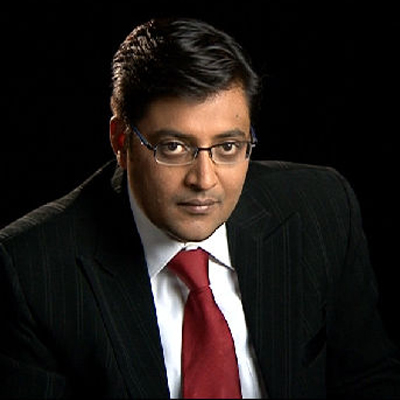
But all this does not faze Times Network (Times Now, ET Now and Magic Bricks Now) news president and editor-in-chief Arnab Goswami at all. He believes that television is “super young in India” and he is hedging his bets on it being the first medium of choice at least for the foreseeable future.
“As a medium TV will continue to be dominant,” he says. “I think for the next 10 years TV will lead and digital will follow. In the coming six to seven years TV and Digital will co-exist, which it does now days also.”
To shore up his argument he points towards the viewership his prime time show Newshour notches up. “While the digital interaction counts between 10000 to 20000, through television we reach out to millions,” he explains.
According to the flamboyant journalist there is a huge room for innovation in news television – something which existing players are hardly exploring. “If you ask me what are the innovations that we are doing in the television news space, I don’t think there are any. Innovations are key to prosperity. Newshour was an innovation, and we keep innovating with it. We open up phone calls, use social media to make it interactive. Emergence of digital will bring in way more innovations,” asserts Goswami.
Sharing his assessment on demographic segmentation Goswami says, “I believe the people who are over 25 will consume TV and ones below 20 will prefer digital.”
Despite being upbeat about television Goswami is not ready to leave any stone unturned to establish his news network as the leader in the digital space. The Times Now app which at this stage has approximately 700,000 downloads (as per Times Now) is what he has trained his eyes on.
A specialist team of 25 people has been put in place to expand The Times Now digital presence. “If there is an audience between 10-20 years which is a digital-only audience, I don’t want to lose them. That’s why we are aggressively innovating in the digital space,” informs Goswami.
The most successful part in the mobile app as per Goswami’s observations is the Newshour Shorts, a section where small clips consisting key moments of a debate are uploaded.
And it’s not just video, Goswami and his team have enabled an audio only feed of Newshour to cater to the bandwidth impoverished. Says he: “The story of our country is we have poor bandwidth even in cities, so what about the guys in the rural area who don’t have the bandwidth to buffer the audio visual feed. They are taking the audio feed and enjoying Newshour as a radio series. We find that at 9 o’clock, a huge number of people tune in to the app to enjoy the audio only version of Newshour.”
What’s engaging him these days is the quickly evolving consumer, he confesses. “People now want to watch content when they want and how they want. We service providers cannot be arrogant and say we will only be on TV if you want to watch us tune in at 9. It is important to be appealing to each and every segment.”
Marking one of the moments of 2015 television audience measurement body Broadcast Audience Research Council (BARC) India started rolling out its rural data from week 41. Even as advertisers and media planners are waiting for the viewer panels and data reportage to settle down, still every one expects air time pricing to enter a new dynamic.
Times Now has had a tendency to attract urban advertisers, mainly because it is an English news channel and is perceived to have premium audiences. So the fact that the rural monitoring would start coughing out viewership numbers needn’t have perturbed Arnab.
But the TV scribe says he spent sleepless nights before week 41 data. He reveals: “People from the fraternity told me to relax as the advertisements and revenues come from the urban areas. But my question was: What is the point of being relevant at urban areas if nobody watches in rural areas? I am a journalist, advertising can come from urban areas but if people don’t watch in small towns I will feel that I don’t have the impact in those areas. If I am doing a story on Lalitgate I want people from Bongaigaon as well as Bombay to watch it. I was very nervous but next day I was thrilled that in terms of viewership, rural is higher than urban. I thank BARC (India) for doing us a great service by breaking the myth that English news is consumed only in metros by males.”
Despite not being on social media, Arnab Goswami often turns out to be the trending topic amongst Indian netizens across platforms. And he points out that he promotes every hashtag with optimum zest.
“The hashtags are important to us,” he says. “For me conversation is important. I feel like involving the audience up to the time where they feel like sharing their opinion. Even if you agree or disagree I want to involve you in it and that’s where the hastags play a vital role.”
But it’s not as if only positive hastags relating to Arnab go viral on social media. Often irked netizens, have expressed their angst in a flood against the channel’s and Arnab’s views. One such scenario was #ShameonTimesNow which trended for four days after the news broadcaster aired a Newshour debate #ShameinSydney describing the performance of Team India in Cricket World Cup semifinal.
“The performance of Team India was shameful and I had no fear in calling it so, I will not change my opinion even now. But people talked about the episode because they watched it and I am happy that they watched it. I want to have that conversation and I want to track the conversation, and go back and read the tweets. I may not change my point of view, but I am aware of what other people are thinking. I do follow lot of conversations so it gives me sense of how it works and what is going on” Goswami asserts.
The English News genre as per the Ficci-KPMG 2015 report has 0.1 per cent of total television viewership. As against that, five per cent of the entire TV adspend of Rs 155 billion is spent on the genre.
And even in this space Times Now is setting the pace. “In terms of revenue through advertising Times Now is a clear number one in the English News genre,” informs a senior media planner. He further adds, “The primetime show Newshour charges approximately double when compared to the other competitors.”
The rate for a 10 second slot during Newshour is over Rs 45,000, and there are close to 12 advertisers on board, “We have more advertisers than we can accommodate and I am grateful to the advertisers for helping us do what we do,” says Goswami.
Looking back at 2015 Goswami terms it as one of the best years in recent times. And that’s broadly because of four reasons, he states, pausing for a few seconds.
“Four things make me term this as one of the best years. Firstly Times Now has got 90 per cent channel share multiple times in terms of viewership. Secondly Times Now has over 50 per cent channel share despite some channels trying to change their names in the market where there is no number two. Thirdly, the new innovation The National Debate, got over 91 per cent of viewership share. And lastly we were able to increase the viewership of ET Now by 15-20 per cent after taking over. So now I have three shows Newshour, Frankly Speaking, and The National Debate. I am excited about them,” he says, signing off with a confident smile on his bespectacled face.