Comment
Why you should watch Colors’ Bigg Boss18

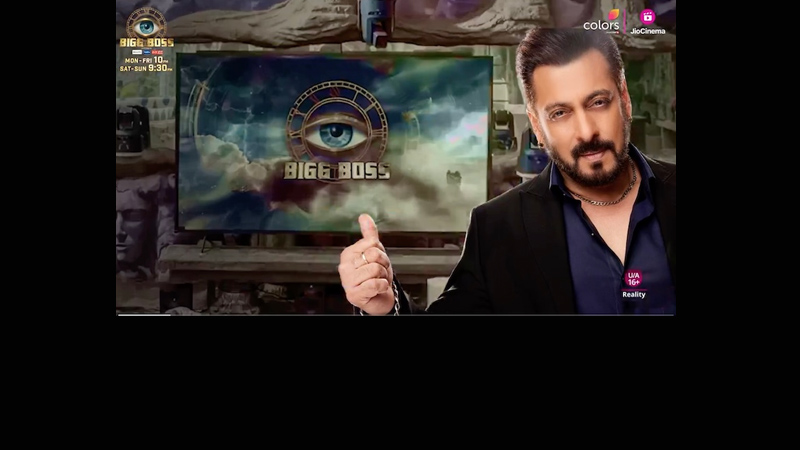
MUMBAI: I used to be a proud advocate of Bigg Boss, championing it as the epitome of human emotions and behaviour. I’d write blogs and tell anyone who would listen that it was a grand experiment in teamwork, polarization, resource mobilisation, negotiation, storytelling and the delicate dance between truth and lies that could turn tides faster than you could drop your popcorn. Some seasons were not to my liking, and some taught me a few lessons. I even predicted the end of Bigg Boss and called it a deadly social experiment that the HR department can copy for an offsite. I auditioned for the show one fateful day and am happy that I did not make the cut. Bigg Boss needs a reality check.
It was, of course, before Vermajee—my dear friend, soul mentor, and consultant in all non-working things in life said. It opened my eyes to the actual sincerity of it all. His wisdom, delivered with the gravity of a man who had mastered the art of sidestepping unnecessary drama, made me see Bigg Boss in another shadow.
Let’s face it. When it comes to quality television, nothing quite compares to the highbrow, intellectual oasis that is Bigg Boss. Because who wouldn’t want to watch a group of people—handpicked for their impressive lack of emotional regulation—battle it out in an elaborate social experiment that makes a corn maze for mice seem like the height of human achievement?

Allow me to walk you through why this epic display of “reality” deserves your full attention. Grab some popcorn, lean back, and marvel at this masterpiece’s sheer brilliance. The moment of truth is here. Here’s what Vermajee said. Was that not a big thumping whack on my head?
No One Ever Doubted The Real Test Of Human Behaviour
Have you ever wondered how people behave when locked in a house, deprived of dignity, and prompted by whispering producers? Vermajee insists that Bigg Boss provides that valuable insight which you never asked for. It’s like watching a Roman gladiator match, except the contestants are armed with petty insults and inflatable egos instead of swords. And they have a constraint- they cannot get physical- I mean in terms of fights. Would you not agree that it is truly an anthropologist’s dream and for the audience, a release from the pressure cooker called life?
The whole show is an arena where emotionally volatile individuals are crammed together in a space smaller than your average Ikea display room, forced to coexist like caged animals. You’ve got your classic tropes: the guy who can’t control his temper, the girl who cries at the drop of a hat, a person still trying to find the pronoun to respond to, a couple deeply in love with but with controversial background, someone who is trying to repurpose life and the one who’s just there to add to the furniture count. You’ll be left asking the existential question: “Is this what Darwin meant by the survival of the fittest?”
Not The Biggboss But The Scriptwriter: Your Unseen Puppet Master
You might think the contestants or the voting audiences are driving the drama, but don’t be fooled. The producers of Bigg Boss are like mischievous masters tossing lightning bolts from the heavens, causing chaos and ensuring the drama never stops. The participants aren’t just navigating their emotions but also carefully following a meticulously crafted script that nudges them towards confrontations with all the subtlety of a sledgehammer and sometimes like a jeweller.
Watch closely, and you’ll see the magic unfold: contestants are guided with cryptic “challenges” that are about as natural as a sitcom laugh track. And when you are deceived into thinking they might be showing the slightest hint of genuine emotion, the production team jumps in to stir the pot. Because who wants emotional growth or understanding when you could have a screaming match over a pillow? Or, better still, a monologue of abuses and misunderstanding longer than the one you read in Ayan Rand’s novel.
A Wardrobe Malfunction Waiting to Happen
Now, let’s talk about the visual feast Bigg Boss offers. Have you ever wondered why the contestants look like they stepped out of a trendy but slightly trashy catalogue? That’s because they didn’t even pick their clothes. That’s right, they are dressed by designers who seem to be playing a prank on them. Clothes too tight, too loud, or too inappropriate for any real-life scenario—it’s fashion with the subtlety of a fireworks display.
Because, after all, nothing says “real human experience,” like a grown man in a neon tank top and sequined shorts screaming about loyalty.
Fights? They’re Gloriously Predictable
If you’re looking for intellectual conversations or meaningful discussions, what are you doing here? Bigg Boss is all about the fights, and boy, do they deliver. The drama unfolds faster than you can shout “TRP”. Contestants hurl insults, food, and sometimes furniture at each other, like toddlers in an adult playground.
And the best part? These aren’t just spontaneous moments of anger. Oh no. These are curated, finely tuned explosions of rage, timed perfectly to break the monotony of everyone sitting around a couch wondering how they got into this mess in the first place. It’s like Fight Club, but without any subtlety, depth, or Brad Pitt. And what more do you think the producers can cram in a 90-minute daily update? What do you think the contestants do the rest of the day- other than when the cue says- Camera- sound- fights?
The Voting – A Systematic Scam
Ah, the thrill of voting! You, the audience, have the privilege of participating in a system that isn’t rigged. Week after week, you send in your votes, believing your voice truly matters. This misguided perception is truly adorable, like the playschool girl dancing to Chikani Chameli. Because let’s get real: the producers have already decided who stays and who is evicted with honourable escape routes. They’ve got their favourites—those who guarantee more drama, more sponsorship deals, are promised a more extended stay or are material for the follow-up reality shows.
You’re not voting for who you want to stay; you’re voting to keep the illusion alive. Have you ever wondered how Bigg Boss never reveals the vote percentages? Have you ever demanded? Are you satisfied with the lollipop of one of the audit firms endorsing the results? Don’t even try going that path. Bigg Boss is less democracy and more dictatorship with a touch of game show order.
The Host: Bias? What Bias?
Then there’s the host, the impartial face of the show. Or at least, he would be unbiased if they weren’t so clearly spoon-fed instructions to keep the show’s prized troublemakers in the game. Watch as the host subtly (or not-so-subtly) guides conversations, drops hints, and occasionally throws shade at the contestants they’ve been told to hate. It’s like watching a chess game, except one side doesn’t know they’re being played. The host is also genuinely human and bias is a human trait.
The Reality Show Contestant Manufacturing Line
When it’s all said and done, when the “winner” emerges, the rest of the contestants move on to their next gig in the reality show carousel. Today’s Bigg Boss loser is tomorrow’s Khatron Ke khiladi contestant. Their career? A carefully curated series of reality show appearances, each more absurd than the last. And you’ll watch them all because, let’s be honest, there’s no escaping the pull of this car-crash television.
NET NET – Final Thoughts on BIGG BOSS (Not That You Need Them)
So, why should you watch Bigg Boss 18? Because it’s a masterclass in what happens when human dignity is tossed out the window for entertainment. It’s the TV equivalent of a sugar rush—quick, addictive, and utterly devoid of nutritional value. But hey, at least you can say you witnessed the unravelling of the human spirit in high definition.
And who knows? You might feel better about your own life in the process. Now go and watch Bigg Boss 18 and tell me if Vermajee is right and if it made you feel better. Seeing the participants of the Bigg Boss family foundering and falling apart like straws on the bar counter may even help create stronger family bonds.
DISCLAIMER. Even Vermajee’s more-than-accurate tutorials aimed at brainwashing an ardent BiggBoss fan have limited appeal. I will be glued to the initial weeks of Bigg Boss18, and if the contestants ignite my curiosity, I will travel with them on the unpredictable journey.
(The views expressed in this comment piece are the author’s and the author’s alone. Indiantelevision.com does not endorse them. We are open to contrarian views to Sanjeev Kotnala’s and will happily carry them. There’s only one requirement: the write ups should be written coherently and well)





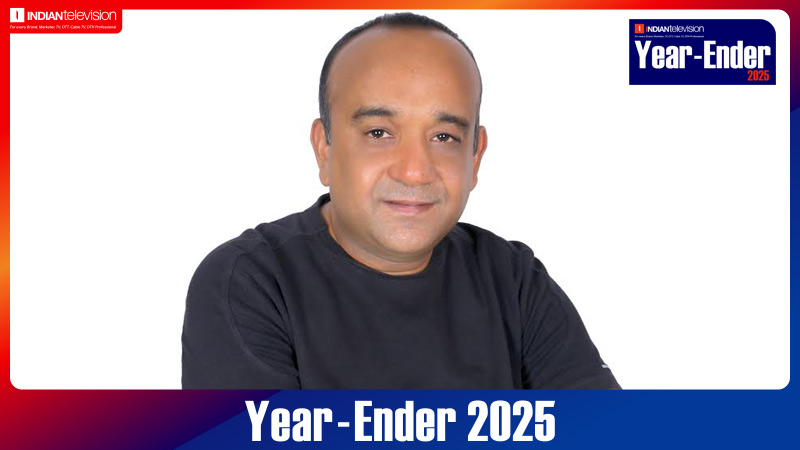
MUMBAI: 2025 will be remembered as the year India’s OTT industry stopped chasing scale for its own sake and began reckoning with how audiences actually consume content. Completion rates fell, patience wore thin and the limits of long-form excess became impossible to ignore. In this guest column, Pratap Jain, founder and CEO of ChanaJor, traces how micro-drama moved from the fringes to the centre of viewing behaviour, why short-form fiction emerged as a retention engine rather than a trend, and how platforms that respected time, habit and emotional payoff were the ones that truly grew up in 2025.
If there is one thing 2025 will be remembered for in the Indian OTT industry, it’s this: the industry finally stopped pretending.
Stopped pretending that bigger automatically meant better.
Stopped pretending that viewers had endless time.
Stopped pretending that scale without retention was success.
What began as a quiet reset in 2023 and a cautious correction in 2024 turned into a very visible shift in 2025. Business models matured. Content strategies tightened. And most importantly, platforms started aligning themselves with how Indians actually watch content, not how the industry wished they would.
At the centre of this shift was micro-drama—not as a trend, but as a behavioural inevitability.
When OTT finally understood the time problem
For years, long episodes were treated as a marker of seriousness. A 45–60 minute runtime was almost a badge of credibility. Shorter formats were pushed to the margins, labelled as “snack content” or “mobile-only.”
That belief quietly collapsed in 2025.
What platform data showed very clearly was not a drop in interest—but a drop in patience. Viewers weren’t rejecting stories. They were rejecting commitment.
Across platforms, the same patterns appeared:
* First-episode drop-offs on long-form shows kept increasing
* Completion rates continued to slide
* Viewers were sampling more titles but finishing fewer
At the same time, shows with episodes in the six to 10 minute range started showing the opposite behaviour: higher completion, higher repeat viewing, and stronger daily habit formation.
Micro-drama didn’t win because it was short. It won because it respected time.
Micro-Drama didn’t arrive loudly. It took over quietly.
There was no single moment when micro-drama “launched” in India. It crept in through dashboards and retention charts.
By mid-2025, it was clear that viewers were happy watching four, five, sometimes six short episodes in one sitting—even when they wouldn’t finish a single long episode. Romance, relationship drama, slice-of-life conflict, and grounded comedy worked especially well.
This wasn’t disposable content. It was compressed storytelling.
In shorter formats, there was no room for indulgence. Every episode had to move the story forward. Weak writing was punished faster. Strong writing was rewarded immediately.
Micro-drama raised the bar instead of lowering it.
Where ChanaJor naturally fit into this shift
ChanaJor didn’t pivot to micro-drama in 2025 because the market demanded it. In many ways, the platform was already built around the same viewing behaviour.
From the beginning, ChanaJor focused on short-to-mid-length fictional stories that felt close to everyday Indian life—hostels, rented flats, office romances, small-town relationships, young people figuring things out. Stories that didn’t need heavy context or cinematic scale to connect.
What worked in ChanaJor’s favour in 2025 was clarity:
* A clearly defined audience
* Tight episode lengths
* Storytelling that prioritised emotion and pace over spectacle
While several platforms rushed to copy global micro-drama formats, ChanaJor stayed rooted in familiar Indian settings and conflicts. That familiarity mattered. Viewers didn’t have to “enter” the world of the show—it already felt like theirs.
Why audiences started responding differently
One of the biggest misconceptions going into 2025 was that audiences wanted shorter content because their attention spans had reduced. That wasn’t entirely true.
What viewers actually wanted was meaningful payoff per minute.
On platforms like ChanaJor, episodes didn’t waste time setting the mood for ten minutes. Conflicts arrived early. Characters were recognisable within moments. Emotional hooks landed fast.
A typical consumption pattern looked like real life:
* One episode during a break
* Two more before sleeping
* A few the next day
This is how viewing habits are built—not through marketing spends, but through comfort and consistency.
Viewers came back not because every show was a blockbuster, but because they knew what kind of experience to expect.
2025 was also the year OTT faced business reality
The other big change in 2025 was on the business side. Subscriber growth slowed. Discounts stopped hiding churn. Customer acquisition costs rose.
Platforms were forced to ask harder questions:
* Are viewers finishing what they start?
* Are they returning without reminders?
* Is this content worth what we’re spending on it?
This is where micro-drama began outperforming expectations. A well-written short series could deliver sustained engagement without massive budgets. It didn’t peak for one weekend and disappear—it stayed alive through repeat viewing.
Platforms like ChanaJor benefited because they weren’t chasing inflated launch numbers. The focus was on consistency and retention, not noise.
Failures Became Visible Faster
2025 also exposed weaknesses brutally.
Several platforms assumed micro-drama was a shortcut—short episodes, quick shoots, instant traction. What they discovered was that bad writing fails faster in short formats than in long ones.
Viewers dropped off within minutes. Episodes were abandoned mid-way. Weak stories had nowhere to hide.
Micro-drama didn’t forgive laziness. It amplified it.
The platforms that survived were the ones that treated short storytelling with the same seriousness as long-form—sometimes more.
OTT Stopped Chasing Prestige and Started Chasing Habit
Perhaps the most important shift in 2025 wasn’t technical or creative—it was psychological.
OTT stopped trying to look like cinema. It stopped chasing validation through scale and awards alone. It began behaving like what it actually is in people’s lives: a daily companion.
Platforms like ChanaJor found their space here because that mindset was already baked in. The goal wasn’t to dominate a weekend launch. It was to quietly become part of someone’s everyday viewing routine.
That shift changed everything—from release strategies to how success was measured.
What 2025 Ultimately Taught the Industry
By the end of the year, three truths were impossible to ignore:
* Time is the most valuable thing a viewer gives you
* Retention matters more than reach
* Format must follow behaviour, not ego
Micro-drama didn’t take over because it was fashionable. It took over because it fit real life.
Looking Ahead
Micro-drama is not replacing long-form storytelling. It is redefining the baseline of engagement.
Longer shows will survive—but only when they earn their length. Short-form fiction will continue to evolve, becoming sharper, more emotionally confident, and better written.
Platforms like ChanaJor have shown that it’s possible to grow without shouting—by understanding the audience, respecting their time, and telling stories that feel real.
2025 wasn’t the year OTT became smaller. It was the year it became smarter.
Note: The views expressed in this article are solely the author’s and do not necessarily reflect our own.