News Broadcasting
“We hope to reach a mature solution on the TAM ratings issue”

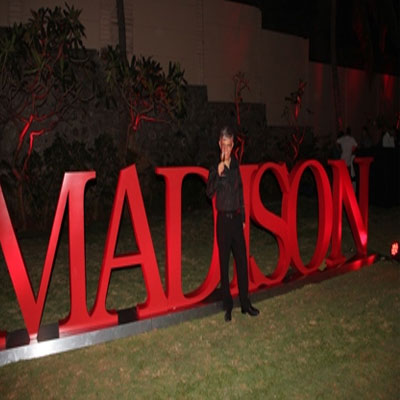
There are two kinds of individuals out there. Those, who lead their lives on their own terms and others, who lead their lives according to the terms set by the rest of the world. And then there is Sam Balsara, who creates benchmarks for the rest through his feisty attitude!
Rated as amongst the top media professionals in the world, MadisonWorld chairman & managing director Sam Balsara is no stranger to a challenging situation. He is known to speak his mind without mincing his words. The media vet has worn many hats in various industry associations and committees over his very long career, which began at Sarabhai’s in the late sixties, early seventies and ended with him setting up Madison 25 years ago.
Here, in an exclusive interview, Balsara opens up on the heated issue of Broadcasters v/s TAM Media. Who else can give us a better perspective than the advertising genius himself. Sit back, read and enjoy his engaging responses from this free wheeling chat indiantelevision.com had with him.

Excerpts:
What is your take on Indian Broadcasting Foundation (IBF) members deciding to discontinue subscribing to TV ratings provider TAM?
It is very clear ratings are very important not just for advertisers and agencies alone, but for the whole industry which includes broadcasters who have worked so hard to built the industry to Rs 12,000 crore. If there are no ratings the confidence in TV advertising will go down.
Take a look at radio and out of home; they have no robust measurement system, hence they account for just five per cent of the media spends. Television does have a robust measurement systems and it accounts for a sizeable 45 per cent.
You don’t have to throw the baby out with the bathwater. If there is something wrong, you fix it. We have to remember that the TV ratings that come out every week are a sample not a census. At times, if it does not do justice, you don’t shut it down. The long term solution is definitely BARC…till then we have to have TAM.
But then how do you address the problems that the IBF and the government has with the ratings?
Let the IBF put out a paper on what their view is on what is wrong with the ratings methodology and what needs fixing. We can give our view on what can be done or should be. The answer is not stopping a rating system.
Why do you say that?
Stopping a ratings system would hurt the broadcast leaders in their respective individual genres, they would lose their leadership perception and this would hurt them. I think it is a very unwise decision.
Let the IBF put out a paper on what their view is on what is wrong with the ratings methodology and what needs fixing. We can give our view on what can be done or should be. The answer is not stopping a rating system.
Let’s say the TAM meltdown continues and you don’t have ratings, is historical data a valid barometer for buying TV advertising time?
Historical data around TV viewership is not an option and is unacceptable to the buyer. I would not work with historical data for buying. If I am buying IPL this year, why should I use last year’s data? Why should and how can I use historical data for how a serial is performing? We know that viewership habits move around.
Then what is the solution?
If there is something seriously wrong with TAM’s data, methodology, we should sit together, highlight the problems, diagnose the imperfections and come up with answers. We need to give a patient hearing to each other as to why it’s going wrong too!
I am aware that TV ratings have been going down because of the rejig of the sample, digitisation and also LC1. But every time you go for a change in a changing environment, the findings are also going to change.
But the dropping ratings are hurting broadcasters and they are saying how is that possible when we are paying for the measurement?
That brings us to the fundamental question: should media owners pay for the ratings system? Maybe you are right! Media owners should not be involved in media measurement. But the fact is that no media owner has found fault with the ratings system when they are at No 1.
But Star India which is the leader in the GEC space is also likely to discontinue its TAM subscription…
Hmmm. The only thing I have to say is that if there is no viewership data, the TV industry is going to suffer.
Is making the advertiser/ad agency pay for the data a solution?
As far as the advertising industry is concerned, we don’t really care who pays for the data, we are concerned that we get the data. We are absolutely certain that we need the ratings.
I am aware that TV ratings have been going down because of the rejig of the sample, digitisation and also LC1. But every time you go for a change in a changing environment, the findings are also going to change.
What if broadcasters continue to refuse to accept TAM as the currency and want to do transactions for TV adverts with agencies and advertisers?
For a deal to take place, each seller has to make something available to the buyer and the latter has to see value in it to pay for it. Both parties have an objective and as long as it is met a deal happens. You see if Dove is priced at Rs 30, and you see merit in buying it you will pay for it, if you don’t, you won’t. Similarly with us, we need a measurement metric before we buy media.
The IBF seems to be pushing the agenda on various fronts. For instance, in the case of net billings it was the IBF which had its way by forcing the advertising industry to accept net billings? Will it do so even in TAM’s case?
There is no question of IBF having its way. The AAAI, ISA and the IBF found a mutually acceptable solution. Some of our full service advertising agency members wanted the 15 per cent mention to be in the bills and we got that in. It was a mature solution that met the needs of all concerned. We similarly hope to reach a mature solution on the TAM ratings situation too.






News Broadcasting
CNBC India unveils new logo, rolls out refreshed identity across network
Debuted at IBLA, the redesign signals a sharper, digital-first future

MUMBAI: CNBC has unveiled a refreshed brand identity across its India network, introducing a new logo and visual system that reflects a more modern, digital-first direction.
The rebrand was officially revealed at the India Business Leader Awards held in Mumbai on March 14, marking the first public showcase of the updated design at one of the network’s most prominent platforms.
The overhaul is among the most visible brand updates for CNBC in recent years, aimed at aligning its look and feel with evolving audience habits and a growing multi-platform presence.
At the centre of the refresh is a redesigned logo that moves away from the network’s long-standing multi-coloured peacock motif, opting instead for a cleaner and more minimalist aesthetic. A key visual cue is a blue upward-pointing arrow embedded within the letter ‘N’, symbolising forward momentum, growth and a focus on the future.
The new identity is being rolled out across the entire CNBC cluster in India, including CNBC-TV18, CNBC-TV18 Prime, CNBCTV18.com, CNBC Awaaz and CNBC Bajar. The move brings a more cohesive and contemporary design language across television and digital platforms alike.
The rollout began on March 30, with the network aiming to create a unified viewer experience regardless of how audiences access its content, be it on broadcast, online or connected devices.
With this refresh, CNBC is signalling its next phase of growth in India, blending legacy credibility with a sharper, forward-looking identity designed for an increasingly digital news ecosystem.