English Entertainment
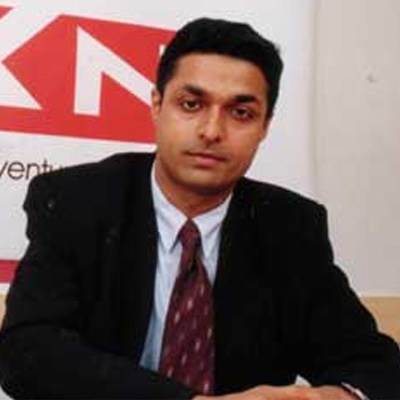
“We believe that watching AXN has to be an experience” : Rohit Bhandari SET’s Assistant VP Marketing

Fresh off the success of last years desi adaptation of Who Dares Wins AXN is all set to unveil its first local adaptation of the year AXN Hot N Wild Contest. A hunt down for the country’s ‘hottest’ girl and guy, the contest is modelled along the lines of the latest reality TV sensation ‘Are You Hot currently on Wednesdays, 11 pm in the Hot N Wild Time Zone on AXN.
The ‘hottest’ male and female winners will go on to become television stars in one of AXN’s upcoming local productions. Indiantelevision.com correspondent Ashwin Pinto caught up with SET’s Assistant VP Marketing Rohit Bhandari who is in charge of AXN. He dwelt on the nature of the search, the marketing push that would be given, other shows that could be looked at for adaptation.
|
Star’s plans for a desi version of ‘Temptation Island’ proved to be a non-starter. How confident are you that the hot’n’wild search will work?  Yes men and women do cheat on one another but we do not ask them to do it on purpose. Are you Hot? is a very simple show. It is about how good you look. The vanity in everybody makes them feel that yes I am good looking. I can only look better. It is just playing with very basic human vanity that everyone has which is to look good. On television I am asking people who think they look good to come out and appear on the show. |
|||||
|
How is the Hot’n’Wild search being modified for the Indian audience? When I ask someone to appear for an audition I want them to appear in what they think they look hottest in, whether it is a sari, a mini skirt or a pair of jeans. Whatever the situation may be I am not going to say no. At the end of the day I am trying to match a perception. It is what they feel looks hot versus the judges’ perception of what we feel looks hot. The idea is that the person is going to appear on a show that AXN would do in the future. The person may not be the best looking guy in the room but he must match up well in front of a camera. I am looking for a person who is fluent with the audience and can involve them. In terms of age limit the person should be at least 18. The maximum cap is 25. However we are not very fixed on this and it could go up to 30. Given how crazy India is about the movies, acting and being a part of the arts I believe that everybody out there harbours ambitions of becoming a movie or a television star at some level or the other. For people in college who have been working for two or three years this would an excellent opportunity for them to cash in. |
|||||
|
What leverage is AXN hoping to get from the endeavour? To give you an example Who Dares Wins has been shown by us since we launched in 1998. Today however when I put you on camera and say that you are on the show you feel very different. That is the experience we are trying to create for the viewer. For us there is both an intended as well as an actual experience. The former is what you go through when you view the channel. The actual one is what you face on the ground. |
|||||
|
|||||
|
What are the attributes that participants should possess that would give them an edge over the competition? The auditions will happen in Bombay, Delhi, Kolkata and Bangalore from 1 August. We require 10-15 days to shortlist entries. The auditions will last seven to eight days. We are looking at short-listing 100 people who would comprise 50 males 50 females. At the end of the day we will come up with one guy and one girl in that market. Totally there will be eight people. They will compete in the final which is the best of the best. Have any sponsors been roped in? Can you give me an idea of the production cost? Livon Silky portion, which actually manufactures and markets hair serum, is also on board. They saw a great brand fit. We are also talking to two three sponsors right now. The production cost would be very low much less than a Who Dares Wins. |
|||||
|
|||||
|
Could you elaborate on the promotional and marketing campaign that is being used? Have any new elements been brought in? You are restricting yourself to a 9-12 pm late night slot. People visit a pub for reasons different from wanting to be a part of something. The way to do it would be to catch them when they are sane when they visit a coffee shop. That is how the idea of tying up with Café Coffee Day came up. That along with Coffee Day Xpress have around 152 outlets across the country in 18 cities. Each city has around 20-25 places. This gives us good coverage and an on ground presence. At Café Coffee Day you can actually pick up a form, fill it. At Planet M there are posters and available forms. On the Internet you can log on to indiatimes or axnindia.com. It is very simple. We are not using theatres. We are using FM Radio in Mumbai, Delhi, Kolkata, Chennai, Bangalore and Pune. We have a huge radio splash. Who are some of the judges that you’ll have roped in? Elle is our partner because we believe that they have core competency in beauty and style. They would be in an excellent position to judge a contest of this nature. We are speaking to local celebrities in each market. They could either be in the fields of television, modelling, film. The logic is that we are looking to bring in a local flavour. In addition the celebrities understand the local nuances better than we do. The panel for the final will be completely different. We are looking at really big names in the fields of fashion, modelling, photography. AXN will also have a representative who may not be Gregory. |
|||||
|
|||||
|
Will ‘Wild On’ be visiting the country as well at a later date? What other shows is AXN looking at for adapting to the Indian market? Would the Bachelor, Fear Factor be possibilities? For whatever little I know about The Bachelor it would be very brave for someone to attempt making it in India. It is like you are bidding a guy and he will decide on whom he wants to marry. That breaks many Indian myths. Arranged marriages are still a huge part of our society. The show is just a contest and the guy marries whom he feels like. That is not how the grain runs in the country. Everybody has a voyeur hidden inside but to go to this extent I am not sure. In addition The Bachelor has no element of action, adventure. It is voyeuristic to a certain extent. It does not auger well for us to do this on ground. However Fear Factor is something we would definitely look at. If we can go to the same extent as what was done in the US I would put my hands and feet up in front of the AXN management and tell them guys we need to do this because this is going to be big and people are going to have fun on the show. Of course those levels of safety might be slightly difficult to achieve. Even if three feasibility flags go up I will get on it. That is how we as an organisation function. We always have five to six ideas on the table. |
|||||
|
What lessons were learnt from doing ‘Who Dares Wins’ in India last year? As far as last year is concerned I wish that we had been on ground for a longer period of time. This might be from a selfish perspective but we touched so many people. I couldn’t accommodate all 500 people who wanted to be on the show and so the format will definitely expand this time around. We believe in the principle of the more the merrier. When more people get involved and experience the fun it will add to our brand equity to that extent. This is because we were the channel that allowed that to happen. We gave them the opportunity. We are working on making a Real Dare a possibility in India. The challenge for us is to get that level of supervision. The main dares done in Australia are not only complex but also supervised by some of the best stunt co-ordinators in Hollywood. They happen to be Australian as they are said to be daring in nature. Therefore to shoot this series in Australia is easy. We are looking at the safety requirements that could be got into India, which would make a main dare a possibility. I would say that if a main dare is possible in India then there is no reason why we cannot doFear Factor here. |
|||||
|
The Snake episode of Fear Factor has given rise to controversy in the US on account of trauma being caused to the snakes and some viewers. Your comments. We understand this country well. We have to be moral policemen ourselves and not allow anyone else to do the job. If we internally maintain a standard of censorship and quality then people will feel far more confident about the channel. This is because we are making sure that viewer sensibilities at any point in time are not offended. I feel that a show like The Wedding Race in China where couples compete against each other in physically demanding sports will not work in India. We tend to be physically inert. Do you agree? Mumbai has a space constraint. One does adventure sport because it allows you to push the envelope a bit. If I am not naturally going to do anything adventurous that will allow me to push the envelope a bit then why would I bother? A lot of people have done bungee jumping but there is no bungee jumping post anywhere. By their nature adventure sports will always appeal to a sub section of the audience and they cannot go beyond a certain point because of space constraints. Therefore adventure sports in India will always be a value based addition. |
|||||
|
Are you going to promote upcoming blockbusters like Charlies Angels Full Throttle? |
|||||
|
What about tying with FMCG’s for products like what MTV is doing with perfumes? As a brand we are on an upward curve. If you look at what AXN was like a couple of years ago and what it is today and what it will be next year there has been a great deal of difference. With shows like 24, CSI,The Shield we are graduating our audience into a slightly different space. For example if you were used to watching something of quality A I am getting you into the habit of watching shows that are of quality A++. I have seen tapes of a couple of shows for next year and they are awesome. |
|||||
|
What kind of response have you received from ’24’? What has helped us is the fact that 24 is very hot on the DVD circuit. I have friends who watched the first three episodes on AXN and then bought the DVDs for the rest of the show. Although this is a very small section of the market the fact that there is awareness of 24 thanks to the DVD is heartening. |
|||||
|
How do you view Reality TV and Action TV as competition? Variety is the key to hook viewers. We have Guinness World Records. At the other end you have Who Dares Wins which is an out and out fun show. Then we have the red hot US programming in the form of The Amazing Race which airs less than 24-hours after its US premiere. Worse Case Scenarios tells you how you can avoid inflicting too much damage on yourself if you are going to be involved in an accident like a car crash. If you cannot stop yourself from falling of a cliff then what is the right way to fall. If however I was to keepRipley’s on 24*7, people would get bugged pretty quickly. While I am sure that Action TV and reality TV have some programming tweaks here and there whether it adds enough variety is debatable. I do not know this as I do not receive them at home. |
|||||







English Entertainment
ZEE5 UK partners Narrative Entertainment to add UK channels
Six FAST channels added as platform sharpens hybrid play in Britain

LONDON: ZEE5 UK struck a first-of-its-kind deal with Narrative Entertainment, bringing mainstream UK television channels onto an Indian streaming platform as it pushes to deepen its footprint in a crowded, mature market.
The partnership adds six of Narrative’s FAST channels to the service, including Great! Movies, Great! Romance, Great! Mystery and kids brands POP, Tiny Pop and POP UP, widening ZEE5 UK’s appeal across genres and age groups.
The move reflects a clear shift in strategy. ZEE5 UK is betting on a hybrid model that blends on-demand content with curated, always-on channels to drive discovery and increase time spent on the platform.
“This partnership represents a meaningful evolution in how we serve audiences in mature markets like the UK, where viewers are defined by habits, convenience and choice rather than geography or language alone,” said Parul Goel, territory head, Europe, Zee Entertainment. “By bringing trusted mainstream UK channels together with our premium originals, movies and kids’ content, we are building a more consumer-centric platform that simplifies viewing while increasing depth and relevance.”
Fateha Begum, commercial director, Narrative Entertainment, said the tie-up would fuel growth for both sides. “Our portfolio of quality programming, with such wide and enduring appeal, is a perfect complement to ZEE5 UK. This is a strong partnership that will support growth for both parties, and we share Zee Entertainment’s vision of an increasingly partnership-led future for the industry.”
ZEE5’s global library spans over 4,000 films and more than 500 originals, with over 130 new titles added annually. The addition of Narrative’s channels strengthens its kids offering and introduces genre-led linear experiences alongside its on-demand catalogue.
The deal also gives Narrative access to ZEE5 UK’s fast-growing user base, extending reach without diluting brand identity, while reinforcing ZEE5 UK’s network of more than 40 live channels.
As streaming wars intensify, ZEE5 UK is widening its playbook, blending content, convenience and partnerships in a bid to win screen time in one of the world’s toughest markets.






