Sports
Vi partners with Chennai Super Kings as official sponsor
Telecom brand secures jersey branding and fan activations for next three years.
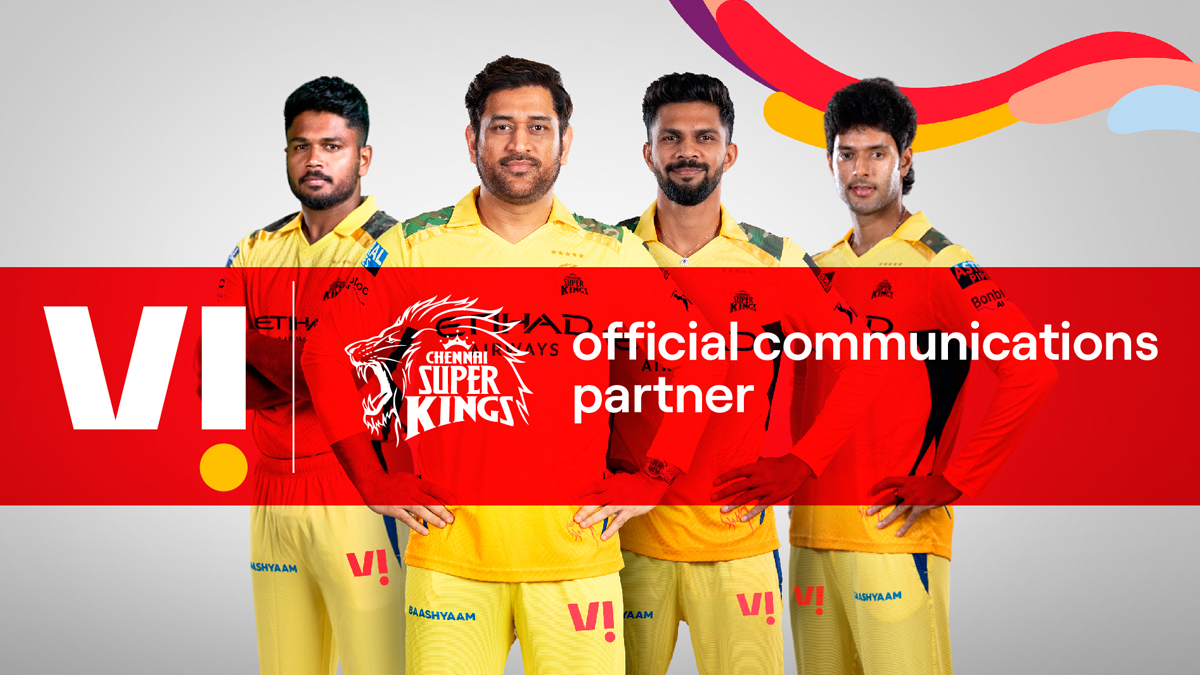
MUMBAI: Vi just bowled a googly of a partnership because when connectivity meets CSK, even the boundary rope feels like a strong signal. Vodafone Idea (Vi) has announced a multi-year partnership with Chennai Super Kings (CSK), naming itself the Official Sponsor for the upcoming IPL season and beyond. The deal, unveiled on 6 March 2026, will see Vi’s logo feature on the leading leg of the CSK playing uniform for the next three years.
The collaboration extends across digital platforms, in-stadium touchpoints and fan experiences, including on-ground activations, exclusive meet-and-greet opportunities, official signed merchandise and match ticket access for Vi users. A key focus is grassroots development through close work with the Super Kings Academy, supporting young cricketers boys and girls aged 6 to 23 with training and growth opportunities.
Vi chief marketing officer Avneesh Khosla said, “Cricket is deeply woven into India’s social and cultural fabric, creating shared experiences that unite communities across the country. Our partnership with Chennai Super Kings represents a powerful coming together of shared values passion, performance, and resilience.”
Chennai Super Kings managing director KS Viswanathan added, “We are delighted to welcome Vi to the Super Kings family. Vi’s strong digital reach and youth connect align perfectly with our vision of building deeper engagement with fans and aspiring players alike.”
The tie-up comes as Vi looks to deepen cultural relevance and strengthen fan connections through robust connectivity, while CSK continues its legacy of nurturing talent and delivering memorable moments on and off the field.
In a league where every run counts, Vi and CSK aren’t just playing the game, they’re building the stands, the academy and the conversation that keeps cricket alive long after the stumps are drawn.

Sports
IPL 2026 shows widening gap between CTV and TV advertising trends
Ecom leads CTV with 39 per cent, 30 plus shared categories, distinct advertiser mix.
MUMBAI: If cricket is the same on every screen, advertising clearly isn’t. A new analysis by TAM Sports reveals a widening gap between Connected TV (CTV) and linear television advertising during IPL 2026, with brands and categories playing very different innings across platforms. On CTV, digital-first categories dominated. E-commerce media, entertainment and social media led with a commanding 39 per cent share, followed by e-commerce services at 11 per cent. Smartphones and cars each accounted for 6 per cent, while air conditioners contributed 4 per cent highlighting a strong tilt towards tech-led and high-consideration categories.
Linear TV, in contrast, leaned heavily into mass-market staples. Mouth fresheners topped the chart with 14 per cent, closely followed by e-commerce services at 13 per cent. Financial institutions held a 6 per cent share, while paints and e-commerce wallets each stood at 5 per cent, reflecting a more traditional advertising mix.
The divergence extends to advertisers as well. On CTV, Star India (JioHotstar) led with a dominant 39 per cent share, followed by Google at 17 per cent. Havells India, Renault India and Reliance Consumer Products rounded out the top five with smaller shares. Linear TV saw Google in the lead at 12 per cent, with Reliance Consumer Products at 10 per cent, followed by Vishnu Packaging and Havells India at 6 per cent each, and K P Pan Foods at 5 per cent.
Despite these differences, there is some overlap. The study identified 30 plus common categories and 25 plus common advertisers across both platforms, based on 22 matches analysed. Shared categories included e-commerce media, e-commerce services, mouth fresheners, paints and cars, while common advertisers featured Star India (JioHotstar), Google and Reliance Consumer Products.
Yet, exclusivity tells the sharper story. CTV saw over 20 exclusive categories and 30 plus unique advertisers, including smartphones, credit cards, fast food outlets and hotels, with brands such as Renault India, Tata Motors and Voltas featuring prominently. Linear TV, meanwhile, had 15 plus exclusive categories and 20 plus advertisers, including chocolates, jewellery, perfumes and mortgage loans, with names like Cadbury India, Skoda Auto and Amul in the mix.
The findings point to a structural shift in how advertisers are approaching big-ticket sporting events. While linear TV continues to deliver scale and familiarity, CTV is emerging as a playground for digital-native categories and more targeted brand storytelling.
In the IPL’s advertising game, it seems the format may be the same but the strategy is anything but uniform.