GECs
TV Viewing: Reasons for shifting loyalty


TV Pulse 2005, the annual research initiative put together by the Joint Industry Body (JIB) and Tam Media, series continues with the paper – TV Viewing: Reasons for shifting loyalty.
This paper was presented by Tam India at the ESOMAR Asia-Pacific conference March 2005 in Tokyo.
One of the problems facing research users the world over is the lack of a holistic outlook towards the research objective. The research world is generally divided into Quantitative and Qualitative researchers and research users have to then contend with putting two and two together to draw insights. The two research methods have their own language and emphasis that have evolved over time for eg: the emphasis on Randomness and Representativeness in Quantitative research studies and Purposiveness and Participation on the Qualitative end.

For some time now, Tam India has been conducting experiments in order to capitalise on the inherent strengths of both research types and deliver one holistic reading to the user. In order to do this, a unique approach which to the authors‘ knowledge has not been used before, was used.
To illustrate the new process, the launch of Indian Idol was used as a test case to find out what were the casual factors behind a home finally shifting to or even to sample a new disruptive programme. The process involves requesting ex-panelists to be part of an observation and depth-interview study. The panelist, of course, were at some time yielding minute-to-minute Tam data, so information gained at this stage meant that a common sample yielded both quantitative and qualitative insight allowing a broadcaster to study the ‘why‘ behind past viewing patterns and use the learnings so gained for future planning.
The following is a small glimpse into the work that the paper showcased:
At each stage of the analysis, quantitative and qualitative insights were merged, the segmentation exercise being a case in point. The qualitative phase of the study pointed to three logical segments:
- Early Adopters
- Gradual Shifters
- Non-shifters
A study of the channel migration patterns of the two extremes: The Early Adopters and Non-Shifters, is a study in contrast.
There were several insights that emerged from the analysis. In terms of targeting for promotions, the study can be summarised as per the following chart:

Essentially, the study found that Youth were the biggest influencers for a home to break its loyalty and shift to a disruptive programme. The Males on account of their being the Remote-Processors were an important element in the shifting process. Due to reasons such as ‘Wanting to break the housewife‘s loyalty‘ and other family dynamics, the Male supported the Youth in the shifting process. The housewives, of course, wished to continue watching their existing programme and hence were resistors to the disruptive programme.
In fact, one of the key things that has worked (given in the full paper) is the scheduling of the disruptive programme on Thursday and Friday that affected viewing dynamics in the home finally leading to loyalty disruption.







GECs
EPIC Company unifies all brands under single EPIC identity
IN10 Media rebrand aligns TV, digital and films into one ecosystem
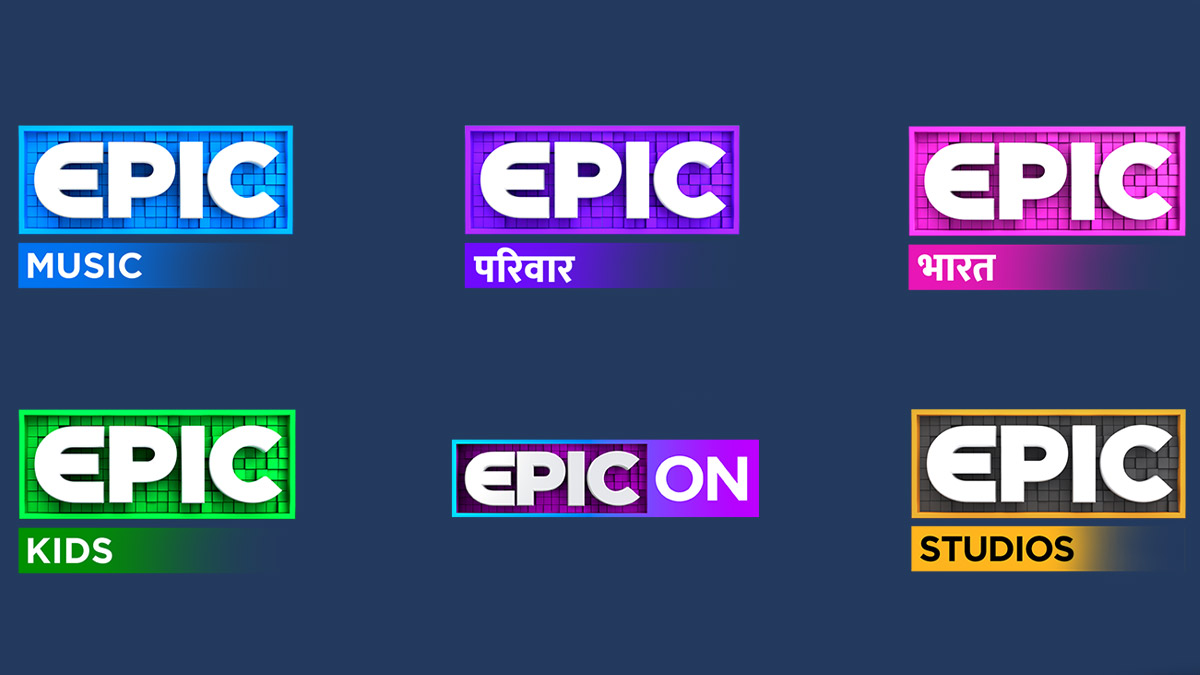
MUMBAI: The EPIC Company, formerly known as IN10 Media Network, has announced a sweeping brand consolidation, bringing its television channels, digital platforms and content IPs under a single identity, EPIC.
The move is aimed at simplifying the company’s structure while creating a more connected content ecosystem spanning television, digital and films. By aligning multiple verticals under one umbrella, the company is looking to present a sharper, more cohesive face to both audiences and partners.
As part of the transition, several channels have been rebranded to align with the EPIC identity. EPIC will now operate as EPIC TV, while Nazara becomes EPIC Bharat, Filamchi is now EPIC Bhojpuri, Gubbare transitions to EPIC Kids, and ShowBox is reintroduced as EPIC Music. Ishara will continue under the identity EPIC Parivaar, maintaining its core positioning.
The company has also refreshed EPICON, its streaming platform, to reflect a more unified and modern brand experience. The overhaul is designed to improve content discovery and create a seamless experience across platforms.
This consolidation follows the recent launch of EPIC Studio, a unified production arm that brings together Juggernaut Productions and MovieVerse Studio, as the company expands its footprint across films, OTT and television.
The EPIC Company managing director Aditya Pittie said, “As our scale has grown, it has become important to simplify how we operate and how we present ourselves to the ecosystem. This consolidation gives us a clearer, more future-ready structure to partner, invest, and build at scale, while ensuring that for viewers, the experience is more seamless and intuitive.”
With the rebrand, The EPIC Company is positioning itself as a platform-agnostic content network, focused on scale, simplicity and integrated storytelling. By bringing everything under one banner, it is aiming to make its content universe easier to navigate and harder to ignore.






