News Broadcasting
The LGBT challenge for Indian TV & cinema

It’s said that a country’s art and culture reflect its plight in the best way. At the present time its TV and films that have become the biggest platform to showcase the visual arts. And in the present situation when the lesbian, gay, bisexual, transgender (LGBT) community is facing a tough time after the Supreme Court reinstated that gay sex will remain a criminal offence, it seems so apt.
On Wednesday, the Supreme Court gave a severe blow to the largely-closeted homosexual community in the world’s largest democracy. It overturned a 2009 ruling by Delhi’s High Court, which had lifted a ban on gay sex between consenting adults that dates back to 1861. According to SC, only parliament can now change the penal code. Under Section 377 of the Indian Penal Code (IPC), sexual activities “against the order of nature” – including homosexual acts – are a criminal offence.
The law says: “Whoever voluntarily has carnal intercourse against the order of nature with any man, woman or animal, shall be punished with imprisonment for life, or with imprisonment of either description for term which may extend to ten years, and shall also be liable to fine.”
While the law has can be extrapolated to cover even heterosexual couples indulging in oral or anal intercourse, it’s the folks with alternate sexual orientation (the LGBT community) that are the most troubled.

Apparently, if we look back, we would realise that "mainstream" commercial TV and cinema (whicht are not just the most disposable form of art in the country, but also the most common source of entertainment across masses) are mostly devoid of any content that features the LGBT community.
 |
|---|
|
'Maryada…lekin Kab Tak' featured a gay couple but the main plot overshadowed this sub-plot
|
While in the world cinema space, we have had aesthetically and artfully shot films like Brokeback Mountain,All About Love, Another Country among many others, in India, the ones that feature gay relationship are either very caricaturish in nature (like Dostana that largely made fun of a gay relationship), or aren’t promoted enough to reach the masses.
Films like Fire by Deeepa Mehta, My Brother Nikhil and I Am by Onir, one of the short films in Bombay Talkies by Karan Johar and Dunno Y…Na Jaane Kyun have tried to bring up the topic to the fore, but our country’s film certification board hasn’t let them reach the audience the way they were supposed to. Others like Girlfriend sank without a trace as most of the scenes were just meant to provide cheap thrills rather than focusing on the issue. There have been many other independent films, like You Can't Curry Loveabout an Indian gay, Vikas who works in London that has won awards and acclaim at international film festivals but in India remain confined to the certain sections.
 |
|---|
|
Mitchell and Cameron in 'Modern Family'
|
The situation on TV seems to be even worse. While the world TV is opening up to a cross-section of issues, we seem to be lagging far behind with most of our shows still featuring the saas-bahu sagas.
So if, internationally, we have shows such as Mom and Dads, an Israeli series involving a menage-a-trois between two gay men – Ima and AbaZ and the mother of their child; Modern Family, a comedy that tastefully puts across the relationship of a gay couple; The New Normal that follows a wealthy Californian gay couple – Bryan (Andrew Rannells) and David (Justin Bartha) – who have a child through a surrogate mother; Sean Saves the World about a gay father and his teenaged daughter; and The Fosters produced by Jennifer Lopez featuring a lesbian couple and their three kids, airing on TV, in India, we can hardly recall anything similar.
While there’s no serial featuring a gay couple in the lead plot, even the side-kicks who have portrayed gay characters haven’t been fleshed out well. One of the first official gay characters was Petha, portrayed by Deven Bhojani in Tara almost two decades ago, that even a hardcore TV viewer would hardly be able to recall. Maddy in Jassi Jaisi Koi Nahi portrayed by Rajesh Khera was another character that showed an alternate sexuality openly, however it was more comical in nature and barely brought out the issues of the community.
 |
|---|
|
'Moms and Dads' is about a gay couple raising a baby
|
It was only in 2010 when Imagine TV reprised a popular Telugu serial Rakth Sambandham that dealt with the character of a closeted eunuch, the industry had thought that Indian TV is coming of age. But unfortunately, the serial, Rakt Sambandh starring Dhruv Bhandari and Sriti Jha, didn’t work its magic on the audience and met with a natural death very soon.
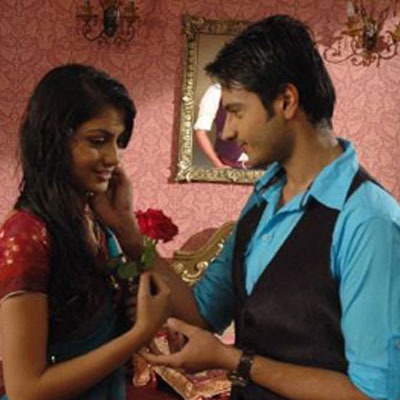
Another show, Maryada…Lekin Kab Tak had a strong sub-plot featuring a gay relationship portrayed by actors Dakssh Ajit Singh and Karaan Singh. But that too didn’t make much difference as it was overshadowed by the main storyline.
At a time when the entire country is debating on what could be done to protect the rights of the LGBT community and is suggesting various measures from bringing in young leaders and disowning the judiciary, shouldn’t the creative industry instead of shouting and screaming on social-media platforms come forward and work towards putting the spotlight on this minor community whose members can now be labelled as criminals just because they love someone from the same sex!





News Broadcasting
CNN-News18 rolls out Battle for the States ahead of key polls
Multi-format election coverage tracks voter mood across five battleground states
NEW DELHI: CNN-News18 has launched a special election programming initiative titled Battle for the States, as India gears up for high-stakes Assembly elections across West Bengal, Tamil Nadu, Kerala, Assam and Puducherry.
Built around the theme ‘Road to Power’, the multi-format coverage aims to follow the entire electoral journey, from campaigning and polling to results and government formation. The network is leaning into on-ground reportage and data-backed storytelling to decode voter sentiment across regions where local issues often shape the narrative.
The programming line-up includes ‘Vote Tracker’, a three-part series developed in collaboration with survey agency Vote Vibe. The show blends survey insights with expert commentary and field reporting, using augmented reality graphics to present complex electoral data such as vote share, seat projections and leadership preferences in a more accessible format. It will air every Monday evening until April 6.
Adding a cultural lens to political reporting is ‘So Saree!’, a ground-driven segment where women anchors travel across constituencies dressed in traditional handwoven sarees from each state. The format uses attire as a storytelling device, highlighting regional identity while capturing grassroots voices.
Meanwhile, ‘Unfiltered Kaapi’ and ‘Chai-Niti’ bring a more conversational tone, drawing inspiration from everyday political discussions in tea stalls and coffee corners. These segments aim to break down key issues through candid, fast-paced exchanges between anchors and reporters, tailored to regional sensibilities.
For viewers seeking deeper insights, the weekend docuseries ‘Reporters Project’ takes a longer view, with correspondents travelling across constituencies to map voter concerns and political shifts on the ground.
“Elections are about people, their aspirations, identities and the issues that matter to them, and every state tells a different story,” said CNN-News18 editorial affairs director Rahul Shivshankar. He added that the initiative focuses on understanding “the sentiment on the ground and what’s driving voter choices”.
Echoing the emphasis on credibility, Network18 CEO – English and business news Smriti Mehra said the network aims to combine on-ground reporting with data-led insights to deliver clear and timely coverage as the elections unfold.
With a mix of data, culture and grassroots reporting, CNN-News18 is positioning Battle for the States as a comprehensive window into one of India’s most closely watched electoral cycles, where every vote carries a story waiting to be told.