Connect with us

MAM

India leads emerging trends in internal communication, Nexticshift  study finds

Study highlights AI, scale and pressure as key drivers

Published

on

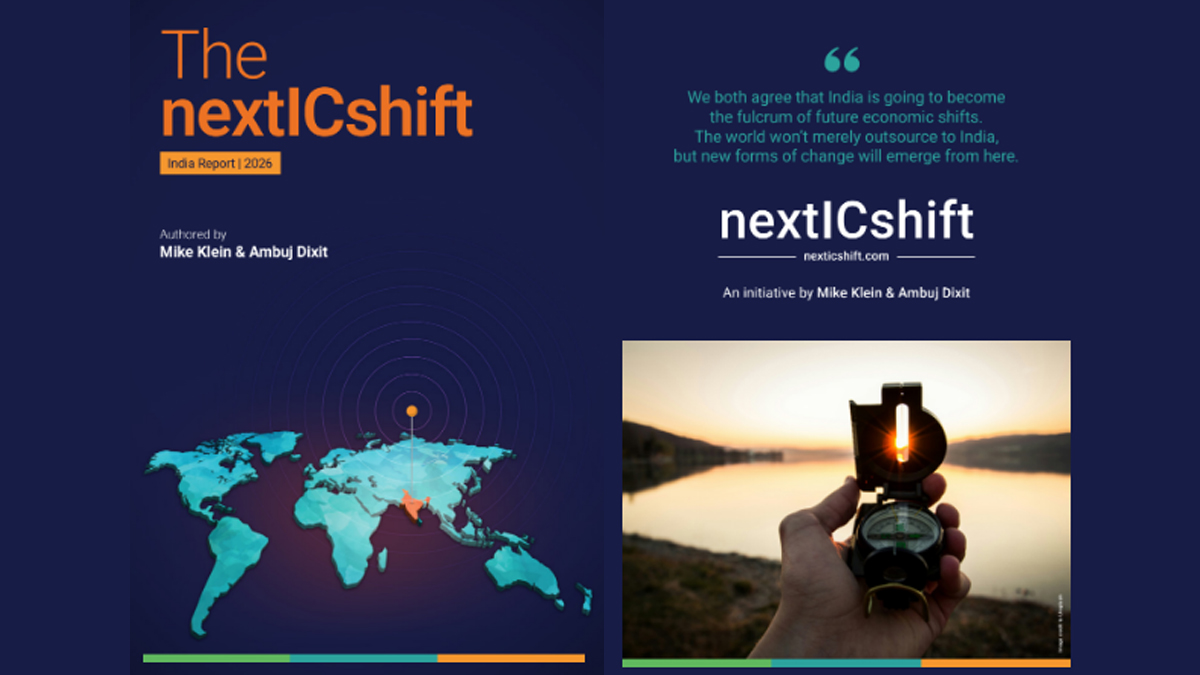
INDIA: India is emerging as an early signal market for the future of workforce and internal communication, according to a new study released under the Nexticshift initiative, which argues that the country is beginning to shape trends other markets will face next.

The report challenges the assumption that Indian internal communication practices merely follow western models. Instead, it finds that India’s scale, speed and pressure-filled operating environment are pushing organisations to adopt more pragmatic, outcome-driven approaches, accelerated by artificial intelligence and demographic change.

With an estimated workforce of nearly 640 million, larger than that of the EU, the US and the UK combined, India represents one of the world’s most complex communication environments. Fewer legacy systems, a younger workforce and rapid, necessity-led AI adoption are reshaping how organisations connect people, priorities and purpose.

Advertisement

The study is based on a five-city listening tour conducted across Mumbai, Delhi, Bengaluru, Hyderabad and Pune in November and December 2025. Researchers held 60 in-depth conversations with chief communication officers, senior internal communication leaders, global capability centre executives, academics and practitioners.

The report was led by Europe-based practitioner Mike Klein, and Ambuj Dixit, based in Mumbai, drawing on nearly five decades of combined experience across corporate, agency and consulting roles.

Its central finding is that intensifying commercial and delivery pressures, combined with limited budgets and resources are forcing internal communication teams to prioritise effectiveness over activity. The function is shifting away from culture-building alone towards enabling clarity, coordination and risk management across large, fast-moving organisations.

Advertisement

As AI compresses timelines and accelerates decision-making, the value of internal communication is increasingly measured by outcomes rather than volume. Routine work is being automated, freeing teams to focus on sharper leadership messaging and more memorable communication as competition for employee attention rises.

“India offers a compressed view of the conditions many organisations globally are only beginning to experience,” said Klein. “That makes it an important place to understand where internal communication is heading.”

“This research is not about best practices or benchmarks,” said Nexticshift co-founder Dixit. “It is about listening carefully to practitioners and recognising how the function is being reshaped by real operating pressure.”

Advertisement

Positioned as an industry resource rather than a prescriptive playbook, the report argues that internal communication is becoming a strategic capability, central to organisational resilience and performance, rather than a support function focused on managing employee sentiment.

Click to comment

Leave a Reply

Your email address will not be published. Required fields are marked *

MAM

VML India lands two finalist spots at Cairns Hatchlings 2026

The Mumbai agency is back in Australia with two teams, a UN brief and 24 hours to impress

Published

on

MUMBAI: VML India is heading to Australia again. The Mumbai-based creative agency has secured two finalist spots at the Cairns Hatchlings 2026 competition, one in the Audio category and one in Design, making it the only Indian agency to have reached the finals in both editions of the contest since its launch in 2025.

Four people will make the trip. Senior copywriter Shilpi Dey and senior art director Raj Thakkar will compete in Audio. Art directors Shabbir and Shruti Negi will go head-to-head with the world’s best in Design. The finals take place at the Cairns Convention Centre from 13th May, culminating in an awards ceremony on 15th May.

The work that got them there is worth examining. For the Audio category, Dey and Thakkar tackled a brief for LIVE LIKE MMAD with a campaign called Inner Voice, Interrupted. Using spatial audio techniques, the campaign recreates the overwhelming self-doubt that descends after a long workday, physically panning negative thoughts left and right before cutting the noise entirely to reveal a confident inner voice. Strategically targeted at commuters via Spotify during evening rush hours, the campaign reframes the hours after work as an opportunity for personal growth and charitable action.

Advertisement

For the Design category, Shabbir and Negi worked on a brief for Canteen’s Bandanna Day, a campaign highlighting how cancer pushes teenagers out of their own defining moments. Using a pixelated design language to create stark contrast between a blurred world of isolation and a focused world of connection, the campaign, titled The Flipside of Cancer, shows teenagers fading into the background of birthdays, skateparks and school proms. As a Canteen bandanna appears, the blur flips and the teenager snaps back into sharp focus.

Kalpesh Patankar, group chief creative officer of VML India, made no attempt to disguise his satisfaction. “We are immensely proud to see our teams consistently excel on the Cairns Hatchlings platform since its inception,” he said. “They have masterfully tackled challenging briefs across diverse categories, demonstrating both layered storytelling and a unique creative approach. This exceptional teamwork is truly inspiring.”

Dey and Thakkar, returning to the finals after last year’s run, were candid about the demands of the audio medium. “It’s one of the most demanding mediums, where we only have a few seconds to capture a listener’s world with sound alone, so absolute clarity is essential,” they said. “The true measure of creative work is its ability to create positive change, and our audio submission was made to help those who need it most while encouraging people to silence the inner voices that hold them back.”

Shabbir and Negi, competing in Design for the first time, described the experience as “a completely different beast.” “We see it as an opportunity to showcase our expertise, raise the bar, and challenge ourselves in new ways, while also learning from creative minds from across the globe,” they said.

In Australia, the four finalists will face a live 24-hour brief from the United Nations before presenting in a live pitch session. Twenty-four hours, one brief, one shot. VML India has been here before. It knows exactly what is at stake.

Advertisement
Continue Reading

Advertisement News18
Advertisement
Advertisement
Advertisement
Advertisement Whtasapp
Advertisement Year Enders

Indian Television Dot Com Pvt Ltd

Signup for news and special offers!

Copyright © 2026 Indian Television Dot Com PVT LTD