Executive Dossier
‘Success of a TV channel is to find homogeneity in a heterogeneous market condition’ : Sony Entertainment Television VP marketing Danish Khan


|
2009 was an eventful year for Sony Entertainment Television (SET). Languishing behind the top three Hindi general entertainment channels (GECs) and even newcomer NDTV Imagine, the channel relaunched with a bunch of differentiated shows. Some worked, some didn‘t, and the programming overhaul failed to lift the ratings to any position of strength.
Sony then discovered the value of its old horses in C.I.D and Aahat. The channel zoomed to a GRP (gross ratings point) of 180 and the road ahead looked promising with the launch of YRF shows. But the leading film producing house evoked a tepid response among audiences for its TV shows, leaving Sony in hunt for new properties that would aid it to move up the ratings ladder. 
Marketing several new properties and the relaunched channel has been a challenging task under these circumstances.
In an interview with Indiantelevision.com‘s Anuradha Ramamirtham, Sony Entertainment Television VP marketing Danish Khan talks about the strategies that Sony adopted during this period as it searched for width and depth of reach across markets.
Excerpts: The GECs were in a growth mode last year and the leadership battle became intense. Marketing, thus, became much more strategic and key to a channel‘s fortune. Sony was clearly on the growth path and we were able to build the brand with high impact campaigns for our bigger properties like Indian Idol 4, Dus Ka Dum, Bhaskar Bharti, Aahat -the all new series and Iss Jungle Se Mujhe Bachao. We also rejuvenated the brand CID. All these shows were successfully marketed in challenging times and conditions.
SET has existed as a brand for long and our aim was to refresh the look and feel of the channel. The relaunch wasn‘t just of getting a bunch of new shows to appear on the channel; it was also about refreshing the channel‘s identity. While we retained the logo, we went for a new packaging and brand identity. On the programming front, we retained some of our old properties like CID, Boogie Woogie and Comedy Circus and introduced some new fiction shows including Bhaskar Bharti and Ladies Special. This helped us in improving the channel‘s ratings by over 150 per cent over a nine-month period. The channel‘s marketing budget stayed almost flat. We were fortunate in that for the first half of the year, the media cost was stagnant due to recession. We also changed our media buying mix a bit by increasing our exposure to low-cost mediums like digital and experiential marketing. We could have a similar impact at lesser cost. The marketing was much more rigorous and we did all to stretch the value of every rupee that we spent. With the TAM panel expanding, it‘s going to be a challenge not only for us but for all marketers in the channel space. Thankfully, we have a strong distribution network. In 2003, when Tam was moving to smaller cities and towns, Sony was the fastest to reach to new markets and develop a strong brand affinity. With the new markets opening up, it will be a good opportunity for us. The tier I cities and metros are mature markets and are organised in nature. In these markets, there are multiple media options available to reach to the consumer like availability of FM stations and organised outdoor media. Consumers in these markets are early adopters to new trends and there are huge amounts of touch points available to reach out to them. Hence, these markets are easier to monitor.
These markets are, however, cluttered. The challenge here is not restricted to reaching to the consumers but also creating a high impact as they are bombarded today with hundreds of messages. In addition to availability of multiple media options, the markets have also become expensive. So, the challenge is both being impactful and cost effective.
The smaller markets are not organised. There is lesser number of touch points and everyone wants to reach there. Experiential marketing works wonder in small towns if it is sprinkled with mass media applications. Consumers here are fresh to meeting celebrities and such activities are hugely accepted and help in creating the right buzz.
Recession or no recession, television is the most cost effective medium for marketers. Thankfully, we have a very robust network with five performing channels; these form the base for all our marketing plans. Outside television, we use different mediums. In 2009, Internet and mobile (digital medium) were used more judiciously to reach to the youth who are tech savvy. Also, experiential marketing (BTL activities) was pushed hard last year and they yielded good results.
Like television, most categories and brands today have a pan India presence. TV is increasingly becoming relevant across categories as its spreads out both geographically and demographically. Like any other marketer, Sony is also keen on small towns. Besides, the channel enjoys a robust distribution platform across India. How do you address such a heterogeneous market? The success of a television channel is to find homogeneity in a heterogeneous market condition. In India, the markets which we cater to are extremely heterogeneous in nature. A Punjab market, for example, will think and behave differently than a Maharashtra market which, in turn, will be different from Uttar Pradesh. But there are certain universal themes that work across markets. The content and communication has to be based on this. Media behaviour and mediums can differ. As far as the message is concerned, it should always be built around something that works universally. That applies to successful shows as well; they have messages that are universal.
It was challenging to work on the YRF shows. These are early days yet and the five weekend shows have started attracting a definite set of loyal audiences. We are doing a lot of on-air promotions and experiential marketing to build the popularity for these shows. |






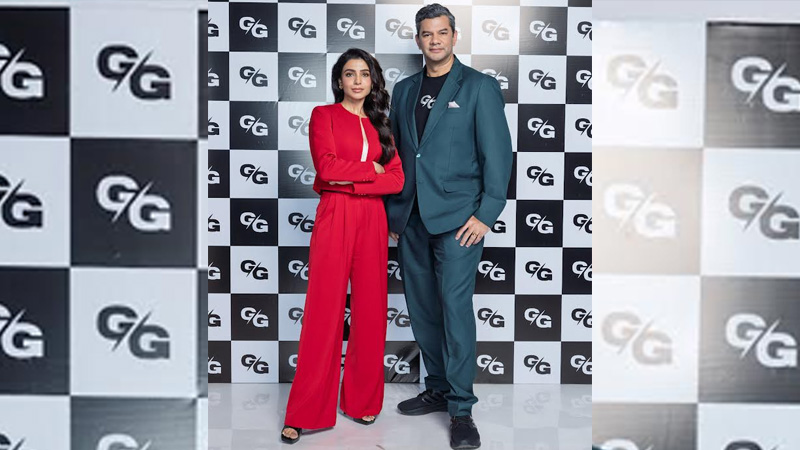
MUMBAI: Game faces on, pressure high India’s gaming ambitions are levelling up. Good Game, billed as the world’s first as-live global gaming reality show, has officially launched in India with a bold mission: to crown the country’s first Global Gaming Superstar.
Blending esports with mainstream entertainment, the show brings together competitive gaming, creativity and on-camera performance in a format that tests more than just joystick skills. Contestants will be judged on gameplay, screen presence and their ability to perform under pressure, reflecting how gaming has evolved from pastime to profession and pop culture currency.
Fronting the show are three high-profile ambassadors: actor and entrepreneur Samantha Ruth Prabhu, Indian cricket star Rishabh Pant, and gaming creator Ujjwal Chaurasia. The winner will take home Rs 1 crore ($100,000) among the largest prize pools for any Indian reality show along with the chance to represent India on a global stage.
Backed by a planned annual investment of up to Rs 100 crore, Good Game is also courting brand partners, promising a minimum reach of 500 million among India’s core youth audience. The creators position the show as a bridge between entertainment and interactive culture, offering long-format content, community engagement and commercial scale.
Auditions are now open to Indian citizens aged 18 and above, inviting amateur and professional gamers, creators and performers alike. Shortlisted candidates will be called for in-person auditions in Mumbai on 14 and 15 February, and in Delhi on 28 February and 1 March 2026.
With big money, big names and even bigger ambition, Good Game signals a shift in how India views gaming not just as play, but as performance, profession and prime-time spectacle.






