Fiction
Production houses feel the CAS crunch


Makers of software for the television industry will be among those to be hit by reduced budgets and a demand for more quality programming once CAS sets in. Indiantelevision.com talks to production houses across the country to gauge the mood in the fraternity.
Caught in the crossfire between the cable industry and the broadcasters‘ fraternity over the conditional access issue is that curious tribe that provides nearly all the software needed to glue the viewers to the telly – the production houses. With less than 50 days between now and the proposed implementation of CAS, apprehension, confusion and chaos among the software makers is escalating. One sentiment overrules all others – that of being the losers in the game, at least in the short term, as budgets stand poised for a nosedive.
Star India COO Sameer Nair recently told indiantelevision.com that “The TRP game will go out of the window post-CAS. If viewership goes down on account of chaos and confusion all around, then we will obviously stop and consider our decision to spend so much money on a particular show. Why should I buy an expensive movie if nobody is going to see it?” Needless to say, production houses are going to need to feel the heat of slashed budgets and tighter controls from broadcasters. WPP Marketing Communications CEO South Asia Andre Nair was equally vocal when speaking to indiantelevision.com recently when he said, “I think that production houses are in general overpaid.”  Production houses are thus wary of the impending doom which will invariably have an adverse effect on their business. “CAS will give the channel another means of putting pressure on production houses. Now to stand out in CAS, you will need to be specifically chosen by the viewer. So, obviously it is only the best – in terms of quality and production that will be chosen, so one cannot compromise on standards already set,” says InHouse Productions CEO Uday Sinhwala.
But for Sinhwala and others, CAS means big trouble more than anything else in the short term. “CAS is a black hole. There is no clarity whatsoever. Who is going to control it? How is it going to be implemented? Who is investing in the set top boxes? Is it going to be a centralised technique? These are some of the many questions which are yet to be answered,” laments Sinhwala. Aditya Singh of Contiloe Films is equally vocal. “There have been talks about CAS but the fact that it is finally happening is hitting us now. Every action has a reaction. In my view, since everything is so sudden the aftereffects are bound to be drastic. As a production house, we will be following the wait-and-watch procedure as we did not have much time to mull over it and chalk out a strategy. Although the implementation is early and should have been thought over thoroughly, nevertheless it is a step in the right direction. The cable operators had been holding both the channels and the viewers to ransom for quite some time now.”
Meanwhile Ektaa Kapoor, creative head of the production house which has most of its soaps scaling high on the TRP-Balaji Telefilms, also opines that though CAS is drastic step it opens a lot of possibilities. According to her, CAS should be first tried and tested in one city, then gradually moved on to more cities, and so on. There should be a scheme implemented wherein no subscriber pays more than Rs 150 a month. Kapoor also add that the production houses are unlikely to suffer as the channels will pay if they want quality stuff and therefore decent quota of advertisers. The production houses otherwise might just opt for Sahara or Doordarshan.
Shobhna Desai Productions Story & Creative head Vipul Amrutlal Shah says, “Everybody has been kept in the dark as far as CAS is concerned. It is going to have an adverse effect on the channels and consequently on production houses as well. The government should reconsider its decision to implement CAS in all four metros at one go, instead it could be done in a phased manner city by city. CAS will kill ad revenues which comes from these four metros and this will damage the backbone of the industry. It is not a happy situation to work in. Lots of peoples‘ hopes and careers‘ are at stake here.” Although Shah does not admit it, sources say that one of his serials Lakeerein which was supposed to have gone on air by now, has been kept on hold by Star Plus, as the channel is waiting to see how CAS unfolds.
With most of the production houses having no other option but to wait and watch, UTV COO, TV content, Manish Popat presents an alternative viewpoint “We are watching the developments and are talking to our customers and our affiliates too. Everyone is aware of the short term challenges that CAS could throw up if it is not rolled out in a pragmatic manner. But, the fact remains that everyone is in favour of CAS and its implementation. Depending on how the the CAS roll out unfolds, I think everyone knows the mid and long term gains of the post CAS era. There might be some short term pain or cost for this long term gains.” Commenting on the effect that CAS could have on the production values and quality of the serials/soaps, Popat says that, “Broadcasters in a post CAS era will be more and more conscious that only great programming will get customers to ask and pay for their bouquet. There will lead to a pronounced need for “tentpole” programming – where there will be more of a pursuit for those two or five programmes that will set the channel apart; or where consumers are willing to pay for that “particular” channel. There will be only a greater demand for better programming post CAS.”
Agrees BAG Films‘ CMD Anurradha Prasad. “CAS is certainly good for the industry, but in the short term it would have telling effects on private producers whose margins are likely to get squeezed by at least 15 per cent straight-away. Though no formal communication has yet come from broadcasters like Star, for which we do programming, informally it has been conveyed to us that post-CAS the commissioning rates would fall.” “At present, we do programming for Star, Sahara Manoranjan and Doordarshan (Rozana, a news and current affairs programming under the sponsored slot on DD2) and talks are on with Sony as also Zee for some possible programming. I think it would be slightly unfair to penalise the private producers — and that too immediately — just because a certain section of the industry feels that CAS is not being sought to be implemented in the right way,” she adds.
Contrary, to this viewpoint, serial director Girish Mallik , currently doing Sahara‘s Mission Fateh says, “With the channels made to face the heat after they become pay, the first reaction will be tightening the producer‘s allowance. Naturally, a producer will, instead of reducing his income, cut corners in the production. You will have more and more of average daily soaps being churned out. As of the actors‘ pay cut, the newer and inexperienced lot is bound to feel the pinch. The big actors might just switch to cinema”. Will CAS result in channels toning down their fees to various production houses? Will soaps be forced to stick to home ground rather than foreign locales? Will characters on television be forced to wear less expensive outfits rather than the seemingly expensive designer wear and consequently be forced tone down the loud make-up adorned by them? One can only wait and watch. |









Fiction
Banijay merges with All3Media in $6.65 billion deal
Marco Bassetti will lead the combined company as CEO
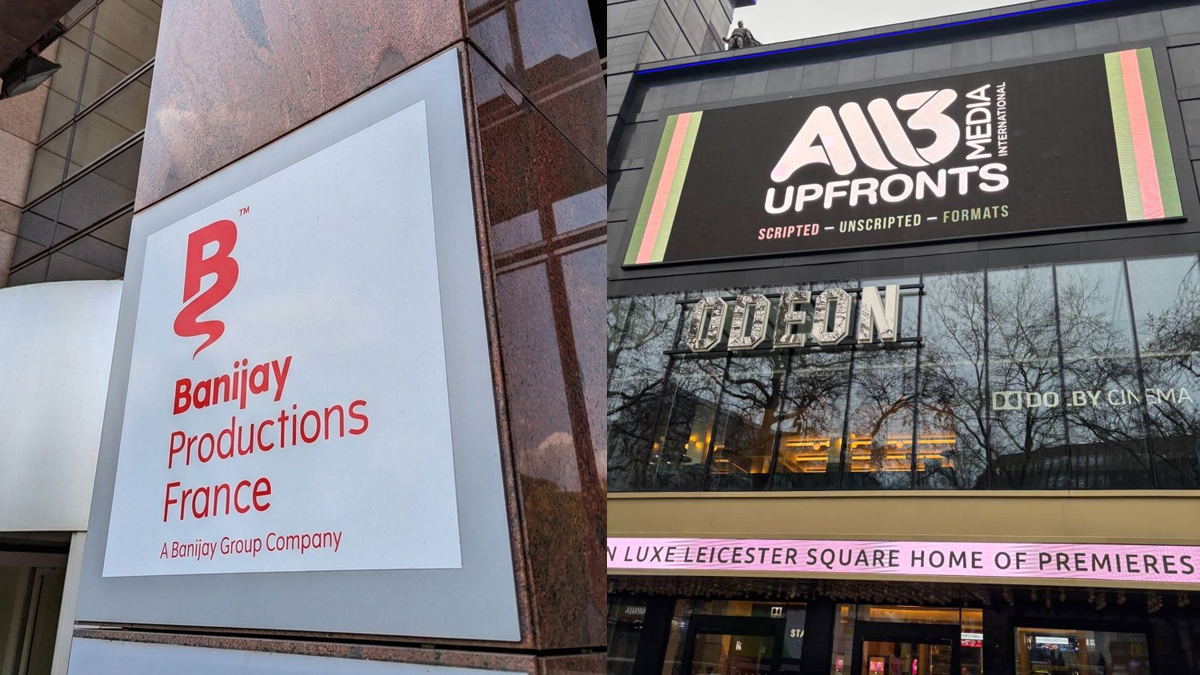
PARIS: Six years after acquiring Endemol Shine at the height of the pandemic, Banijay has struck again. The European production heavyweight is merging with All3Media in a deal that will create a television titan with $6.65 billion in revenue and redraw the contours of a fast-consolidating market.
The combined company will trade under the Banijay name and be owned 50 per cent each by Banijay Group and RedBird IMI, which acquired All3Media in 2024. The transaction is expected to close by autumn, subject to regulatory approvals.
Banijay Entertainment CEO Marco Bassetti, will take the top job at the enlarged group. All3Media CEO Jane Turton becomes deputy CEO. RedBird IMI CEO Jeff Zucker will serve as chairman.
The logic is scale. Broadcasters are commissioning less, streamers are tightening budgets and global buyers are fewer but bigger. Against that backdrop, heft matters. The merged entity will generate roughly $6.65 billion in revenues based on 2024 figures, giving it sharper elbows in rights negotiations and deeper pockets for franchise-building.
“Entrepreneurialism, ambition and creativity” remain core to Banijay’s DNA, Bassetti said, flagging plans to invest more heavily in new intellectual property, live events and emerging platforms. Turton struck a similarly bullish note, pointing to All3Media’s journey from a 2003 start-up to a global supplier of hit formats and high-end drama.
Between them, the two groups control a formidable slate. Banijay’s catalogue spans MasterChef, Big Brother, Survivor, Black Mirror, Peaky Blinders and Deal or No Deal. All3Media’s labels include Studio Lambert, producer of The Traitors and Squid Game: The Challenge; Two Brothers, behind The Tourist; and Neal Street, currently producing the forthcoming Beatles biopics directed by Sam Mendes for Sony.
The back catalogue is equally muscular. Banijay Rights holds some 220,000 hours, while All3Media International adds around 35,000 hours, forming one of the industry’s largest libraries.
Banijay, controlled by French entrepreneur Stéphane Courbit and listed in Amsterdam, counts more than 130 production companies across 25 territories. All3Media operates over 40 labels, with strong positions in the UK, US and Germany. The enlarged group will also lean into live entertainment, building on Banijay’s Balich Wonder Studio, which produced the opening ceremony of the Milan-Cortina Winter Olympics, and the Independents.
The deal marks a shift in tone. As recently as October, Bassetti suggested that mergers and acquisitions were not a priority. But the drumbeat of consolidation has grown louder. Mediawan has moved for Peter Chernin’s North Road. David Ellison’s Paramount has agreed to a $110 billion takeover of Warner Bros, with plans to combine HBO Max and Paramount plus. ITV has explored selling its media and entertainment arm to Comcast-owned Sky, though talks have reportedly slowed.






