Executive Dossier
‘POP works best when used with other mediums but it has to be cohesive’ : Martin Kingdon – Point of Purchase Advertising International UK & Ireland director general


Point of Purchase Advertising International (POPAI) is the only non-profit trade association exclusively committed to serving the interests of all those involved in POP advertising including brands, retailers, designers, producers, materials and technology suppliers and agencies.
The company also helps keep abreast of public policy issues; promotes the POP industry through public relations and its members at National and International conferences.

POPAI (UK and Ireland) director general Martin Kingdon was in India recently for the POP Asia conference, where he spoke on the brand and retail approaches to POP in UK. Martin has been responsible for the management and development of POPAI and the POP industry in the UK.
Indiantelevision.com’s Hetal Adesara caught up with Kingdon on the sidelines of POP Asia to get a low down on the POP industry in UK.
Excerpts:
|
What’s your take on the Point-of -Purchase industry, globally? Globally POP is growing quite rapidly. Historically, marketers and brands have found it very easy to spend money on television. However, as time has gone on and particularly with the advent of digital TV and the proliferation of the TV channels, it’s become harder for Brands to work out where to spend money. With this the marketers have now started to identify that where, genuinely, does a shopper makes the buying decision. Is it all pre planned or is it in the stores. I have believed this for years that the store is very important.
To me the over all ‘retail environment’ is important because POP as a standalone is quite narrow. The whole experience delivered to the customer holds the key. |
|
By and large POP in India is understood as a ‘poster & dangler campaign’? Is there anything else to it in the western markets? Absolutely. Here I am talking about a range of things. First of all permanent displays, generally to display products well. They apply both as a stock keeping function as well as a brand reminder in a broader sense. Then there are semi permanent units designed to last for 12-16 weeks at the site with possibly flexible and replaceable graphics. And then we have these temporary units like the posters, the hanging signs, danglers or pre standing units designed to last about 3-4 weeks for specific promotions. Now with this kind of flexibility Brands realize that they can back-up their campaigns. POP works best when used with other mediums but it has to be cohesive. It helps in reinforcing the awareness that a brand is trying to build up. |
|
How does one leverage POP for brand building? POP’s position as far as brand building is concerned has not really been understood. Everyone who has worked on the basis of mass media, and historically they are correct, the answer to this is at the moment I don’t know how much POP relates to brand building but I am certain that it is far more now than it was five years ago. POP is not very good at providing a complete image of a brand; rather it’s for reinforcing the image and taking cues from it. The point is that mass medium like TV provides longer memories vis-?-vis POP. |
|
How do you engage technology with POP? What is your perspective on the technology trends in the industry? One of the things that have happened quite recently is that there is obviously far more impact now with interactive displays. These displays are linked up to computer programs and systems. POP has not move tremendously fast as regards innovation. What I believe as the key thing happening is the increase in the use of innovative interactive systems.
The trend that we are observing in the US and UK is towards a far greater adoption of permanent displays rather then semi permanent or temporary displays. This will provide a joint benefit of brand reinforcement with a flexibility of message communication. In UK we are witnessing a revolutionary growth in digital screen technologies. |
|
How does one measure the return on investment (ROI) in POP advertising? The practical way to measure ROI in POP advertising is to run small scale control experiments in retail stores. If this is carried out in a large scale then the cost would go up and then it wouldn’t make sense.
One has to negotiate with brands, the retailers, manufacturers, independent research companies to carry out a test. What we do is shortlist around 20 stores and divide them into two groups of 10 and study them for about a month.
The first group will remain as it is and the second group will have POPs installed in them. Sales are then monitored and all aspects of seasonality are excluded. The effect is then measured after cutting out the costs of Pops, design, installation, placing it with the retailer and the disposal costs if any. The gross sales figures are then measured. This will give us an idea of the role that Pops played in the stores. |
|
This year Point of Purchase Advertising International (POPAI) is scheduled to conduct a study on the total digital industry in the UK and Europe. When is it likely to be out? The digital market has seen a tremendous growth in the last two or three years. We will be looking at how the industry is going to develop, the innovations that are taking place in the space and the retailers’ attitude towards it. We will also be estimating the value of the digital market in two ways:
The study will be released in two phases. We are launching the prospectus next week and the first phase of the study will be rolled out in June this year. The second phase will be launched in the latter half of 2005. |




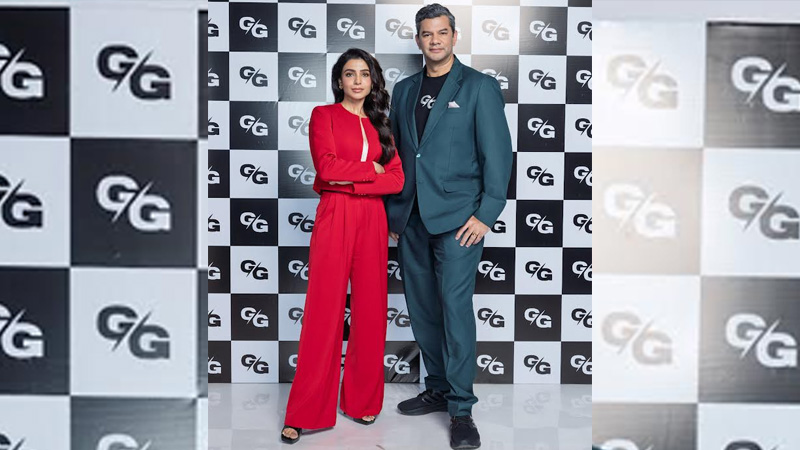
MUMBAI: Game faces on, pressure high India’s gaming ambitions are levelling up. Good Game, billed as the world’s first as-live global gaming reality show, has officially launched in India with a bold mission: to crown the country’s first Global Gaming Superstar.
Blending esports with mainstream entertainment, the show brings together competitive gaming, creativity and on-camera performance in a format that tests more than just joystick skills. Contestants will be judged on gameplay, screen presence and their ability to perform under pressure, reflecting how gaming has evolved from pastime to profession and pop culture currency.
Fronting the show are three high-profile ambassadors: actor and entrepreneur Samantha Ruth Prabhu, Indian cricket star Rishabh Pant, and gaming creator Ujjwal Chaurasia. The winner will take home Rs 1 crore ($100,000) among the largest prize pools for any Indian reality show along with the chance to represent India on a global stage.
Backed by a planned annual investment of up to Rs 100 crore, Good Game is also courting brand partners, promising a minimum reach of 500 million among India’s core youth audience. The creators position the show as a bridge between entertainment and interactive culture, offering long-format content, community engagement and commercial scale.
Auditions are now open to Indian citizens aged 18 and above, inviting amateur and professional gamers, creators and performers alike. Shortlisted candidates will be called for in-person auditions in Mumbai on 14 and 15 February, and in Delhi on 28 February and 1 March 2026.
With big money, big names and even bigger ambition, Good Game signals a shift in how India views gaming not just as play, but as performance, profession and prime-time spectacle.







