Sports
SPORTEL Monaco 2026 | Open water swimming needs immersive storytelling to win viewers: Lisa Pou
At SPORTEL Monaco 2026, the Monegasque swimmer discusses broadcast shortcomings, digital visibility, sponsorship challenges and why the sport must evolve without losing its identity


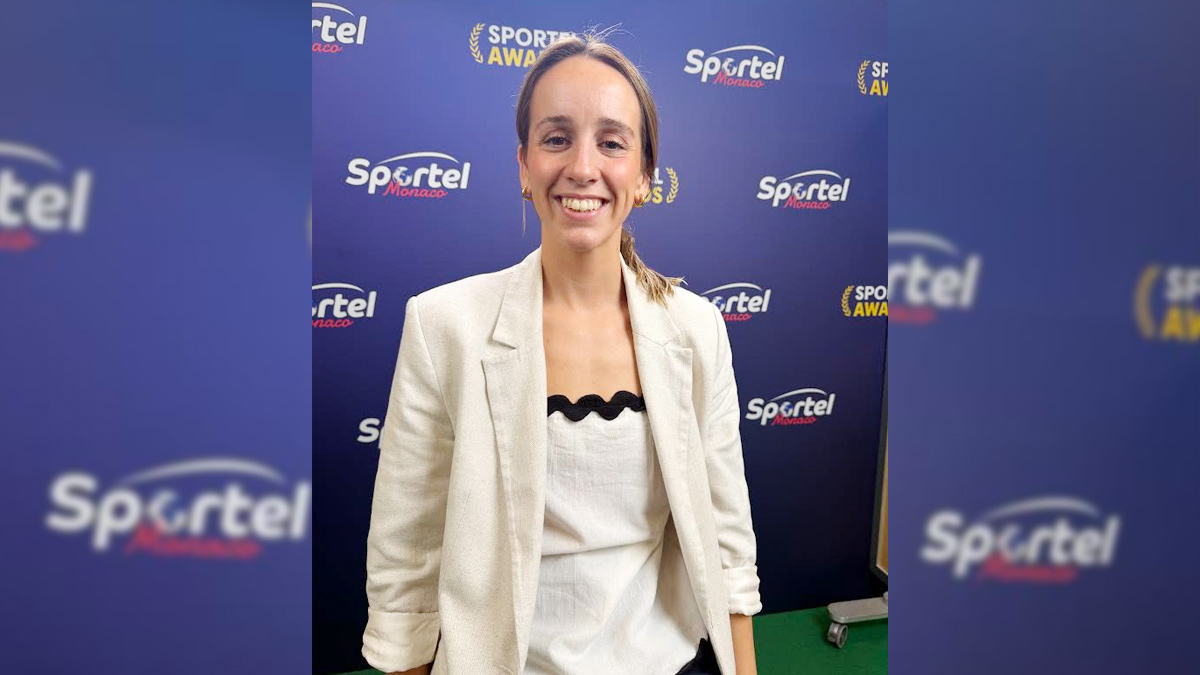
MONACO: For a sport that demands extraordinary physical endurance, open water swimming faces an equally difficult challenge outside the water: keeping audiences engaged. Unlike pool competitions, where viewers can easily identify swimmers and follow their progress, open water races unfold across vast stretches of sea, rivers and lakes, often lasting nearly two hours. Translating that experience into compelling television remains a challenge for broadcasters and sporting bodies.
Monegasque open water swimmer Lisa Pou believes the answer lies in immersive storytelling, greater production accuracy and helping audiences understand the athletes and the competition.
Speaking exclusively to Indian Television.com on the sidelines of SPORTEL Monaco 2026, Pou discussed the changing relationship between sport and media, the importance of digital visibility for less mainstream disciplines and how broadcast considerations are increasingly influencing sporting formats.
Pou, who previously represented France and won bronze in the team event at the 2018 European Aquatics Championships, switched her sporting nationality to Monaco in 2023. She is also a jury member at the SPORTEL Awards.
Bringing viewers closer to the water
For Pou, the fundamental problem with broadcasting open water swimming is that much of what makes the sport exciting is difficult to communicate visually.
A race can last approximately two hours, during which swimmers must constantly adapt to changing conditions, monitor competitors and make tactical decisions. However, audiences unfamiliar with the discipline may see little more than a group of athletes moving through the water.
“I think it’s important to bring closeness with the swimmers so that viewers can become immersed in what we do,” she said.
Pou suggested that broadcasters could draw inspiration from cycling, particularly the Tour de France, where commentary, athlete identification and storytelling help viewers remain invested in lengthy competitions.
Using different coloured swimming caps to distinguish competitors, displaying swimmers’ names during coverage and introducing audiences to their personal journeys could make races easier to follow.
“Bring the viewers almost into the water. Immersive is the key word,” she said.
She added that it was disappointing when athletes dedicated considerable time to training but struggled to gain recognition because audiences had limited opportunities to appreciate their performances.
Why understanding the sport matters in broadcast production
Beyond visual storytelling, Pou believes production teams must possess a strong understanding of the sport they are covering.
Recalling the European Championships held in Paris in August, she expressed dissatisfaction with certain aspects of the television coverage.
Although the visuals were appealing, she felt the production lacked the precision necessary to communicate the competition effectively.
Open water swimmers wear electronic transponders that help track their progress as they pass designated checkpoints. The information is subsequently used to identify competitors and communicate their positions during a live broadcast.
However, Pou recalled instances when the numbers displayed during coverage did not accurately correspond with the swimmers passing through the checkpoints.
“You have to be really precise every time because if there is chaos, you cannot bring viewers. It is already difficult to understand what is happening in the water. If you make mistakes, it won’t work,” she explained.
For her, the solution requires camera operators and production personnel who understand the athletes, race dynamics and critical moments of the competition.
She acknowledged that filming techniques have improved over the years. Previously, broadcasters sometimes relied on cameras positioned onshore even when swimmers were competing considerable distances away, making it difficult for audiences to follow the action.
Today, cameras mounted on boats allow production teams to get closer to competitors, although she believes there remains considerable scope for improvement.
Her observations highlight a broader issue for sports broadcasters: production quality is not merely about capturing attractive images but also about ensuring that viewers can accurately understand the competition unfolding before them.
When television begins influencing sporting formats
One of Pou’s more significant concerns is how the pursuit of audience engagement is influencing the evolution of open water swimming itself.
She pointed to the removal of the traditional 25km event from the World Aquatics Championships programme, describing the distance as an important part of the sport’s heritage.
A 25km race can last approximately five hours, presenting a considerable challenge for broadcasters attempting to retain viewers throughout the competition.
Pou believes the discipline has considerable potential to attract audiences interested in endurance events such as marathons and Ironman competitions, provided its physical and emotional demands are communicated effectively.
However, she acknowledged that longer races have struggled to translate into compelling television.
“Our sport is evolving with the media,” she observed.
While introducing formats that are more accessible to audiences could help attract new followers, Pou expressed mixed feelings about the loss of traditional events.
“In a way, it’s good, but in another way, we cut off the roots of open water because we couldn’t bring viewers to watch.”
She nevertheless believes newer race formats could help generate awareness and introduce the sport to audiences who may not previously have followed it.
Concerns over the sport’s future at major competitions
Pou also expressed concern about the long-term position of open water swimming within major international sporting events if its audience does not continue to grow.
Referring to discussions surrounding the Brisbane Olympics, she raised the possibility of sporting programmes evolving to accommodate disciplines with strong domestic appeal, including lifesaving sports in Australia.
She noted that athlete participation limits at the Olympic Games can make the inclusion of additional disciplines complicated.
Her comments reflected concern about the potential implications for open water swimming rather than confirmation of any decision to remove it from the Olympic programme.
For Pou, the broader issue remains the same: the sport must find ways to attract audiences and demonstrate its appeal.
Although she believes visibility has improved, she acknowledged that athletes, organisers and sporting bodies are still searching for effective solutions.
Social media is now fundamental to sponsorship
The growing influence of digital platforms was another recurring theme during the conversation.
Asked how important media presence is for athletes competing in less mainstream disciplines, Pou described it as essential, particularly in the current digital environment.
“Everyone is connected to social media, so it can be a plus for the less-viewed sports. The more people you have watching, the more sponsors you can get,” she said.
She believes platforms such as Instagram and other digital channels provide smaller sports with opportunities to reach audiences beyond their traditional following.
For athletes, that visibility can translate into greater recognition and improved opportunities to attract commercial partners.
Discussing whether open water swimming is consumed primarily through social media, linear television or OTT platforms, Pou pointed to the audience engagement generated through World Aquatics’ social media presence.
However, she acknowledged that the sport has yet to identify a definitive approach to significantly expanding its following.
According to Pou, athletes, organisers and World Aquatics personnel continue to discuss ways to improve audience engagement.
While she could not identify a particular age group dominating the sport’s viewership, she observed that open water swimming attracts audiences across generations, although its overall following remains relatively limited.
The challenge, she believes, is not necessarily a lack of interest in the sport but finding ways to communicate its appeal to people who do not already understand it.
Emotion is what makes sports content compelling
As a SPORTEL Awards jury member, Pou also offered insight into what she considers important when evaluating sports content.
Her primary consideration is emotion.
“I am looking for emotions, specifically. I think this is what can bring viewers to the images,” she said.
However, she emphasised that capturing emotion alone is insufficient. The way those emotions are presented determines whether audiences can connect with them.
For open water swimming, this is particularly relevant because much of an athlete’s physical and mental struggle is not immediately apparent on screen.
Helping viewers understand the effort involved, the competitive stakes and the personal journeys of individual swimmers could create a more engaging viewing experience.
What broadcasters cannot always capture
Explaining the difference between competing in a swimming pool and open water, Pou highlighted the physical, mental and even spiritual dimensions of her discipline.
In a pool, athletes swim within designated lanes under relatively predictable conditions. Open water competitors, however, must adapt to their surroundings and the movements of other swimmers.
One race may involve large waves, another heavy rainfall that affects visibility, while strong currents can fundamentally alter race conditions.
“You have to adapt to the others, and you also have to adapt to the elements,” she explained.
The mental challenge is equally demanding.
During a race lasting nearly two hours, swimmers must maintain concentration despite physical exhaustion. A competitor accelerating unexpectedly can change the race, requiring an immediate response from the rest of the field.
Pou explained that losing focus, even briefly, could prove costly.
Yet it is precisely this unpredictability that makes the discipline appealing to her.
“What I like the most is really adapting to the sea, to the river, to the lake. It’s always different.”
For broadcasters, these changing conditions and tactical decisions also present opportunities to develop stronger narratives around the competition.
Representing Monaco on the international stage
Pou also discussed what representing a small nation such as Monaco means to her.
She acknowledged the support available to athletes through training infrastructure, professional staff and the wider sporting community.
She particularly highlighted Prince Albert II’s involvement in supporting Monegasque athletes and his presence at international sporting events.
According to Pou, having people within the principality actively encouraging its athletes provides an important source of motivation when competing internationally.
A message for India’s emerging open water swimmers
Turning to India, Pou expressed optimism about the country’s potential in open water swimming.
Having encountered Indian competitors during international events, she believes the country has the ability to develop further in the discipline.
Her advice to young swimmers looking to transition from pool competitions to open water was to remain committed to their goals while continuing to enjoy the sport.
“The most important thing is to take pleasure in what you do and always keep your goal,” she said.
For those who do not necessarily aspire to compete professionally, she encouraged swimming with friends and appreciating the opportunity to connect with nature.
Ultimately, Pou’s observations reflect a larger challenge confronting sports broadcasters and rights holders.
As sporting organisations compete for audience attention across television, streaming and social media, the presentation of a competition is becoming increasingly important to its commercial future.
For open water swimming, the challenge is to make its athletes, strategies and emotional intensity more accessible without compromising the endurance and unpredictability that define the discipline.
As Pou sees it, bringing audiences closer to the water could be the first step towards ensuring that more people understand why the sport deserves to be watched.