News Broadcasting
Mip Junior puts spotlight on VOD


CANNES: Mip Junior took off on 5 October at the tony Carlton Hotel in Cannes.
The spotlight was on children’s content as delegates discussed everything from tight budgets to the change in focus to Video on Demand (VOD) to the challenges and opportunities that lie ahead.
The first session ‘Money Matters: Finding Finance in New and Different Ways’, moderated by Debbie Macdonald consultant Debbie Macdonald and presided over by Snow River Media chief executive Angus Flethcher, concentrated on new business models, opportunities and challenges facing the independent creative and producing world.

“Technology has changed and so has the audience. The audience is moving dramatically from one platform to the other. There is an extraordinary revolution going on, and it’s exciting to be in the middle of that change,” said Flethcher, adding that though television could be scary, the good part is: “We can directly speak to our audience. Producers today need not make a half an hour or one hour series. Instead they can create a one minute video for the internet and get immediate feedback.”
He said content producers now had both newer entry points and people to talk to. Citing the example of Angry Birds, he elaborated: “The character was developed with a story, not as a series, but as a game, and it has done tremendously well.”
The first session stressed on the importance of the VOD platform. While it was the success of Netflix that made everyone think of VOD as a medium to reach out to audiences, BRB Internacional CEO Carlos Biern said, “Most important is the audience (kids), who can, with VOD, be glued to animation 24X7.”
Whereas the second session, ‘New Content Deal-Making: get the most of your VOD rights’, spoke about how the VOD platform could be utilised to reach out to audiences. Biern observed it could prove fruitful for advertisers as well while The Jim Henson Company executive vice president, global distribution Richard Goldsmith informed: “VOD is quickly becoming television. So while we look at VOD as a separate source of income, every time we have a conversation with channels, they also want to buy the VOD rights. This shows how important it is becoming for all of us.”
What emerged is that while Netflix and Amazon may continue to rule the roost, the remaining VOD players had to stand out from the crowd. “We want to become the only option in children’s tablets and smart phones. We all need to involve with our brands to be able to connect with our target group,” said Toon Goggles managing director Stephen L Hodge.
The key takeaways of the talks seemed to be that every show will sooner than later turn into an app and that SVOD will soon replace standard linear television.






News Broadcasting
CNN-News18 to host Fury in the Gulf conclave on West Asia crisis
Three-hour summit to unpack geopolitical fallout and impact on India
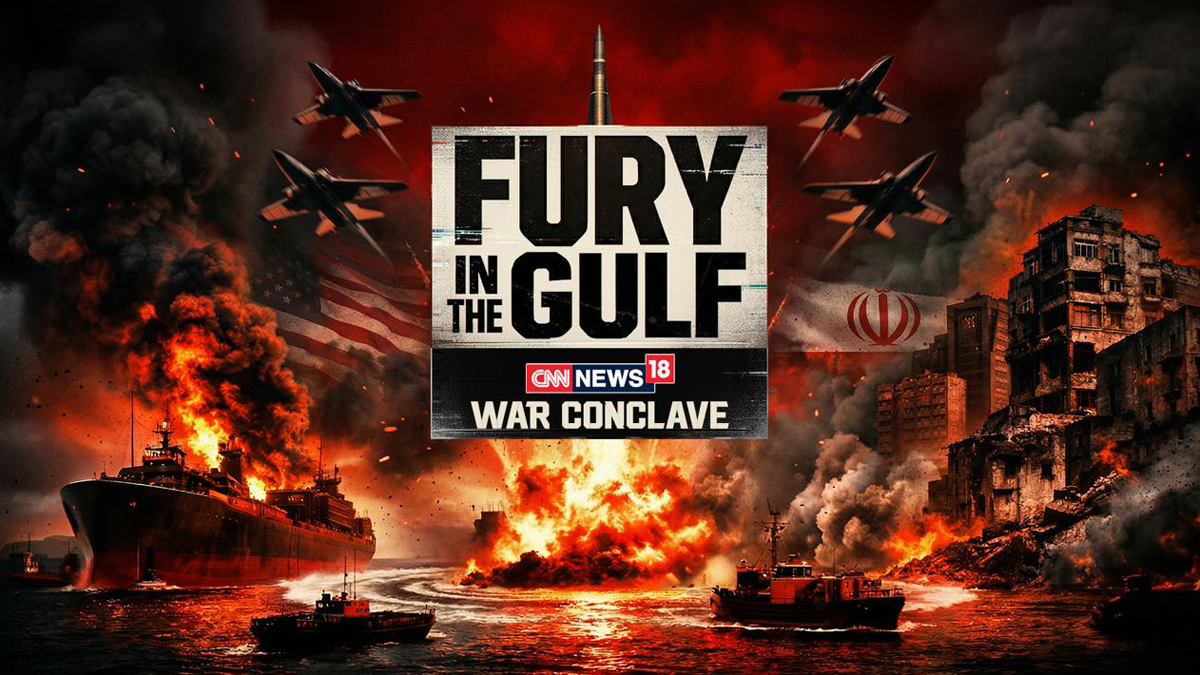
MUMBAI: CNN-News18 is set to host a special three-hour broadcast, Fury in the Gulf – War Conclave, on April 7, aiming to decode the escalating West Asia crisis and its far-reaching implications for India.
Scheduled from 4:00 PM to 7:00 PM, the conclave comes at a time when tensions between Iran and the United States are reshaping global geopolitics and triggering economic uncertainty. With India’s deep energy ties, trade links and large diaspora in the Gulf, the developments carry significant domestic relevance.
Built around the theme ‘Conflict, Consequences, and The Future,’ the programme will feature six curated sessions combining one-on-one interviews and panel discussions. The focus is to cut through the clutter and offer viewers a clearer understanding of the fast-evolving situation.
Key sessions include ‘Diplomacy in Times of War’ featuring Shashi Tharoor, and ‘World After the Iran Conflict’ with voices such as Ram Madhav, Reuven Azar, representatives from the European Union and the Iranian Deputy Envoy. Another session titled ‘Another Dunkirk?’ will bring together K. J. S. Dhillon and Jitin Prasada among others.
CNN-News18 editorial affairs director Rahul Shivshankar said, “In times of war, clarity becomes the most powerful tool. Fury in the Gulf – War Conclave brings together credible voices to address the questions and confusion that arise amid an overwhelming influx of information.”
He added that the initiative is aimed at delivering “facts, perspective, and insight” at a time when misinformation can easily cloud public understanding.
Echoing the sentiment, CNN-News18 CEO– English and business news Smriti Mehra said the conflict marks a defining global moment, with consequences that extend well beyond the region. She noted that the conclave seeks to present the crisis with “depth, nuance and responsibility” so audiences can better grasp its real-world impact.
As geopolitical tensions continue to dominate headlines, the conclave positions itself as an attempt to bring order to the noise, offering viewers a structured, insight-led look at a complex and rapidly shifting global situation.






