Documentary
MIFF panel says documentaries turn memories into living archives of history
Filmmakers discuss storytelling, research and preserving culture through documentary cinema


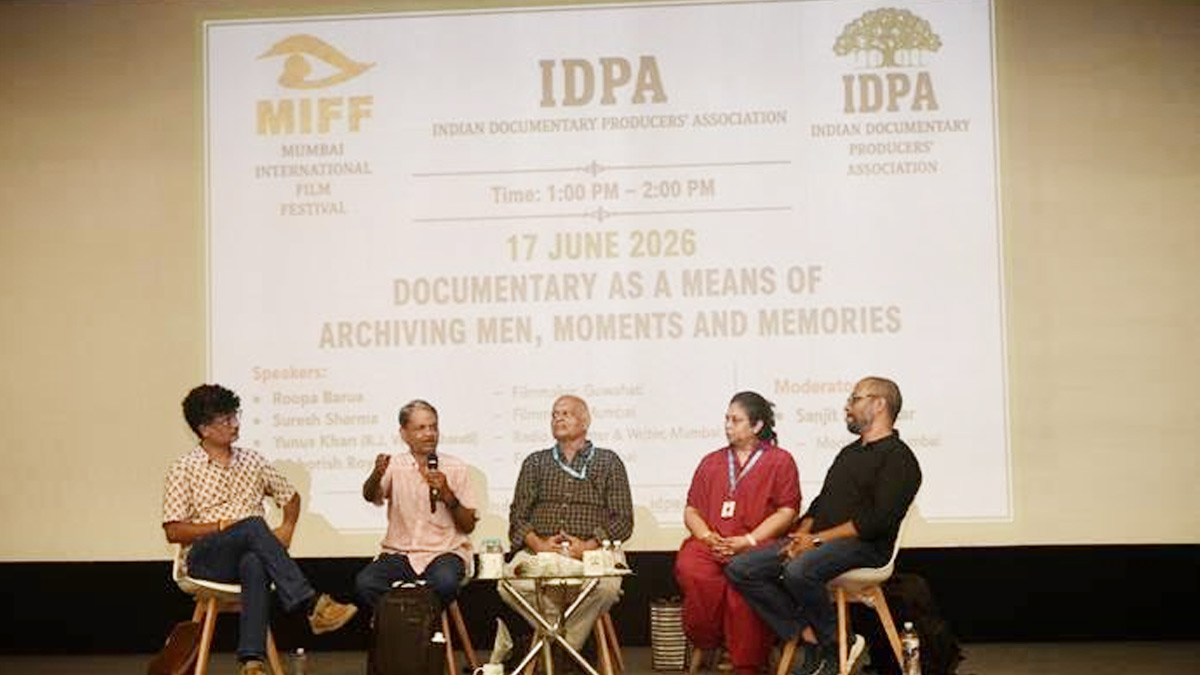
MUMBAI: Every documentary begins with a story, but often ends up preserving a piece of history. That was the central theme of an open forum hosted by the Indian Documentary Producers Association during the 19th edition of the Mumbai International Film Festival (MIFF) 2026, where filmmakers and media professionals reflected on the role of documentaries as living archives of people, places and pivotal moments.
Titled Documentary as a Means of Archiving Men, Moments and Memories, the session brought together Suresh Sharma, Sanjit Narwekar, Roopa Barua, Yunus Khan and Amrish Roy Choudhury for a wide-ranging discussion on storytelling, research and preservation.
The panellists agreed that documentaries serve a purpose far beyond recording events. By capturing lived experiences, cultural traditions and social realities, they create enduring records that future generations can revisit and learn from.
Speaking during the session, documentary filmmaker Suresh Sharma emphasised the importance of research, fact-checking and strong narrative construction. He noted that documentaries become powerful when they capture the struggles and emotional realities of their subjects, adding that unexpected discoveries during research often reshape a film’s direction.
One of the session’s most memorable observations came from film critic and historian Sanjit Narwekar, who described documentary filmmaking as a series of “happy accidents”. He explained that the search for one story frequently uncovers another, encouraging filmmakers to remain open to fresh perspectives and evolving narratives.
Filmmaker Roopa Barua reflected on how films initially made to tell local stories often gain long-term archival value. Referring to her works Riders of the Mist and Daughters of the Polo God, she stressed the importance of engaging storytelling and thoughtful pacing in maintaining audience interest while preserving cultural memory.
Highlighting the contribution of audio storytelling, radio presenter Yunus Khan spoke about the role of radio documentaries in safeguarding India’s cultural heritage. He pointed to the work of Vividh Bharati in documenting artists’ journeys and preserving folk music, literature and regional traditions across the country.
The discussion also underscored the importance of archival resources. Filmmaker and writer Amrish Roy Choudhury highlighted the value of institutions such as the National Film Archive of India and stressed the need for rigorous verification when documenting historical subjects.
As the conversation unfolded, a common thread emerged: documentaries often outgrow their original purpose. What begins as a search for a compelling story can become an invaluable record of culture, memory and social change. The session concluded with an engaging audience interaction on documentary research, archival practices and the enduring importance of preserving memories through film.