Special Report
IPL lived up to the hype

|
|||

Still hung over. That is what many of those directly involved in putting together the greatest pop cricket spectacle ever staged are still feeling even a week after the first edition of the Indian Premier League (IPL) championship came to its heady climax.
The biggest cricket show on earth more than lived up to the expectations of those who invested in it. The public took to it, the corporates were sold on it, telecaster Sony hit pay dirt and the key individual behind it all – IPL chairman and commissioner Lalit Modi -won the grudging admiration of even his worst detractors. The fact that the event created a $2 billion market without a ball being bowled has been simply amazing.
Realms have already been written on how the perfectly packaged blend of highly competitive sport, merged with heady doses of ‘celebrity and entertainment masala‘, had the cinema, television and retail industries collectively reeling.
And the hype that was emanating out of India had its ripple effect across the globe. One could argue that it is linked to the fact that the Indian economy is increasingly being written and spoken about in the global press, but it is no small matter that virtually every big international publication did in-depth stories on the IPL speaks for itself. In Australia a million people watched the first match although it was past midnight there. UK‘s Setanta declared that its subscriber base has risen between 17-20 per cent on the back of the IPL. These are just some of the heady stats that the IPL has thrown up.

Read on for a reality check on the IPL from the point of view of the four key constituents – Sony, team owners, BCCI and the public.
Sony home safe and dry:
Ratings were what Sony was tracking and they held up throughout, delivering above expectations more often than not.
 Click for complete data |
Before the IPL started there was scepticism about how the event would fare. Even when the event initially delivered strong numbers there were doubts on whether the momentum could be sustained. Naysayers carped that the novelty might wear off, Australian players leaving would prove to be a dampener, etc.
This data though should silence them. Tam data c&s 4+ all India shows that the IPL managed to achieve an average of 4.7 over 57 matches on Max. This shows that viewer interest did not flag. The opening match between Kolkata and Bangalore got the highest rating of 7.19. Next came a crucial match between Chennai and Mumbai which managed a rating of 6.58. A match between Kolkata and Delhi as the race for the semi final spots hot up managed a rating of 6.27. Both the semi finals also got ratings of over 6.
This though, is less than half of the ratings that the semi final and final of the T20 World Cup got. India‘s semi final against Australia managed to get a rating of 13.4 while the dream final against Pakistan managed an astronomical 15.9. What this shows therefore, is that there is still plenty of room for improvement as far as the IPL is concerned.
An average of 31 million people tuned in for each of the IPL semi finals. The figure is the same as that for the 2007 World Cup final that was played between Australia and Sri Lanka. One must keep in mind though that the World Cup also aired on DD. For the T20 World Cup final on ESPN, the reach figure was 48 million. IPL reached 99 million viewers throughout its duration.
 |
It is also pertinent to note that the importance of matches also played a role in the IPL ratings. For instance Mumbai‘s last match against Bangalore only got a rating of 2.13. This was because the Reliance owned franchise was out of semi final contention by then.
The kind of ratings numbers that the IPL has delivered for Sony also means that it is ahead of the curve on its revenue targets as well.
Of the first year payout commitment of the $ 59 million to the BCCI for telecast rights, Sony‘s share was $ 55 million. Sony had built in a $ 4 million shortfall in the first year into its calculations. That seems to have changed with Sony president network sales, licensing and telephony Rohit Gupta expressing confidence that the network will at least be on break-even point once final calculations have been done. This is largely on the back of the huge response the event got from the viewing public. After its main inventory was sold out, the channel was able to jack up rates for the 200 seconds that it had in the bank for each match. “For the semi finals and final we sold at Rs 8-10 lakhs per 10 seconds. We have set a benchmark pricing for the second season,” asserts Gupta.
That assertion only reinforces the confidence Set India CEO Kunal Dasgupta essayed in an interaction with Indiantelevision.com before the IPL kicked off when he stated, “In the first five years we will make $100 million in profit. In the next five we will make half a billion. My ad sales will treble after five years.”
Team owners ahead of delivery curve:
For this year, the average expenditure per franchisee, according to Indian television.com calculations, was $ 17.5 million (the least being Jaipur‘s Rajasthan Royals at $ 15 million and the most being liquor tycoon Vijay Mallya‘s Bangalore Royal Challengers at $ 20 million). Considering that most team owners began this exercise factoring in the possibility of having to take a hit of anywhere between $ 3-7.5 million hit in Year 1, all of them (bar one) would be more than satisfied with what they have managed and the response the IPL has garnered thus far.
As of now, and depending on who you talk to, it is either Kolkata or Chennai that have likely hit break-even.
Kolkata was far and away the best managed as far as brand associations and merchandise sales were concerned but it was Chennai that was the most successful in terms of gate receipts.
Breaking down the numbers, GroupM ESP (consultants for Hyderabad‘s Deccan Chargers) managing partner Hiren Pandit states: “The franchises have received around $ 7.5 million from central revenues. In terms of local revenues (prize money, local sponsorship, gate receipts) Kolkata would have earned the most at $ 11 million while Punjab would have got the least at $ 5 million. Where Kolkata did really well was in sponsorship where it got $ 7 million.
“Bangalore would not have made much here as the UB Group was using it to push their own brands. In terms of losses I estimate that Bangalore lost around $ 10 million.” This loss, Pandit, is quick to point out, needs to be weighed against the kind of brand activation opportunities that will be available to the UB Group, going forward.
As for the smaller teams like Punjab and Jaipur, they would have struggled the most on both brand associations as well as gate receipts (as their grounds are small).
Public are loving it:
The response in the stadia was what no one was sure about, but by all accounts it has proved a big hit all across, even in the smaller centres.
Interestingly, it was Mumbai that had to go the furthest in its efforts to attract crowds. Why is that? Because Mumbaiites are the most spoilt for choice, in terms of avenues for entertainment. Additionally, commute times are the longest in Mumbai so for potential ticket buyers, logistics also plays a big part.
A stadium like Hyderabad on the other hand, gets to host a One Day International once in two years, if it is lucky. The IPL more than anything else is offering access to a whole new form of entertainment and the public is lapping it up.
What will clearly not work for any team though, is the traveling fan concept. Home games means just that – home games. India‘s geography simply does not allow for fans to travel with their teams.
The Future:
So what next for the IPL? Where does it go from here? At this stage it is all more talk than concrete plans but the intention is clearly to take the IPL global.
IPL governing council member IS Bindra, has been quoted as saying that the IPL is just the first step of a “grand vision” that will eventually lead to the birth of a network of similar franchise-based models across the major cricket-playing nations. That is something that WSG South Asia CEO Venu Nair endorses wholeheartedly. Going forward, Nair is in favour of cricket going the soccer route. In soccer, leagues are more important than countries. “Cricket should follow the same route to survive. At the moment you have some events like the Champions Trophy, which are useless.”
“You could (instead) have a World Cup preferably in the T20 format once in four years. The rest of the time league cricket could be played in different countries. What this would mean though is that other countries would have to set up strong leagues of their own. This would ensure that all the boards make money, which could then be used for the development of the game.. At the same time players would benefit, as financially there would be no need for most of them to play for more than five years. The current theory that one needs a 15 year career is outmoded. The ICC‘s role would still be to govern the game. Nobody loses out.”
An issue that franchisees will have to look at is to build loyalty among fans for a set of players. Another key thing for franchisees is gate receipts. Nair feels that more attention has to be paid to premium seating. “Abroad premium seating accounts for 40 per cent of gate revenue. At the moment though, only Chennai, Jaipur and Punjab have adequate facilities for premium seating. The rest of the franchisees will have to invest in this along with the state associations. The lack of adequate facilities and a high quality experience for those in the premium seating area is why Reliance reduced prices for the semi finals in Mumbai.”
In conclusion, whatever may be the postmortems different agencies engage in now that the event is done and dusted, it would be difficult to argue that any of the parties that chose to be associated with the event did not get more than their money‘s worth.
Team owners ahead of delivery curve:
For this year, the average expenditure per franchisee, according to Indian television.com calculations, was $ 17.5 million (the least being Jaipur’s Rajasthan Royals at $ 15 million and the most being liquor tycoon Vijay Mallya’s Bangalore Royal Challengers at $ 20 million). Considering that most team owners began this exercise factoring in the possibility of having to take a hit of anywhere between $ 3-7.5 million hit in Year 1, all of them (bar one) would be more than satisfied with what they have managed and the response the IPL has garnered thus far.
As of now, and depending on who you talk to, it is either Kolkata or Chennai that have likely hit break-even.
Kolkata was far and away the best managed as far as brand associations and merchandise sales were concerned but it was Chennai that was the most successful in terms of gate receipts.
Breaking down the numbers, GroupM ESP (consultants for Hyderabad’s Deccan Chargers) managing partner Hiren Pandit states: “The franchises have received around $ 7.5 million from central revenues. In terms of local revenues (prize money, local sponsorship, gate receipts) Kolkata would have earned the most at $ 11 million while Punjab would have got the least at $ 5 million. Where Kolkata did really well was in sponsorship where it got $ 7 million.
“Bangalore would not have made much here as the UB Group was using it to push their own brands. In terms of losses I estimate that Bangalore lost around $ 10 million.” This loss, Pandit, is quick to point out, needs to be weighed against the kind of brand activation opportunities that will be available to the UB Group, going forward.
As for the smaller teams like Punjab and Jaipur, they would have struggled the most on both brand associations as well as gate receipts (as their grounds are small).
Public are loving it:
The response in the stadia was what no one was sure about, but by all accounts it has proved a big hit all across, even in the smaller centres.
Interestingly, it was Mumbai that had to go the furthest in its efforts to attract crowds. Why is that? Because Mumbaiites are the most spoilt for choice, in terms of avenues for entertainment. Additionally, commute times are the longest in Mumbai so for potential ticket buyers, logistics also plays a big part.
A stadium like Hyderabad on the other hand, gets to host a One Day International once in two years, if it is lucky. The IPL more than anything else is offering access to a whole new form of entertainment and the public is lapping it up.
What will clearly not work for any team though, is the traveling fan concept. Home games means just that – home games. India’s geography simply does not allow for fans to travel with their teams.
The Future:
So what next for the IPL? Where does it go from here? At this stage it is all more talk than concrete plans but the intention is clearly to take the IPL global.
IPL governing council member IS Bindra, has been quoted as saying that the IPL is just the first step of a “grand vision” that will eventually lead to the birth of a network of similar franchise-based models across the major cricket-playing nations. That is something that WSG South Asia CEO Venu Nair endorses wholeheartedly. Going forward, Nair is in favour of cricket going the soccer route. In soccer, leagues are more important than countries. “Cricket should follow the same route to survive. At the moment you have some events like the Champions Trophy, which are useless.”
“You could (instead) have a World Cup preferably in the T20 format once in four years. The rest of the time league cricket could be played in different countries. What this would mean though is that other countries would have to set up strong leagues of their own. This would ensure that all the boards make money, which could then be used for the development of the game.. At the same time players would benefit, as financially there would be no need for most of them to play for more than five years. The current theory that one needs a 15 year career is outmoded. The ICC’s role would still be to govern the game. Nobody loses out.”
An issue that franchisees will have to look at is to build loyalty among fans for a set of players. Another key thing for franchisees is gate receipts. Nair feels that more attention has to be paid to premium seating. “Abroad premium seating accounts for 40 per cent of gate revenue. At the moment though, only Chennai, Jaipur and Punjab have adequate facilities for premium seating. The rest of the franchisees will have to invest in this along with the state associations. The lack of adequate facilities and a high quality experience for those in the premium seating area is why Reliance reduced prices for the semi finals in Mumbai.”
In conclusion, whatever may be the postmortems different agencies engage in now that the event is done and dusted, it would be difficult to argue that any of the parties that chose to be associated with the event did not get more than their money’s worth.
(Graphics and design by Kavita Sangoi)
Also Read:
Sony reaps IPL rewards for innovation, concerted effort
Indiantelevision.com’s interview with GroupM ESP managing partner Hiren Pandit




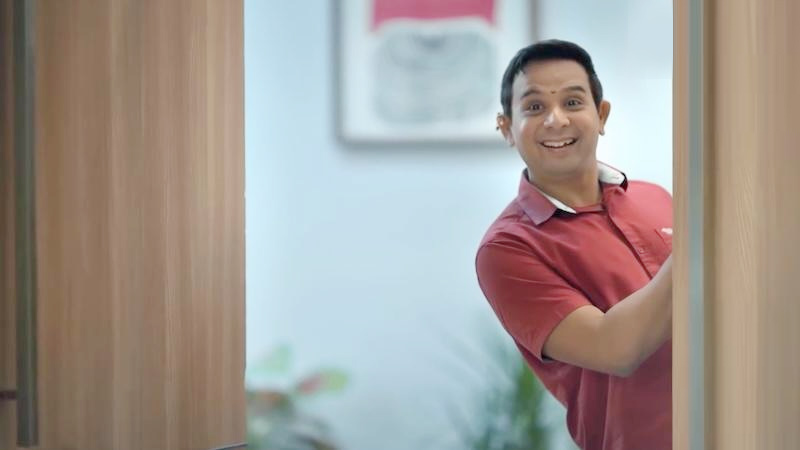
MUMBAI: Some friendships are made in heaven; others are coded in Mumbai. Hamara Vinayak, the first-ever digital original from Siddharth Kumar Tewary’s Swastik Stories, turns the divine into the delightful, serving up a story that’s equal parts start-up hustle and spiritual hustle.
Some tech start-ups chase unicorns. This one already has a god on board. Hamara Vinayak takes the leap from temple bells to notification pings and it does so with heart, humour and a healthy dose of the divine.
At its core, the show asks a simple but audacious question: what if God wasn’t up there, but right beside you, maybe even debugging your life over a cup of chai?
The show’s tagline, “God isn’t distant… He’s your closest friend” perfectly captures its quirky soul. Across its first two episodes, screened exclusively for media in Mumbai, the series proves that enlightenment can come with a good punchline.
The series follows a group of ambitious young entrepreneurs running a Mumbai-based tech start-up that lets people around the world book exclusive virtual poojas at India’s most revered shrines. But as their app grows, so do their ethical grey zones. Into this chaos walks Vinayak, played with soulful serenity and sly wit by the charming Namit Das, a young man whose calm smile hides something celestial.

He’s got the peaceful look of a saint but the wit of someone who could out-think your favourite stand-up comic. Around him spins a crew of dream-driven youngsters – Luv Vispute, Arnav Bhasin, Vaidehi Nair and Saloni Daini who run a Mumbai-based tech start-up offering devotees across the world the chance to book “exclusive” poojas at India’s most sacred shrines. It’s a business plan that blends belief and broadband – and, as the story unfolds, also tests the moral compass of its ambitious founders.
“The first time I read the script, I found the character very pretty,” Namit joked at the post-screening interaction. “It’s a beautiful thought that God isn’t distant, he’s your closest friend. And playing Vinayak, you feel that calm but also his cleverness. He’s the friend who makes you think.”
The reactions to the series ranged from smiles to sighs of wonder. Viewers were charmed by the show’s sincerity and sparkle, a quality that stems from its creator’s belief that faith can be funny without being frivolous.
Among the cast, Luv Vispute shines brightest, his comic timing adding sparkle to the show’s more reflective beats. But what keeps Hamara Vinayak engaging is the easy rhythm of its writing – one moment touching, the next teasing, always gently reminding us that spirituality doesn’t have to be solemn.
Luv spoke fondly of his long association with Swastik. “Since my first show was with Swastik, this feels like home,” he said. “Every project with them is positive, feel-good, and this one just had such a different vibe. I truly feel blessed.”
Saloni Daini, who brings infectious warmth to her role, added that she signed up the moment she heard the show was about “Bappa.”
“We shot during the Ganpati festival,” she recalled. “The energy on set was incredible festive, faithful, and full of laughter. It’s such a relatable story for our generation: chaos, friendship, love, kindness, and faith all mixed together.”

Vaidehi Nair and Arnav Bhasin complete the ensemble, each representing different shades of ambition and morality in the start-up’s journey. Their camaraderie is easy and believable, a testament to how much the cast connected off-screen as well.
This clever fusion of mythology and modernity plays to India’s two enduring loves, entertainment and faith. Mythology has long been the comfort zone of Indian storytellers, from the televised epics of the 1980s to the glossy remakes that still command prime-time TRPs. For decades, gods have been our most bankable heroes. But Hamara Vinayak tweaks the formula not by preaching, but by laughing with its characters, and sometimes, at their confusion about where divinity ends and data begins.
Creator Siddharth Kumar Tewary, long hailed as Indian television’s myth-maker for shows like Mahabharat, Radha Krishn and Porus, explained the show’s intent with characteristic clarity, “This is our first story where we are talking directly to the audience, not through a platform,” he said. “We wanted to connect young people with our culture to say that God isn’t someone you only worship; He’s your friend, walking beside you, even when you take the wrong path. The story may be simple, but the thought is big.”
That blend of philosophy and playfulness runs through the show. “We had to keep asking ourselves why we’re doing this,” Tewary added. “It’s tricky to make something positive and spiritual for the OTT audience, they’ve changed, they want nuance, not sermons. But when the purpose is clear, everything else aligns.”
For the creator of some of Indian TV’s most lavish spectacles, Hamara Vinayak marks a refreshing tonal shift. Here, Tewary trades celestial kingdoms for co-working spaces and cosmic battles for office banter. Yet his signature remains: an eye for allegory, a love for faith-infused storytelling, and an understanding that belief is most powerful when it feels personal.
Hamara Vinayak, after all, feels less like a sermon and more like a conversation over chai about what success means, what faith costs, and why even the gods might be rooting for a start-up’s Series A round.
As Namit Das reflected during the Q&A, “Life gives us many magical, divine moments we just forget to notice them. Sometimes even through a phone screen, you see something that redirects you. That’s a Vinayak moment.”
The series also mirrors a larger cultural pivot. As audiences migrate from television to OTT, myth-inspired tales are finding new form and flexibility online. The digital screen lets creators like Tewary reinvent the genre, giving ancient ideas a modern interface, without losing the emotional charge that’s made mythology India’s storytelling backbone for decades.
In a country where faith trends faster than any hashtag, Hamara Vinayak feels both familiar and refreshingly new, a comedy that’s blessed with heart, humour and just enough philosophy to keep the binge holy.
For a country where mythology remains the oldest streaming service, Tewary’s move from TV to OTT feels both natural and necessary. Indian storytellers have always turned to gods for drama, guidance and TRPs from Ramayan and Mahabharat on Doordarshan to glossy mytho-dramas on prime time. But digital platforms allow creators to remix reverence with realism, and in Hamara Vinayak, faith gets an interface upgrade.
The result is a show that feels like a warm chat with destiny, part comedy, part contemplation. And in an age of cynicism, that’s no small miracle.
As Tewary put it, smiling at his cast, “The message had to be positive. We just wanted to remind people that even in chaos, God hasn’t unfriended you.”
With 5 episodes planned, Hamara Vinayak promises to keep walking that fine line between laughter and light. It’s mythology with memes, devotion with dialogue, and a digital-age reminder that even the cloud has a silver lining or perhaps, a divine one.
If the first two episodes are any sign, the show doesn’t just bridge heaven and earth, it gives both a Wi-Fi connection.