Special Report
IPL is the name of the game

Three decades after Kerry Packer revolutionised cricket with the World Series, cricket stands on the threshold of another potentially disruptive revolution. On 18 April, the Board of Control for Cricket in India (BCCI) will unveil the Indian Premier League (IPL), a format the Indian board hopes will change the way Indians watch the game.
Instead of cheering the country, one will cheer city-based leagues. Eight teams – Jaipur, Mumbai, Mohali, Chennai, Hyderabad, Kolkata, Bangalore and Delhi – will take the field.
 Can this work? The answer is yes if one looks at the experience of the first mover in India – Essel Group’s Indian Cricket League. The ICL is currently holding its second event and is getting good visibility as matches are also being aired on Ten Sports. The on-ground attendance has also been decent, showing that if an event is well marketed there is scope. Considering that ICL has managed all this in the face of a take-no-prisoners onslaught by the Indian cricket board, what the officially sanctioned event might well deliver boggles the mind.
One must also note at the outset that IPL and ICL are possible because of the success of the T20 format. Initially there was some cynicism even within the BCCI as to how the new format would fare. The T20 World Cup, though, changed all that. With India winning, the viewership grew and the final scored a ratings of 9.81 TVR (Tam data, C&S 4+).

Broaden the game’s appeal: The aim of the IPL is to broaden the appeal of the game. Since matches will take place in the evening, the hope is that families including women and children will turn up in large numbers.
The IPL has also brought corporates closer to the game. Companies like Reliance Industries now own a team. This is expected to inject professionalism and also entrepreneurship. The larger aim is to push cricket at the grassroots and domestic level.
The IPL is conceived as a city-based league format. With the base price set at $50 million for the city-based franchisees, the teams were bought for well above that.
 The prices paid show that after a lot of due diligence, corporate India views the IPL as being a serious business venture. Reliance Industries, for instance, paid $111.9 for Mumbai while Dr Vijay Mallya’s UB Group shelled out $111.6 million for Bangalore.
The IPL will have flair and flamboyance when you consider that Bollywood also got into the act. Shah Rukh Khan paid $75.09 million for Kolkata. Preity Zinta took Mohali for $76 million. On the other side, we have Emerging Media, an expert in organising sport, paying $67 million for Jaipur.
The broadcaster’s viewpoint: The BCCI hit the jackpot when the Sony-WSG combine bought the ten-year broadcast rights to the IPL for $918 million. Compared to this, the price that ESPN Star Sports (ESS) paid for ICC rights looks like a good bargain.
 While many have questioned the financial wisdom of such a huge payout for an as yet untried format, the numbers do not look quite so daunting when the fine print of the deal is examined. The guaranteed payout commitment by Sony-WSG is $306 million for the first five years. The remaining $612 million, to be paid out in the second half of the deal, comes with an exit clause built in.
Sony president network sales, licensing and telephony Rohit Gupta is gung ho about the IPL, noting that T20 is the game’s future. “If you see the scene for the last four years, ratings for ODIs have been steadily falling. T20 brought the game back in a big way. The stickiness is far higher than it is for the other forms of the game.”
Marketing is of paramount importance: The main challenge for IPL is for the franchises to build up fan clubs. After all, Indians are not used to cheering at a local level. As Gupta notes, the key challenge for each of the franchisees is getting fans of that state to identify with the team.
 The first step in that direction was to have names that reflect the city. So Emerging Media christened the Jaipur team as Rajasthan Royals. The aim is to convey the pomp and regal splendour of the city.
Reliance has called their team Mumbai Indians to show the character of this city. They, like the other franchises, will run a 360-degree marketing initiative with a strong local flavour.
Glamour is also an important quotient in the marketing strategy. Cricket and Bollywood are two religions in India. Mix them and the result is potent. For instance, Bangalore has roped in actresses Katrina Kaif and Deepika Padukone for a music video to promote their Royal Challengers.
 A push for domestic talent: One of the great things about the IPL is that it gives youngsters the chance to prove themselves. At the second auction, a draft for the Under 19 was held. This was to ensure that in a few years time India will have a young talent pool who are experts in this format of the game.
RoI: There are several revenue streams available for franchisees. There are central revenue streams, which include a share of the TV rights. The franchisees will get 80 per cent of TV revenues in the first five years and 60 per cent from the next five. They will also get 60 per cent of sponsorship revenues. The franchisees get all local revenues.
The revenue will come from many sources including gate revenues, franchisee shirt sponsorship, local sponsorship, licensing programme and uniform merchandising.
 Reliance and Emerging Media are looking at a three-year time frame to break even. If, however, the IPL takes off, then that period could be sooner.
Gupta adds that corporate involvement is the best thing that could have happened. “Now you will see more accountability from the players. If a corporate house has paid over a million dollars for Dhoni, then he better perform. It can no longer be a case of doing well in one match and taking it easy for the next three.”
Performance is key in brand perception and each franchise will be doing its utmost to ensure that perception is not hurt by a lack of on-field performance.
Infrastructure will get a boost: Corporates will back infrastructure creation like academies and training camps since these are the places where talent will bloom.
 Mindshare’s Hiren Pandit says that Deccan Chronicle is looking at grassroots activities. There are plans to take this concept to schools and colleges. Therefore, there is a larger picture at stake.
A mix of caution and optimism: As far as advertiser interest is concerned, DLF, which lost out on the franchise bid, has taken the IPL title sponsorship. Hero Honda is the co-sponsor.
Sony Entertainment Television (Set) India, which has telecast rights for the matches, has closed its advertising sales. Set India CEO Kunal Dasgupta says ad sales revenues have already crossed Rs 2 billion.
Pandit says that companies that get involved with the IPL early will reap the benefits in the long run. When asked about the mix of sports and entertainment, he says that for IPL it is important that while the entertainment quotient like the opening ceremony is good, the cricket played should be serious.
 “It should not be treated as a tamasha. Otherwise you lose out on both,” warns Pandit.
Lodestar Universal CEO Shashi Sinha, though, has doubts over whether the high rates of sponsorship are worth it for clients. In his opinion, it might be over-priced. “If the IPL does not live up to expectations of advertisers, there will be losses,” he cautions.
IPL could boost globalisation of cricket: What IPL might do is globalise the game. T20 is, in fact, the best way to get new countries like China involved with the game. Since it is only three hours long, it is easier to get new audiences to sit through it. Adam Gilchrist seconds this view saying that it is important that other nations start playing the game.
 Gilchrist also says that IPL should be given time to grow. It is important not to be pessimistic about it straight away. One will get an idea of how it is faring after a few years, he adds.
Conclusion: BCCI VP and DLF IPL chairman and commissioner Lalit Modi is very confident that the IPL will mark the dawn of a new era in Indian cricket. One would, however, be better served by not getting bowled over by all the hype and hoopla that is surrounding what could well be termed the ‘gentleman’s game’ on steroids. The maidens may be bringing in sex appeal to the new format but how the event fares over the next three years will be the real test to assess where the IPL, and for that matter ICL, stand.




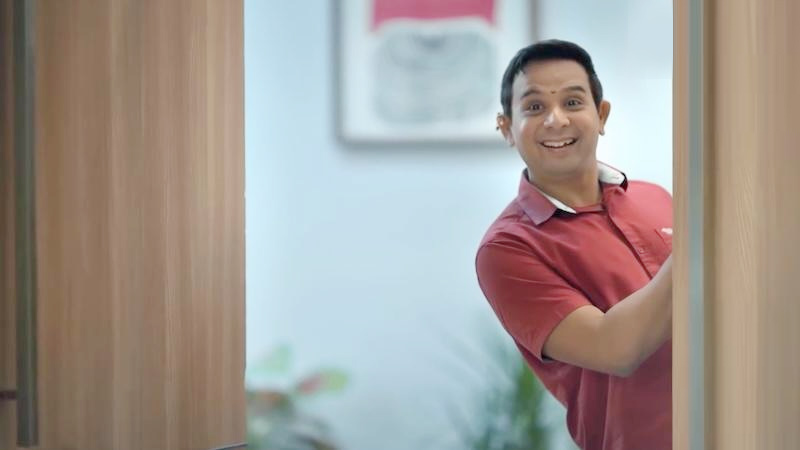
MUMBAI: Some friendships are made in heaven; others are coded in Mumbai. Hamara Vinayak, the first-ever digital original from Siddharth Kumar Tewary’s Swastik Stories, turns the divine into the delightful, serving up a story that’s equal parts start-up hustle and spiritual hustle.
Some tech start-ups chase unicorns. This one already has a god on board. Hamara Vinayak takes the leap from temple bells to notification pings and it does so with heart, humour and a healthy dose of the divine.
At its core, the show asks a simple but audacious question: what if God wasn’t up there, but right beside you, maybe even debugging your life over a cup of chai?
The show’s tagline, “God isn’t distant… He’s your closest friend” perfectly captures its quirky soul. Across its first two episodes, screened exclusively for media in Mumbai, the series proves that enlightenment can come with a good punchline.
The series follows a group of ambitious young entrepreneurs running a Mumbai-based tech start-up that lets people around the world book exclusive virtual poojas at India’s most revered shrines. But as their app grows, so do their ethical grey zones. Into this chaos walks Vinayak, played with soulful serenity and sly wit by the charming Namit Das, a young man whose calm smile hides something celestial.

He’s got the peaceful look of a saint but the wit of someone who could out-think your favourite stand-up comic. Around him spins a crew of dream-driven youngsters – Luv Vispute, Arnav Bhasin, Vaidehi Nair and Saloni Daini who run a Mumbai-based tech start-up offering devotees across the world the chance to book “exclusive” poojas at India’s most sacred shrines. It’s a business plan that blends belief and broadband – and, as the story unfolds, also tests the moral compass of its ambitious founders.
“The first time I read the script, I found the character very pretty,” Namit joked at the post-screening interaction. “It’s a beautiful thought that God isn’t distant, he’s your closest friend. And playing Vinayak, you feel that calm but also his cleverness. He’s the friend who makes you think.”
The reactions to the series ranged from smiles to sighs of wonder. Viewers were charmed by the show’s sincerity and sparkle, a quality that stems from its creator’s belief that faith can be funny without being frivolous.
Among the cast, Luv Vispute shines brightest, his comic timing adding sparkle to the show’s more reflective beats. But what keeps Hamara Vinayak engaging is the easy rhythm of its writing – one moment touching, the next teasing, always gently reminding us that spirituality doesn’t have to be solemn.
Luv spoke fondly of his long association with Swastik. “Since my first show was with Swastik, this feels like home,” he said. “Every project with them is positive, feel-good, and this one just had such a different vibe. I truly feel blessed.”
Saloni Daini, who brings infectious warmth to her role, added that she signed up the moment she heard the show was about “Bappa.”
“We shot during the Ganpati festival,” she recalled. “The energy on set was incredible festive, faithful, and full of laughter. It’s such a relatable story for our generation: chaos, friendship, love, kindness, and faith all mixed together.”

Vaidehi Nair and Arnav Bhasin complete the ensemble, each representing different shades of ambition and morality in the start-up’s journey. Their camaraderie is easy and believable, a testament to how much the cast connected off-screen as well.
This clever fusion of mythology and modernity plays to India’s two enduring loves, entertainment and faith. Mythology has long been the comfort zone of Indian storytellers, from the televised epics of the 1980s to the glossy remakes that still command prime-time TRPs. For decades, gods have been our most bankable heroes. But Hamara Vinayak tweaks the formula not by preaching, but by laughing with its characters, and sometimes, at their confusion about where divinity ends and data begins.
Creator Siddharth Kumar Tewary, long hailed as Indian television’s myth-maker for shows like Mahabharat, Radha Krishn and Porus, explained the show’s intent with characteristic clarity, “This is our first story where we are talking directly to the audience, not through a platform,” he said. “We wanted to connect young people with our culture to say that God isn’t someone you only worship; He’s your friend, walking beside you, even when you take the wrong path. The story may be simple, but the thought is big.”
That blend of philosophy and playfulness runs through the show. “We had to keep asking ourselves why we’re doing this,” Tewary added. “It’s tricky to make something positive and spiritual for the OTT audience, they’ve changed, they want nuance, not sermons. But when the purpose is clear, everything else aligns.”
For the creator of some of Indian TV’s most lavish spectacles, Hamara Vinayak marks a refreshing tonal shift. Here, Tewary trades celestial kingdoms for co-working spaces and cosmic battles for office banter. Yet his signature remains: an eye for allegory, a love for faith-infused storytelling, and an understanding that belief is most powerful when it feels personal.
Hamara Vinayak, after all, feels less like a sermon and more like a conversation over chai about what success means, what faith costs, and why even the gods might be rooting for a start-up’s Series A round.
As Namit Das reflected during the Q&A, “Life gives us many magical, divine moments we just forget to notice them. Sometimes even through a phone screen, you see something that redirects you. That’s a Vinayak moment.”
The series also mirrors a larger cultural pivot. As audiences migrate from television to OTT, myth-inspired tales are finding new form and flexibility online. The digital screen lets creators like Tewary reinvent the genre, giving ancient ideas a modern interface, without losing the emotional charge that’s made mythology India’s storytelling backbone for decades.
In a country where faith trends faster than any hashtag, Hamara Vinayak feels both familiar and refreshingly new, a comedy that’s blessed with heart, humour and just enough philosophy to keep the binge holy.
For a country where mythology remains the oldest streaming service, Tewary’s move from TV to OTT feels both natural and necessary. Indian storytellers have always turned to gods for drama, guidance and TRPs from Ramayan and Mahabharat on Doordarshan to glossy mytho-dramas on prime time. But digital platforms allow creators to remix reverence with realism, and in Hamara Vinayak, faith gets an interface upgrade.
The result is a show that feels like a warm chat with destiny, part comedy, part contemplation. And in an age of cynicism, that’s no small miracle.
As Tewary put it, smiling at his cast, “The message had to be positive. We just wanted to remind people that even in chaos, God hasn’t unfriended you.”
With 5 episodes planned, Hamara Vinayak promises to keep walking that fine line between laughter and light. It’s mythology with memes, devotion with dialogue, and a digital-age reminder that even the cloud has a silver lining or perhaps, a divine one.
If the first two episodes are any sign, the show doesn’t just bridge heaven and earth, it gives both a Wi-Fi connection.






