News Broadcasting
How not to break news


our news television medium seems to have finally begun to distinguish between truth-telling and ideological discourse. Indeed, this seems to be an increasing trend among most news channels today. Take the tagline for Zee News, for example: Haqeeqat jaisi, waisi khabar. Seemingly holding a defiant mirror to society and policymakers in the wake of post-Gujarat criticism, news channels in India have created truths far beyond the imagination of pre-liberalisation policymakers. Rising ratings for news are perhaps the closest endorsements to this trend. Why, then, do we see all around us a growing scepticism about our news channels?
The reasons have to do with audiences themselves: the question is, do audiences expect news to tell them what’s happening, or what editors think they should know? News television channels would do well to overhaul their thinking, because the technology they use provides them with the inherent power to democratize news. For example, many channels are still experimenting with “breaking news”. An editor even spoke on a platform recently (an event, hosted by another channel), and said that breaking news was passe. Even as he was doing so, his channel was flashing “Breaking News”. Gone are the days when news was just news. Today, the delivery of news has the capacity to attract new eyeballs. A cognitive research done in the US in January 2005 showed that the attention span of a television channel-surfer is so low that his/her decision whether to switch channels is made in the first 0.15 seconds. So what’s on the screen is what either sells or doesn’t.
|
Gone are the days when news was just news. Today, the delivery of news has the capacity to attract new eyeballs  |
Research conducted in the US last year concluded after a nationwide survey that news channels regularly use hard, unplanned news to mean breaking news – not something that necessarily takes the newsroom by surprise. The problem with this trend has to do with viewer credibility. It’s simple: ever heard of the “crying wolf” story? Breaking news can work the same way. (Actual example: “Breaking News: Salman reaches court for hearing”) If, for story after story, the attention-grabbing flash continues to disappoint the viewer, breaking news ends up breaking TRP dreams. The Salman Khan “breaking news” is based on the age-old “late news” or “just in” principle: it conveys to the viewer that the story just got in. But with live news now, the concept must undergo a change in our editors’ minds: news stories every half hour should be “just in”.
|
News channels only need to stick to their own agenda in order to score: if their claim is to present investigative stories, do so without diluting the definition of an investigative story |
So how can channels break through the viewer’s attention-span problem? By using a judicious mix of emotive and rational approaches. The pace of news stories is important, and many of our channels are inept at this skill. Because VT editors are armed with the latest techniques and gadgets that allow them to cut rapidly, they often forget basics like establishing scene, sequence and story. Channels seldom depend on visual richness, but too often on anchor branding. News anchors gain credibility and brand strength over time and after much sweat. Merely marketing them like an FMCG product will rarely rake in the returns. And on that note, 57 students of journalism who conducted a comparative content analysis of television channels in 2005 said that the excessive amount of advertising on many news channels is enough to lead away audiences from news.
Clearly, therefore, news channels only need to stick to their own agenda in order to score: if their claim is to present investigative stories, do so without diluting the definition of an investigative story. However, my prediction is that news channels cannot afford to distinguish their product so clearly, and must present a mix of reportage and discussion. The writing is on the wall: our nascent TV news audiences have been hoping that the news media are an answer to pull up a failing administration. In many ways, our media have lived up to that expectation. However, that may soon change if news channels do not settle down to understanding that news audiences invariably grow more knowledgeable over time, and expect more from their television.
(The writer heads a media institute in Pune, and is a former news channel employee.)
(The views expressed here are those of the author and Indiantelevision.com need not necessarily subscribe to the same)






News Broadcasting
CNN-News18 to host Fury in the Gulf conclave on West Asia crisis
Three-hour summit to unpack geopolitical fallout and impact on India
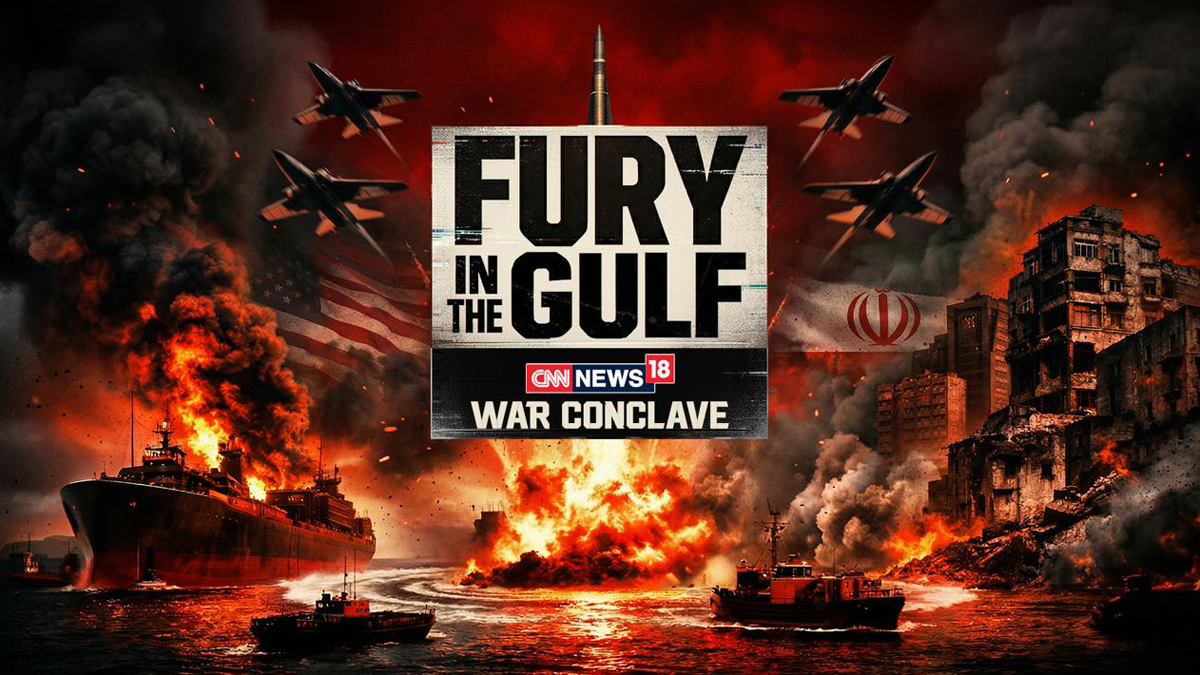
MUMBAI: CNN-News18 is set to host a special three-hour broadcast, Fury in the Gulf – War Conclave, on April 7, aiming to decode the escalating West Asia crisis and its far-reaching implications for India.
Scheduled from 4:00 PM to 7:00 PM, the conclave comes at a time when tensions between Iran and the United States are reshaping global geopolitics and triggering economic uncertainty. With India’s deep energy ties, trade links and large diaspora in the Gulf, the developments carry significant domestic relevance.
Built around the theme ‘Conflict, Consequences, and The Future,’ the programme will feature six curated sessions combining one-on-one interviews and panel discussions. The focus is to cut through the clutter and offer viewers a clearer understanding of the fast-evolving situation.
Key sessions include ‘Diplomacy in Times of War’ featuring Shashi Tharoor, and ‘World After the Iran Conflict’ with voices such as Ram Madhav, Reuven Azar, representatives from the European Union and the Iranian Deputy Envoy. Another session titled ‘Another Dunkirk?’ will bring together K. J. S. Dhillon and Jitin Prasada among others.
CNN-News18 editorial affairs director Rahul Shivshankar said, “In times of war, clarity becomes the most powerful tool. Fury in the Gulf – War Conclave brings together credible voices to address the questions and confusion that arise amid an overwhelming influx of information.”
He added that the initiative is aimed at delivering “facts, perspective, and insight” at a time when misinformation can easily cloud public understanding.
Echoing the sentiment, CNN-News18 CEO– English and business news Smriti Mehra said the conflict marks a defining global moment, with consequences that extend well beyond the region. She noted that the conclave seeks to present the crisis with “depth, nuance and responsibility” so audiences can better grasp its real-world impact.
As geopolitical tensions continue to dominate headlines, the conclave positions itself as an attempt to bring order to the noise, offering viewers a structured, insight-led look at a complex and rapidly shifting global situation.






