Comment
FCC action could stifle TV innovation


On Wednesday, FCC chairman Tom Wheeler proposed a new technology mandate that would require satellite and cable TV providers to disaggregate or separate their services so that a few companies could repackage them as their own without negotiating for content rights like everybody else in the market does today. While the chairman touts consumer benefits to his proposal, the opposite is the case.
The proposal, like prior federal government technology mandates, would impose costs on consumers, adversely impact the creation of high-quality content, and chill innovation. It also flies in the face of the rapid changes that are occurring in the marketplace and benefitting consumers.

As a member of the technical advisory committee that the FCC formed, I, along with others on the committee, put in an extraordinary amount of time examining these issues. The Report we produced comprehensively discussed the widely-adopted apps-based model. The chairman ignores the less regulatory apps-based approach that is already expanding the array of choices that consumers have to access content on retail devices.
In the 21st century, television has been on a tear of innovation. In the 1980s, wanting your MTV became an anthem. The 1990s saw an explosion of channels and diversity of voices on television, and the beginnings of HDTV. Change has been accelerating ever since.
Netflix now has more customers in the US than any traditional TV provider; tablets, smartphones, smart TVs, connected devices for accessing video are ubiquitous; and new online video services are announced all the time. There are services from online powerhouses like Amazon; from new entrants like Sony’s Play Station Vue and Dish’s Sling TV that sell packages including linear channels; and from programmers like HBO, Showtime, and CBS. Just this week, we’ve seen the influence of these new services in locking up content at Sundance.
These changes are bringing enormous consumer benefits — the quantity and variety of high-quality programming is better than ever, and consumers expect access to content anytime, anywhere, and on devices of their choice.
Comcast is responding with our innovative X1 platform, and enabling access on a growing array of devices. Like other traditional TV distributors, online video distributors, networks, and sports leagues, Comcast is using apps to deliver its Xfinity service to popular customer-owned retail devices.
These apps are wildly popular with consumers. Comcast customers alone have downloaded our apps more than 20 million times. This apps revolution is rapidly proliferating, and we are working with others in the industry and standards-setting bodies to expand apps to reach even more devices.
Given these exciting, pro-consumer marketplace developments, it is perplexing that the FCC is now considering a proposal that would impose new government technology mandates on satellite and cable TV providers with the purported goal of promoting device options for consumers.
A little background here. Congress enacted “navigation device” legislation twenty years ago that directed the FCC to foster retail alternatives to cable set-top boxes. The FCC responded with a CableCARD mandate. Despite the cable industry’s longstanding and ongoing support for CableCARDs, consumers showed little interest in the technology; it saddled cable operators and their customers with over $1 billion in unnecessary costs; and, it was overtaken by the explosive growth in connected devices and apps.
It is strange now that the FCC is ignoring the important lesson of history that intrusive federal governmental regulatory interference in the market just doesn’t work by proposing new mandates at a time when Congress’s goals are being realized in the marketplace and consumers have unprecedented device choices that go well beyond what anyone could possibly have imagined even a decade ago.
The proposal would require traditional TV distributors like satellite and cable providers – but not other video distributors – to re-architect their networks and develop an undefined new piece of customer equipment just so device companies can take apart the video service and selectively reassemble it.
Consumer costs would rise, content security would weaken, and consumer protections such as privacy would erode. It would undermine intellectual property rights and content licensing agreements. The Chairman has said that his proposal addresses these concerns, but the simple fact is that the proposal strips away the tools that video distributors use to present service in a way that satisfies security, regulatory, and licensing requirements.
As noted, the FCC’s track record on these types of technology mandates has been less than stellar. CableCARD is just one example. Another is the 1394 output mandate. The FCC required cable operators to include 1394 outputs on their set-top boxes, the mandate went on for years even after it was clear that other outputs had won out in the marketplace.
Already, a broad range of parties is weighing in to support the innovation that is occurring in the marketplace and raising concerns including Disney, 21st Century Fox, NBCUniversal, and Viacom as well as small, independent, and diverse programmers like TV One, Fuse Media, Crossings TV , Revolt, and Baby First Americas; device manufacturers like Roku, Cisco, and ARRIS; diversity organizations such as the Hispanic Technology and Telecommunications Partnership (HTTP), a coalition of Hispanic organizations; and legislators, including 30 members of the Congressional Black Caucus and the National Black Caucus of State Legislators.
As the Commission considers taking this initial step to launch a rulemaking proceeding to determine whether to impose new mandates and if so, what those should ultimately be, we look forward to studying the proposal and providing constructive input. We hope the FCC will decide to avoid this major step backward for consumers and video innovation.
(Disclaimer: The article has been sourced from Comcast’s website. The views expressed here are purely personal views of the author, who is Comcast Cable SVP – business and industry affairs and chief technology officer Mark Hess and Indiantelevision.com does not necessarily subscribe to them.)





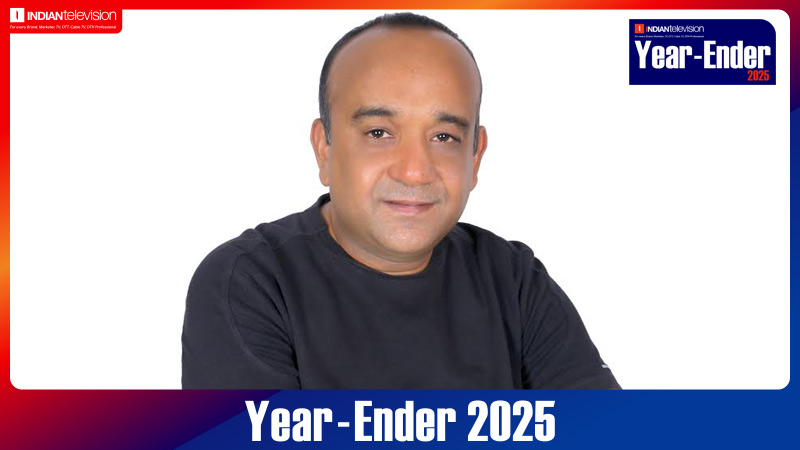
MUMBAI: 2025 will be remembered as the year India’s OTT industry stopped chasing scale for its own sake and began reckoning with how audiences actually consume content. Completion rates fell, patience wore thin and the limits of long-form excess became impossible to ignore. In this guest column, Pratap Jain, founder and CEO of ChanaJor, traces how micro-drama moved from the fringes to the centre of viewing behaviour, why short-form fiction emerged as a retention engine rather than a trend, and how platforms that respected time, habit and emotional payoff were the ones that truly grew up in 2025.
If there is one thing 2025 will be remembered for in the Indian OTT industry, it’s this: the industry finally stopped pretending.
Stopped pretending that bigger automatically meant better.
Stopped pretending that viewers had endless time.
Stopped pretending that scale without retention was success.
What began as a quiet reset in 2023 and a cautious correction in 2024 turned into a very visible shift in 2025. Business models matured. Content strategies tightened. And most importantly, platforms started aligning themselves with how Indians actually watch content, not how the industry wished they would.
At the centre of this shift was micro-drama—not as a trend, but as a behavioural inevitability.
When OTT finally understood the time problem
For years, long episodes were treated as a marker of seriousness. A 45–60 minute runtime was almost a badge of credibility. Shorter formats were pushed to the margins, labelled as “snack content” or “mobile-only.”
That belief quietly collapsed in 2025.
What platform data showed very clearly was not a drop in interest—but a drop in patience. Viewers weren’t rejecting stories. They were rejecting commitment.
Across platforms, the same patterns appeared:
* First-episode drop-offs on long-form shows kept increasing
* Completion rates continued to slide
* Viewers were sampling more titles but finishing fewer
At the same time, shows with episodes in the six to 10 minute range started showing the opposite behaviour: higher completion, higher repeat viewing, and stronger daily habit formation.
Micro-drama didn’t win because it was short. It won because it respected time.
Micro-Drama didn’t arrive loudly. It took over quietly.
There was no single moment when micro-drama “launched” in India. It crept in through dashboards and retention charts.
By mid-2025, it was clear that viewers were happy watching four, five, sometimes six short episodes in one sitting—even when they wouldn’t finish a single long episode. Romance, relationship drama, slice-of-life conflict, and grounded comedy worked especially well.
This wasn’t disposable content. It was compressed storytelling.
In shorter formats, there was no room for indulgence. Every episode had to move the story forward. Weak writing was punished faster. Strong writing was rewarded immediately.
Micro-drama raised the bar instead of lowering it.
Where ChanaJor naturally fit into this shift
ChanaJor didn’t pivot to micro-drama in 2025 because the market demanded it. In many ways, the platform was already built around the same viewing behaviour.
From the beginning, ChanaJor focused on short-to-mid-length fictional stories that felt close to everyday Indian life—hostels, rented flats, office romances, small-town relationships, young people figuring things out. Stories that didn’t need heavy context or cinematic scale to connect.
What worked in ChanaJor’s favour in 2025 was clarity:
* A clearly defined audience
* Tight episode lengths
* Storytelling that prioritised emotion and pace over spectacle
While several platforms rushed to copy global micro-drama formats, ChanaJor stayed rooted in familiar Indian settings and conflicts. That familiarity mattered. Viewers didn’t have to “enter” the world of the show—it already felt like theirs.
Why audiences started responding differently
One of the biggest misconceptions going into 2025 was that audiences wanted shorter content because their attention spans had reduced. That wasn’t entirely true.
What viewers actually wanted was meaningful payoff per minute.
On platforms like ChanaJor, episodes didn’t waste time setting the mood for ten minutes. Conflicts arrived early. Characters were recognisable within moments. Emotional hooks landed fast.
A typical consumption pattern looked like real life:
* One episode during a break
* Two more before sleeping
* A few the next day
This is how viewing habits are built—not through marketing spends, but through comfort and consistency.
Viewers came back not because every show was a blockbuster, but because they knew what kind of experience to expect.
2025 was also the year OTT faced business reality
The other big change in 2025 was on the business side. Subscriber growth slowed. Discounts stopped hiding churn. Customer acquisition costs rose.
Platforms were forced to ask harder questions:
* Are viewers finishing what they start?
* Are they returning without reminders?
* Is this content worth what we’re spending on it?
This is where micro-drama began outperforming expectations. A well-written short series could deliver sustained engagement without massive budgets. It didn’t peak for one weekend and disappear—it stayed alive through repeat viewing.
Platforms like ChanaJor benefited because they weren’t chasing inflated launch numbers. The focus was on consistency and retention, not noise.
Failures Became Visible Faster
2025 also exposed weaknesses brutally.
Several platforms assumed micro-drama was a shortcut—short episodes, quick shoots, instant traction. What they discovered was that bad writing fails faster in short formats than in long ones.
Viewers dropped off within minutes. Episodes were abandoned mid-way. Weak stories had nowhere to hide.
Micro-drama didn’t forgive laziness. It amplified it.
The platforms that survived were the ones that treated short storytelling with the same seriousness as long-form—sometimes more.
OTT Stopped Chasing Prestige and Started Chasing Habit
Perhaps the most important shift in 2025 wasn’t technical or creative—it was psychological.
OTT stopped trying to look like cinema. It stopped chasing validation through scale and awards alone. It began behaving like what it actually is in people’s lives: a daily companion.
Platforms like ChanaJor found their space here because that mindset was already baked in. The goal wasn’t to dominate a weekend launch. It was to quietly become part of someone’s everyday viewing routine.
That shift changed everything—from release strategies to how success was measured.
What 2025 Ultimately Taught the Industry
By the end of the year, three truths were impossible to ignore:
* Time is the most valuable thing a viewer gives you
* Retention matters more than reach
* Format must follow behaviour, not ego
Micro-drama didn’t take over because it was fashionable. It took over because it fit real life.
Looking Ahead
Micro-drama is not replacing long-form storytelling. It is redefining the baseline of engagement.
Longer shows will survive—but only when they earn their length. Short-form fiction will continue to evolve, becoming sharper, more emotionally confident, and better written.
Platforms like ChanaJor have shown that it’s possible to grow without shouting—by understanding the audience, respecting their time, and telling stories that feel real.
2025 wasn’t the year OTT became smaller. It was the year it became smarter.
Note: The views expressed in this article are solely the author’s and do not necessarily reflect our own.






