Sports
Dhawan steps up to bat for Delhi’s grassroots sports push
Cricket star named face of Delhi Khel Mahakumbh to fuel youth talent hunt.
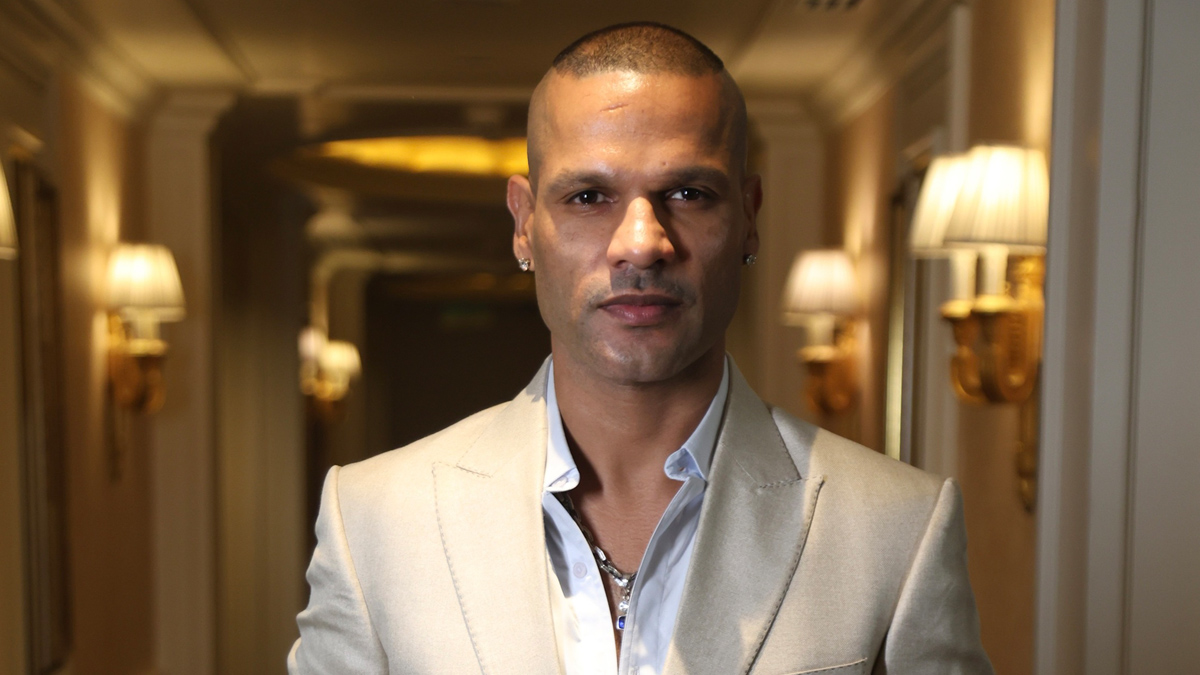
MUMBAI: When sport meets state ambition, a familiar opener is walking out to the crease. Shikhar Dhawan has been appointed Brand Ambassador of the inaugural Delhi Khel Mahakumbh, a flagship grassroots initiative of the directorate of education and sports under the Government of NCT of Delhi.
Conceived as a city-wide sporting carnival with serious intent, the Delhi Khel Mahakumbh aims to widen participation, spot early talent and build structured pathways for young athletes across the capital. By bringing school and community-level sport under one competitive umbrella, the programme positions sport as a key pillar of youth development rather than an extracurricular afterthought.
Dhawan’s association adds instant visibility and resonance. One of India’s most recognisable sporting figures and an Arjuna Awardee, he has increasingly focused on nurturing talent beyond his playing career through his venture Da One Sports. His involvement aligns with the event’s ambition to give young athletes the exposure many careers hinge on.
Ashish Sood, Minister of Education and Sports, Government of Delhi, described the Mahakumbh as a “transformative platform” for sports development, noting that Dhawan’s presence brings credibility and inspiration while reinforcing the focus on grassroots participation and talent identification.
For Dhawan, the role strikes a personal chord. He said the initiative responds to a city “brimming with talent and seeking the right opportunity and exposure”, adding that his own journey underlines how decisive early platforms can be. He also linked the effort to a broader vision of strengthening Delhi’s sporting legacy and aspirations.
That ecosystem thinking is echoed by Da One Group CEO Anshita Gupta who said the Mahakumbh fills a crucial gap by offering structured development and high-performance avenues, creating clearer routes for aspiring athletes to progress.
The scale of the ambition is sizeable. The inaugural Delhi Khel Mahakumbh begins on 13 February, spanning 16 venues across the capital and drawing participation from all 12 districts of Delhi. Thousands of young athletes are set to compete across basketball, football, athletics, kabaddi, wrestling, squash and volleyball.
If the idea is to make sport feel accessible, aspirational and city-wide, Delhi has chosen a brand ambassador who knows a thing or two about seizing an opening and turning it into something bigger.

Sports
IPL 2026 shows widening gap between CTV and TV advertising trends
Ecom leads CTV with 39 per cent, 30 plus shared categories, distinct advertiser mix.
MUMBAI: If cricket is the same on every screen, advertising clearly isn’t. A new analysis by TAM Sports reveals a widening gap between Connected TV (CTV) and linear television advertising during IPL 2026, with brands and categories playing very different innings across platforms. On CTV, digital-first categories dominated. E-commerce media, entertainment and social media led with a commanding 39 per cent share, followed by e-commerce services at 11 per cent. Smartphones and cars each accounted for 6 per cent, while air conditioners contributed 4 per cent highlighting a strong tilt towards tech-led and high-consideration categories.
Linear TV, in contrast, leaned heavily into mass-market staples. Mouth fresheners topped the chart with 14 per cent, closely followed by e-commerce services at 13 per cent. Financial institutions held a 6 per cent share, while paints and e-commerce wallets each stood at 5 per cent, reflecting a more traditional advertising mix.
The divergence extends to advertisers as well. On CTV, Star India (JioHotstar) led with a dominant 39 per cent share, followed by Google at 17 per cent. Havells India, Renault India and Reliance Consumer Products rounded out the top five with smaller shares. Linear TV saw Google in the lead at 12 per cent, with Reliance Consumer Products at 10 per cent, followed by Vishnu Packaging and Havells India at 6 per cent each, and K P Pan Foods at 5 per cent.
Despite these differences, there is some overlap. The study identified 30 plus common categories and 25 plus common advertisers across both platforms, based on 22 matches analysed. Shared categories included e-commerce media, e-commerce services, mouth fresheners, paints and cars, while common advertisers featured Star India (JioHotstar), Google and Reliance Consumer Products.
Yet, exclusivity tells the sharper story. CTV saw over 20 exclusive categories and 30 plus unique advertisers, including smartphones, credit cards, fast food outlets and hotels, with brands such as Renault India, Tata Motors and Voltas featuring prominently. Linear TV, meanwhile, had 15 plus exclusive categories and 20 plus advertisers, including chocolates, jewellery, perfumes and mortgage loans, with names like Cadbury India, Skoda Auto and Amul in the mix.
The findings point to a structural shift in how advertisers are approaching big-ticket sporting events. While linear TV continues to deliver scale and familiarity, CTV is emerging as a playground for digital-native categories and more targeted brand storytelling.
In the IPL’s advertising game, it seems the format may be the same but the strategy is anything but uniform.