Sports
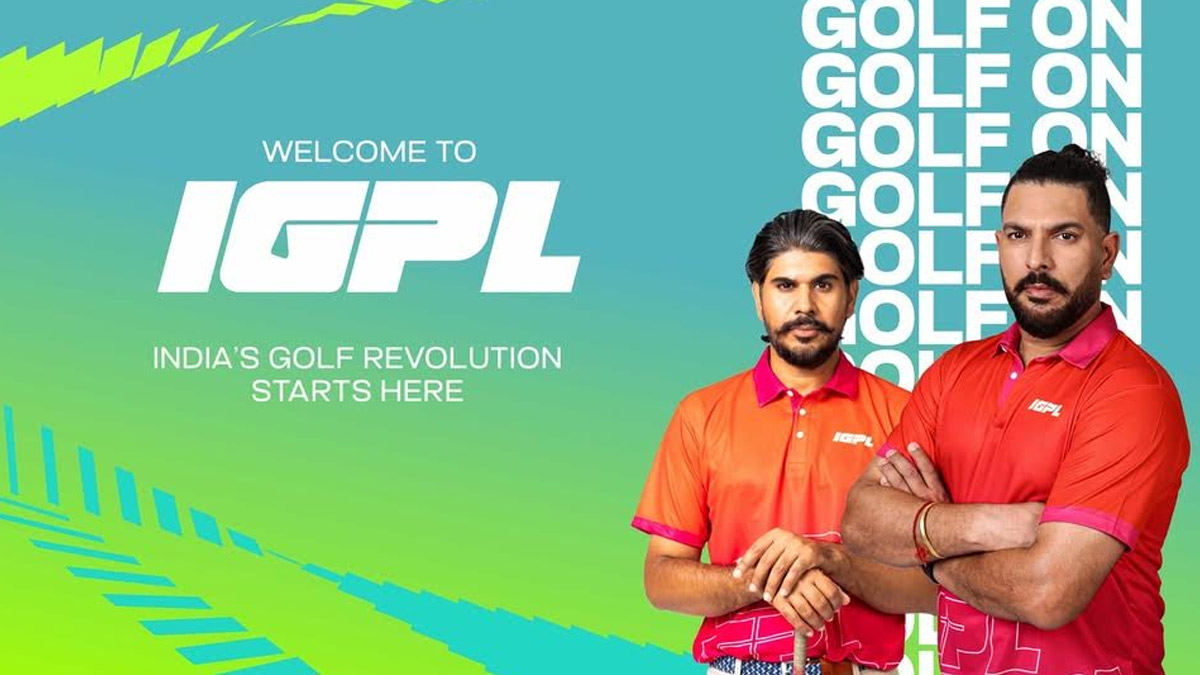
AM Green named title sponsor of Indian Golf Premier League
Energy transition firm backs world’s first franchise-based pro golf league.
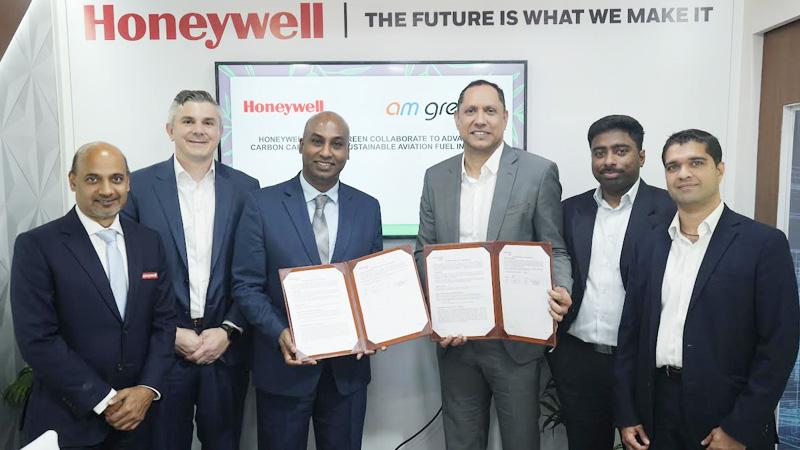
MUMBAI: AM Green has just teed off a green partnership because when sustainability meets the fairway, even the bunkers start rooting for a cleaner future. AM Green has been announced as the marquee title sponsor of the Indian Golf Premier League (IGPL), rebranding the tournament as the AM Green Indian Golf Premier League for the 2026 season.
The partnership aligns a leading global energy transition platform with one of India’s most ambitious sporting initiatives. AM Green, co-founded by Anil Chalamalasetty and Mahesh Kolli (also founders of Greenko), focuses on large-scale production of green hydrogen, biofuels and sustainable aviation fuel to drive industrial decarbonisation.
The IGPL features ten city franchises Hyderabad, Mumbai, Kolkata, Delhi, Chennai, Visakhapatnam, Goa, Bengaluru, Punjab and Gurugram with professional golfers mentored by legends including Jeev Milkha Singh, Jyoti Randhawa, SSP Chawrasia, Gaganjeet Bhullar, Gaurav Ghei and Shiv Kapur. The league supports women’s and grassroots golf in collaboration with the Indian Golf Union, PGAI and WGAI, while offering a pathway to international competition through LIV Golf’s International Series.
IGPL CEO Uttam Singh Mundy said, “AM Green is precisely the kind of partner the IGPL was built for. This is an organisation that is not adjusting to the future but actively building it.”
AM Green, chairman Anil Chalamalasetty added, “Golf, with its emphasis on precision, strategy and discipline, resonates deeply with our values as an organisation.”
The IGPL 2026 Invitational Tour will continue with national and international legs including Chandigarh, Mauritius, South Africa and Congo, building on successful 2025 events in the UAE and Sri Lanka.
In a sport where every shot counts, AM Green and the IGPL are proving that going green can be both good for the planet and great for the game.

Sports
IPL 2026 ad race sees digital-first categories dominate CTV
E-commerce leads CTV with 35 per cent share; Google tops linear TV
MUMBAI: In the IPL’s biggest face-off yet, it’s not just bat versus ball, it’s screen versus screen. And in IPL 2026, connected TV seems to be playing a very different game from traditional television. Fresh data from TAM Sports shows that advertising trends across Linear TV and CTV diverged sharply during the first 22 matches of the tournament, underlining how brands are splitting strategies across platforms.
On CTV, digital-first categories clearly stole the spotlight. E-commerce media, entertainment and social media alone accounted for a commanding 35 per cent share of ad volumes, followed by e-commerce services at 12 per cent. Smartphones (8 per cent), cars (7 per cent) and air conditioners (5 per cent) rounded off the top five, signalling a strong tilt towards tech-savvy, urban audiences.
Linear TV, however, told a more traditional story. Mouth fresheners led with a 14 per cent share, followed by e-commerce services at 12 per cent. Categories such as e-wallets, financial institutions and paints each held a 6 per cent share, reflecting mass-market consumption patterns that continue to anchor broadcast television.
The advertiser mix further highlights this split. On CTV, Star India (JioHotstar) dominated with a hefty 35 per cent share, followed by Google at 20 per cent. Havells India and Renault India each accounted for 4 per cent, while Reliance Consumer Products stood at 3 per cent.
On Linear TV, Google emerged as the top advertiser with a 13 per cent share, followed by Reliance Consumer Products at 9 per cent. Vishnu Packaging and Havells India held 6 per cent each, with K P Pan Foods at 5 per cent.
Despite these differences, there was notable overlap. More than 25 categories and over 20 advertisers were common across both platforms during the 22-match period. E-commerce, mouth fresheners, cars and paints featured prominently across screens, while brands like Star India (JioHotstar), Google and Reliance Consumer Products maintained strong cross-platform presence.
Yet, exclusivity is where the divergence becomes sharper. CTV saw over 15 exclusive categories and more than 25 exclusive advertisers, including smartphones, astrologers and fast food outlets. Linear TV mirrored this with over 15 exclusive categories and 20-plus advertisers, led by chocolates, jewellery and personal care.
The broader takeaway is clear. IPL advertising is no longer a one-screen strategy. CTV is fast emerging as a playground for digital-native, high-engagement categories, while Linear TV continues to deliver scale for traditional mass brands.
As the tournament progresses, one thing is evident: in the advertising IPL, it’s not just about where the eyeballs are, it’s about which screen they’re on.