Applications
Trai’s Tariff Order is faulty, MSOs tell Tdsat

NEW DELHI: The multi-system operators (MSOs) today said it was erroneous on the part of the Telecom Regulatory Authority of India (Trai) to contend that they could earn their revenue from carriage fee and other services provided by them.
Counsel C S Vaidyanathan and Arun Kathpalia on behalf of Digicable Networks and C. Aryama Sundaram on behalf of Indusind Media & Communications Ltd (IMCL) told the Telecom Disputes Settlement and Arbitration Tribunal (Tdsat) that the Trai Tariff order was clear an MSO approaching a broadcaster to get a channel on demand will not be entitled to get carriage fee.
Concluding the arguments he had commenced yesterday, Vaidyanathan said the MSOs were all for the digital addressable system but after sorting out the ‘unworkable problems’.
According to the Trai tariff order, charges collected from the subscription in the basic service tier (BST) of 100 free to air television channels (FTA) for Rs 100 will be in the ratio of 55:45 and that of paid channels or bouquet of paid channels will be a maximum of Rs 150 and shall be shared in the ratio of 65:35 between MSO and the local cable operator (LCO) respectively.
Sundaram said the Tariff order was clear in placing obligations only on the MSO, while there was nothing of this kind on the broadcaster or the LCOs.
While supporting the arguments of Vaidyanathan, Sundaram said that the MSO will make just one and a half times above what the broadcaster pays him, but he will have to share this with the LCO. Thus, the MSO will end up paying from his pocket to meet the demands of the LCOs as well as the broadcasters.
As an example, he said that he will have to pay around Rs 100 to the broadcaster and Rs 52.50 to the LCO out of the Rs 150 for the bouquet of paid and FTA TV channels. The 65:35 ratio was unworkable as the MSO would have to pay out of pocket.
He said a tariff order should mean fixing of tariff, but all that Trai had done was to fix a ceiling for the BST and for the bouquet of paid and FTA channels.
The provision for carriage fee in the Tariff order becomes unworkable when read with the Interconnect Order, he said. Furthermore, he said the Tariff order had also forbidden any placement fee.
He said that Trai had mandated that an MSO will have to make arrangements for 500 channels, and the MSO could only do this by spending hugely on technology.
There were around 300 FTA channels and, therefore, even the BST would be different for every consumer, with the result that different combinations will have to be made.
He also wondered why Trai had not fixed any rate for the broadcaster to pay as carriage fee, noting that this will mean that a broadcaster can give the same content at different rates for MSO, DTH, and IPTV.
The Trai Act was clear that under Section 11(2), the sector regulator should fix the tariff and not merely give a ceiling or a revenue sharing formula.
He said clearly there was non application of mind in the explanatory memorandum to the Tariff Order, and he also said there was clearly no study or research for fixing the formula.
Kathpalia said there was also fear of monopoly as two broadcasters had joined together to set up their own cartel distribution with vertical interest in some MSOs Thus, there was no level playing field for the MSOs.
Arguments will continue tomorrow as Tdsat also has to hear further arguments on behalf of Digicable and a petition by Delhi Distribution Company, New Delhi.
Also read:
Trai Tariff Order not based on any study or rationale: Counsel

Applications
Inshorts Group chief Deepit Purkayastha joins IAB video council for Southeast Asia and India
The co-founder and chief executive of the short-form content platform has been inducted into the IAB SEA+India Video Council, giving India a stronger voice in shaping digital video frameworks
NOIDA: India has long been the world’s most chaotic, multilingual and mobile-first digital market. Now, one of its most prominent short-video executives is getting a seat at the table where the rules are written.
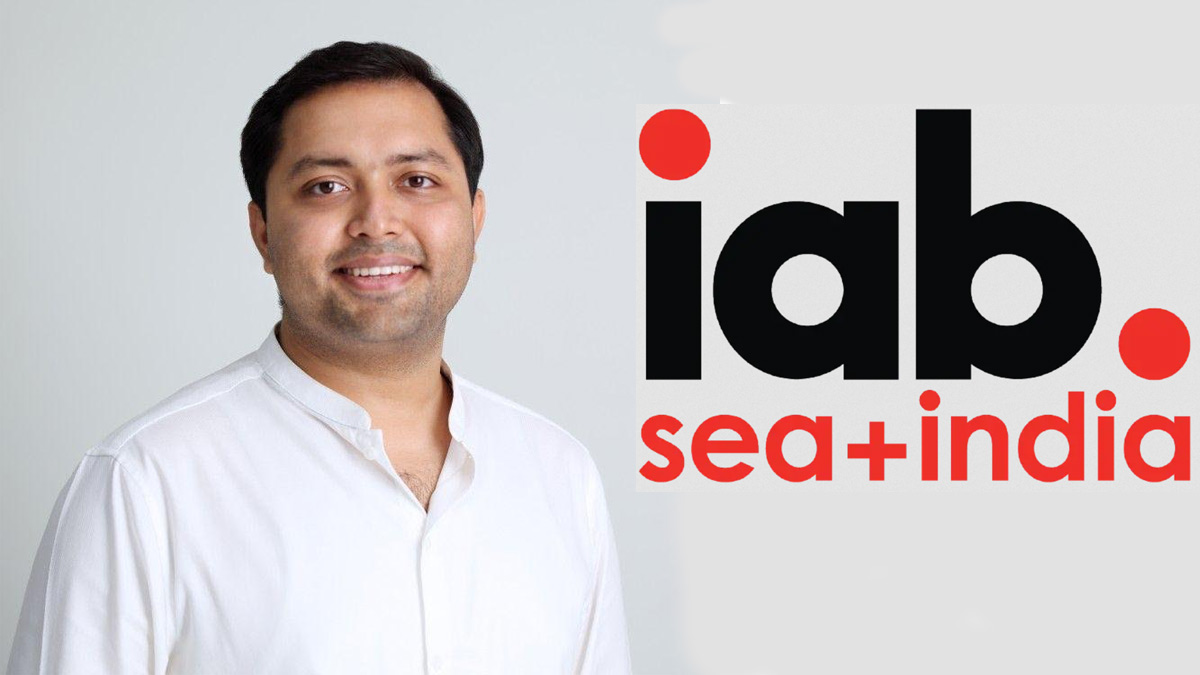
Deepit Purkayastha, co-founder and chief executive of Inshorts Group, has been selected as a member of the IAB SEA+India Video Council for 2026. Run by the Interactive Advertising Bureau, the council brings together senior leaders from Southeast Asia and India to shape standards, best practices and measurement frameworks for the fast-evolving video and digital advertising ecosystem.
The timing is pointed. According to the IAMAI-Kantar Internet in India Report 2025, over 588 million Indians are now consuming short-video content, with growth increasingly driven by rural and non-metro audiences. India’s active internet user base has crossed 950 million, with 57 per cent of users now coming from rural markets. Yet the frameworks that govern how video consumption is measured and monetised were largely designed for single-language, Western markets and have struggled to keep pace with the scale, diversity and complexity of India’s digital landscape.

Purkayastha is no stranger to these debates. He already serves on the AI Council at Marketing and Media Alliance India and as co-chair of the Digital Entertainment Committee at the Internet and Mobile Association of India. His induction into the IAB SEA+India Video Council extends that influence into the global video standards arena.
Inshorts Group sits squarely at the intersection of these forces. Its flagship product, Inshorts, India’s highest-rated short news app, reaches 12 million active users with 60-word news summaries. Its sister platform, Public App, reaches 80 million monthly active users across more than 700 districts and 12 languages, serving communities that most global platforms barely register.
Purkayastha said the opportunity was about building something more representative. “India today sits at the centre of the global video ecosystem, but the frameworks that define how value is created and measured have not always kept pace with the realities of our market,” he said. “Being part of the IAB SEA+India Video Council is an opportunity to contribute to a more representative and future-ready approach, one that accounts for diversity in language, context, and user intent.”
As a council member, Purkayastha will contribute to shaping regional standards across video advertising, measurement and platform governance, with a focus on frameworks that are native to India’s multilingual, mobile-first ecosystem rather than imported from global benchmarks designed elsewhere.
For years, India has been content to play by rules written for other markets. Purkayastha’s induction is a signal that it is done waiting to be consulted and ready to start writing them.