Applications
Internet too guilty of carrying illegal channels

New Delhi: A parliamentary committee has expressed surprise at the Information and Broadcasting (I&B) Ministry‘s failure to check the sources that carry non-permitted television channels other than the cable operators.
The Parliamentary Standing Committee on Information Technology has said it cannot understand the reason behind the I&B Ministry‘s assertion that the cable operators were to be blamed for the carriage of illegal television channels.
The Parliamentary committee has said that a document prepared by the I&B Ministry had stated, while explaining how illegal channels reach subscribers‘ homes through cable networks, that the source can be broadband, internet, IPTV, mobile TV, video streaming, etc.
During its examination of the Cable Television Networks (Regulation) (Second Amendment) Bill aimed at curbing telecast of illegal channels, the committee noted that even the Prime Minister‘s Office had asked the ministry to check carriage of non-permitted channels on the internet.
In the views furnished by the PMO to the ministry at the consultation stage, it was specifically mentioned that the problem of availability of non-permitted TV channels for viewing over the internet needs to be taken cognisance of and that the Ministry can take further action.
The committee, therefore, expressed surprise that the ministry has tried to ignore the important concern expressed by the PMO.
Instead of examining the issue, the Ministry has stated that the internet is, by and large, unregulated, except for certain restrictions under the Information Technology Act. The committee failed to understand how the issue of transmitting illegal/unregistered channels can be addressed in entirety without regulating a key source – the internet.
The committee during the course of deliberations tried to analyse the specific reasons for bringing the proposed amendments in the Cable Act that would be applicable to only cable operators in the context of showing illegal/unregistered channels.
The ministry justified the proposed amendments on the pretext that the DTH and IPTV services providers do not indulge in carriage of illegal channel as the channels carried on DTH service and IPTV service can be centrally monitored as these are addressable and leave a digital trail.
The other basis for the assertion of the ministry that DTH and IPTV service providers do not indulge in carriage of illegal channels is stringent licensing conditions for DTH and IPTV.
When the issue of licensing of cable operators to bring all the service providers on the level playing field was raised, the main constraint as expressed by the ministry in licensing cable operators was the infrastructure needed to provide licence to 60,000 cable operators.
The committee felt that the ministry needs to keep a constant watch on the new and emerging technologies and the international legislative framework in this regard to address the multiple challenges coming in the way.
Moreover, to provide the level playing field to various service providers, the extant legislation guidelines need a constant review in the light of the technological changes so as to avoid legal complications in managing the issue of illegal transmission.
The committee‘s attention was drawn during the course of examination to inequitable treatment to various service providers, viz. cable operators, DTH, IPTV, internet in the context of the amending provisions made in the proposed legislation. The cable associations were of the view that unregistered channels are carried through platforms other than cable like DTH, IPTV, mobile TV, video streaming, internet whereas the legislation has been brought only for the cable operators.
The committee during the course of deliberations with the cable industry stakeholders were given the impression that the cable operators are being over burdened with penalty, punishment and with so many regulations that small cable operators are unable to protect themselves.
The broadcaster associations on the other hand had given the impression to the committee that in their case stringent license conditions are applicable whereas in the case of a cable operator the requirement is only of registration.
The committee noted that the extant legislative framework/guidelines with regard to regulating unregistered/illegal channels has the commonality through the Cable Act and rules there-under, which prescribe the Programme Code and Advertisement Code. The common legislative framework is applicable to all the platforms as acknowledged by the ministry.
According to the FICCI- KPMG Indian Media Entertainment Industry Report 2012, the percentage of cable‘s share in last mile connectivity, which is 62 per cent at present, may come down to 47.3 per cent by the year 2015. During this period the DTH percentage may increase from 31 per cent to 46.7 per cent.
The committee observed that considering the emerging technologies, the scenario of TV watching may change drastically. With a multiple transformation taking place all over the world in the technologies available in the media and entertainment sector, the whole scenario of watching TV may change in future.

Applications
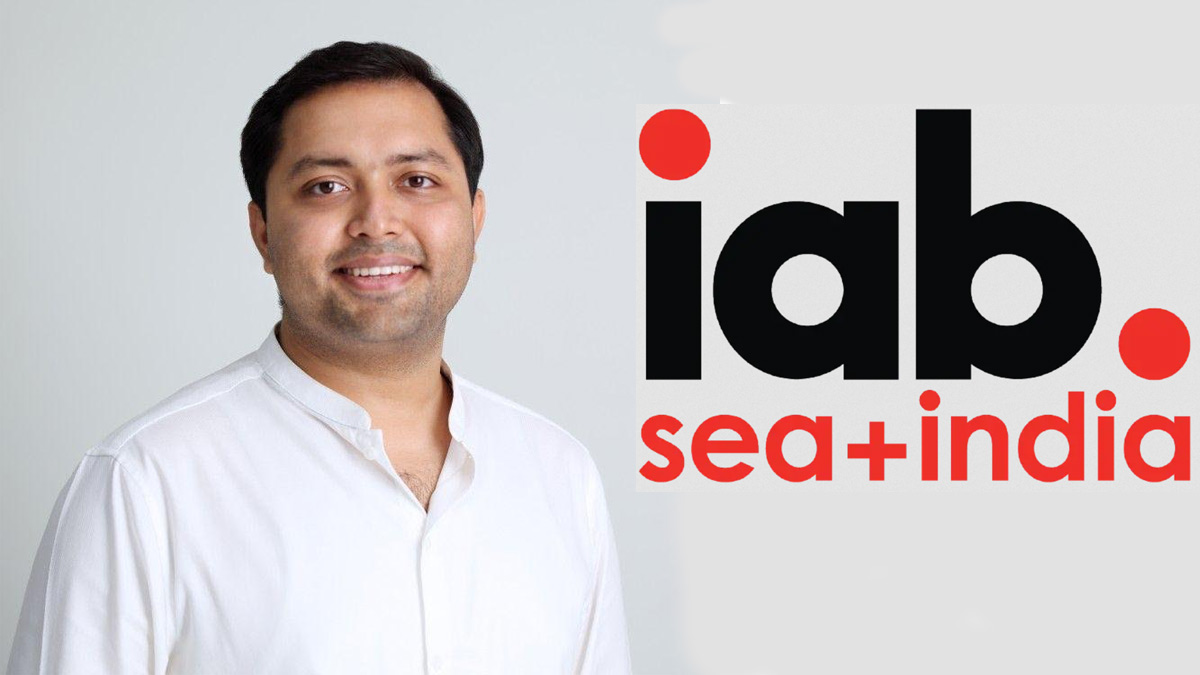
Inshorts Group chief Deepit Purkayastha joins IAB video council for Southeast Asia and India
The co-founder and chief executive of the short-form content platform has been inducted into the IAB SEA+India Video Council, giving India a stronger voice in shaping digital video frameworks
NOIDA: India has long been the world’s most chaotic, multilingual and mobile-first digital market. Now, one of its most prominent short-video executives is getting a seat at the table where the rules are written.
Deepit Purkayastha, co-founder and chief executive of Inshorts Group, has been selected as a member of the IAB SEA+India Video Council for 2026. Run by the Interactive Advertising Bureau, the council brings together senior leaders from Southeast Asia and India to shape standards, best practices and measurement frameworks for the fast-evolving video and digital advertising ecosystem.
The timing is pointed. According to the IAMAI-Kantar Internet in India Report 2025, over 588 million Indians are now consuming short-video content, with growth increasingly driven by rural and non-metro audiences. India’s active internet user base has crossed 950 million, with 57 per cent of users now coming from rural markets. Yet the frameworks that govern how video consumption is measured and monetised were largely designed for single-language, Western markets and have struggled to keep pace with the scale, diversity and complexity of India’s digital landscape.

Purkayastha is no stranger to these debates. He already serves on the AI Council at Marketing and Media Alliance India and as co-chair of the Digital Entertainment Committee at the Internet and Mobile Association of India. His induction into the IAB SEA+India Video Council extends that influence into the global video standards arena.
Inshorts Group sits squarely at the intersection of these forces. Its flagship product, Inshorts, India’s highest-rated short news app, reaches 12 million active users with 60-word news summaries. Its sister platform, Public App, reaches 80 million monthly active users across more than 700 districts and 12 languages, serving communities that most global platforms barely register.
Purkayastha said the opportunity was about building something more representative. “India today sits at the centre of the global video ecosystem, but the frameworks that define how value is created and measured have not always kept pace with the realities of our market,” he said. “Being part of the IAB SEA+India Video Council is an opportunity to contribute to a more representative and future-ready approach, one that accounts for diversity in language, context, and user intent.”
As a council member, Purkayastha will contribute to shaping regional standards across video advertising, measurement and platform governance, with a focus on frameworks that are native to India’s multilingual, mobile-first ecosystem rather than imported from global benchmarks designed elsewhere.
For years, India has been content to play by rules written for other markets. Purkayastha’s induction is a signal that it is done waiting to be consulted and ready to start writing them.