Applications
DTH: Foreign investments likely in phase II

Videocon d2h director Saurabh Dhoot and its CEO Anil Khera speak to indiantelevision.com about the after effects of the FDI hike. Here are their views on foreign investments and advantages DTH offers over cable TV:
Q. Do you see the investment interest going up after the FDI hike? If so, why?
India is undergoing the largest transformation in terms of size of transformation seen anywhere in the world. This transformation has potential to change the landscape of broadcast and media sector in the country. FDI hike would certainly make it interesting for strategic players wanting to participate in India growth story with a long term vision in mind. We could certainly expect more interest as a result.
Having said that, FDI limit in itself does not create investments. Sound business fundamentals of a Company and its ability to create long term shareholders value is still the key. In that sense specially in the cable side business model itself with multiple layers makes it challenging for some of the strategic players to make calls.
Q. How much of capital is required by the sector to digitise first the metros and then the country?
Several elements require investment for digitization. Backend (billing solutions, customer service etc), mid end (fibre quality) and front end (STB) all require varying degree of investments. Though, companies are likely to invest first in STB and thereafter in remaining areas over a period of time.
Phase 1 of digitization (metros) is likely to require 2500Cr of investment and entire country would perhaps require around $5B of investment.
Q. Will the investments come in the first phase or investors will wait for how DTH and cable companies perform in the first phase?
Given first phase is too close, most are realistically likely to wait out the phase 1 performance before making any investments.
Q. What are the advantages DTH companies have over cable when investors look at investing where?
DTH has following advantages:
1) Most important aspect of owning the last mile and no layers like LCO in place
2) In case of cable there is no certainty over number of real customers
3) DTH companies have years of experience of executing digitization, customer management, stable operations, call centres etc. Cable companies would be doing that for first time.
4) DTH companies are truly speaking B2C companies unlike cable companies which are effectively B2B
5) DTH companies are national companies with tremendous brand awareness unlike cable companies
Q. Isn‘t DTH having too many companies competing against each other? Will this be a hindrance for investors?
On the contrary investors are keenly looking at DTH market for making some appropriate investments. Given one is already listed players and other has a long term strategic partner, there is shortage of opportunities for investors in this space.
Q. Are ARPUs also a concern for investors?
ARPU‘s are certainly a key metric for companies as well as investors. However, there is a universal acceptance that digitization would help corrections in ARPU‘s. Most investments today would present itself at the current ARPU levels leaving future ARPU movement as upside for investors.
Q. Where do you think the money will be used? In digitisation or in acquisitions?
Majority of investments/money would be used in digitization at this stage. Specially cable wherein acquisition of LCO‘s is a key step required at some stage, they are likely to create revenue share model instead of acquisitions. Bid and ask difference is likely to be too huge for investments in that aspect.
Q. When do you see consolidation happening among the bigger players?
This is likely to happen post 3-4 years. Immediate next years would be about growth and not consolidation for the bigger players.
Q. Will Videocon d2h look for diluting stake?
Videocon is well funded by the promoters to take care of digitization. It has been the fastest growing DTH company in the last 6 consecutive quarters and would look at maintain the same going forward. Additionally we are always looking at different partnership models (equity based or non equity based) for strengthening our position in the market.
Q. Does the integrated model of manufacturing set-top boxes (STB) better Videocon d2h‘s prospects for roping in foreign investors?
Videocon d2h is center of focus for several domestic and foreign investors due to several reasons. in house manufacturing is indeed a very key aspect of our model. Videocon is the ONLY pay tv company in the world that manufactures its own set top boxes. Being the only company coming from an electronics manufacturing and consumer goods distribution gives us unique edge. Owning the supply chain is a very big competitive edge. It helps us manage costs, supply chain, in house capability to resolve issues at any level of value chain.
It may be noted that this also happens to be the biggest item of funds deployment for all pay tv companies. Leverage of this capability runs into millions of dollars financially and priceless advantage non financially.

Applications
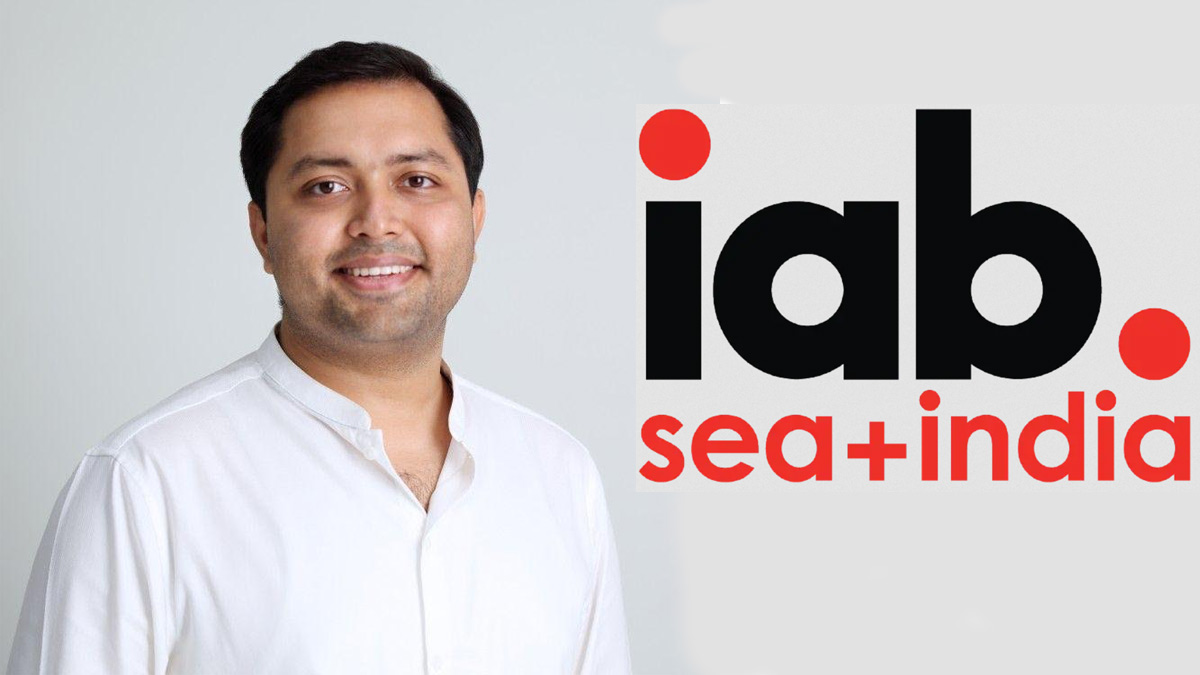
Inshorts Group chief Deepit Purkayastha joins IAB video council for Southeast Asia and India
The co-founder and chief executive of the short-form content platform has been inducted into the IAB SEA+India Video Council, giving India a stronger voice in shaping digital video frameworks
NOIDA: India has long been the world’s most chaotic, multilingual and mobile-first digital market. Now, one of its most prominent short-video executives is getting a seat at the table where the rules are written.
Deepit Purkayastha, co-founder and chief executive of Inshorts Group, has been selected as a member of the IAB SEA+India Video Council for 2026. Run by the Interactive Advertising Bureau, the council brings together senior leaders from Southeast Asia and India to shape standards, best practices and measurement frameworks for the fast-evolving video and digital advertising ecosystem.
The timing is pointed. According to the IAMAI-Kantar Internet in India Report 2025, over 588 million Indians are now consuming short-video content, with growth increasingly driven by rural and non-metro audiences. India’s active internet user base has crossed 950 million, with 57 per cent of users now coming from rural markets. Yet the frameworks that govern how video consumption is measured and monetised were largely designed for single-language, Western markets and have struggled to keep pace with the scale, diversity and complexity of India’s digital landscape.

Purkayastha is no stranger to these debates. He already serves on the AI Council at Marketing and Media Alliance India and as co-chair of the Digital Entertainment Committee at the Internet and Mobile Association of India. His induction into the IAB SEA+India Video Council extends that influence into the global video standards arena.
Inshorts Group sits squarely at the intersection of these forces. Its flagship product, Inshorts, India’s highest-rated short news app, reaches 12 million active users with 60-word news summaries. Its sister platform, Public App, reaches 80 million monthly active users across more than 700 districts and 12 languages, serving communities that most global platforms barely register.
Purkayastha said the opportunity was about building something more representative. “India today sits at the centre of the global video ecosystem, but the frameworks that define how value is created and measured have not always kept pace with the realities of our market,” he said. “Being part of the IAB SEA+India Video Council is an opportunity to contribute to a more representative and future-ready approach, one that accounts for diversity in language, context, and user intent.”
As a council member, Purkayastha will contribute to shaping regional standards across video advertising, measurement and platform governance, with a focus on frameworks that are native to India’s multilingual, mobile-first ecosystem rather than imported from global benchmarks designed elsewhere.
For years, India has been content to play by rules written for other markets. Purkayastha’s induction is a signal that it is done waiting to be consulted and ready to start writing them.