Applications
Chennai not ready for digitisation; TN govt to seek deadline extension

MUMBAI: An uncertainty looms over Chennai as the Union government presses for shutdown of analogue cable TV services in the four metros from 1 November. The state-backed Arasu Cable TV will be in no position to roll out digital cable TV services in the city within the next three weeks as it is in the midst of finalising its digital infrastructure suppliers and is preparing to request for an extension of the deadline so that consumers are not deprived of watching their television shows in Chennai.
The Jayalalithaa-led state government will write to the Information and Broadcasting (I&B) Ministry seeking extension so that Arasu gets time to install the set-top boxes (STBs) in consumer homes. A comfortable time zone of at least three months is being considered but it is not clear yet how the Union government will react.
“Who said Chennai is ready? We are going to seek for an extension of three months. We won‘t be able to complete the roll out of digital services by 31 October,” Arasu Cable TV managing director D. Vivekananda told Indiantelevision.com.
Arasu Cable had earlier floated a tender for providing digital head-ends, STBs, encryption solutions and subscriber management system (SMS) but cancelled it because it found the costs too high. A few consortiums had participated in the tender including the ones led by Wipro with Cisco as a partner. The Motorola consortium had offered a cost of around Rs 1.15 billion while Wipro‘s was about half of that for the whole digital infrastructure and management.
“We scrapped the tender as it was cost prohibitive for us. One of the participants quoted Rs 500 million for the digital head-ends. So we have gone in for a new tender and will likely be deciding whom to go with on Saturday,” said Vivekananda.
Arasu has trimmed down the new tender and decided not to have new digital head-ends. “We have four digital head-ends. We decided not to go for new head-ends as it would have proved too costly. We will upgrade our Ericsson head-end and make it compatible for offering 200 television channels. In any case, the regulator (Trai) has given three months time for upgradation of capacity to offer 500 channels,” he said.
Arasu is looking at one million STBs and will be paying its vendors across 12 months with a small upfront payment. “This is a reversal from the earlier payment terms,” a participant said on condition of anonymity.
Arasu has also decided to handle the management services itself. “We are recruiting 50 people,” said Vivekananda.
Cisco has decided not to participate in the new tender.
“They wanted conditional access system that would support multiple STBs. We found that and other financial terms unfavourable,” a senior executive at Cisco said on condition of anonymity.
The Ministry of Information and Broadcasting quoting data provided by multi-system operators has said that 0.25 million set-top boxes have been installed in Chennai till 9 October which represents 56 per cent penetration of digital cable. As on 9 October, there are 1.56 million households with cable TV subscribers and 0.69 million direct-to-home customers in chennai.
“These figures have no truth. We do not believe in them. There will be chaos if the 31 October deadline stays as consumers won‘t be having the STBs in their homes by then,” said Vivekananda.
The Chennai cable operators have also disputed the government numbers on STB penetration in the city. The Chennai Metro Cable Operators Association (CMCOA) had earlier written a letter to the Information and Broadcasting Minister Ambika Soni saying the government‘s claim of digitisation in Chennai is incorrect.
According to CMCOA, the Chennai DAS area has four million cable television homes, but only 160,000 homes have been seeded with STBs. “You may call for latest SMS report of any pay channel billed with two existing MSOs Kal cables and Jak Communications,” CMCOA general secretary M R Srinivasan said in the letter.
Nobody knows what the true figures are. But why couldn‘t Arasu be ready within the deadline period? “We have gone in for tender transparency. It takes time,” said Vivekananda.

Applications
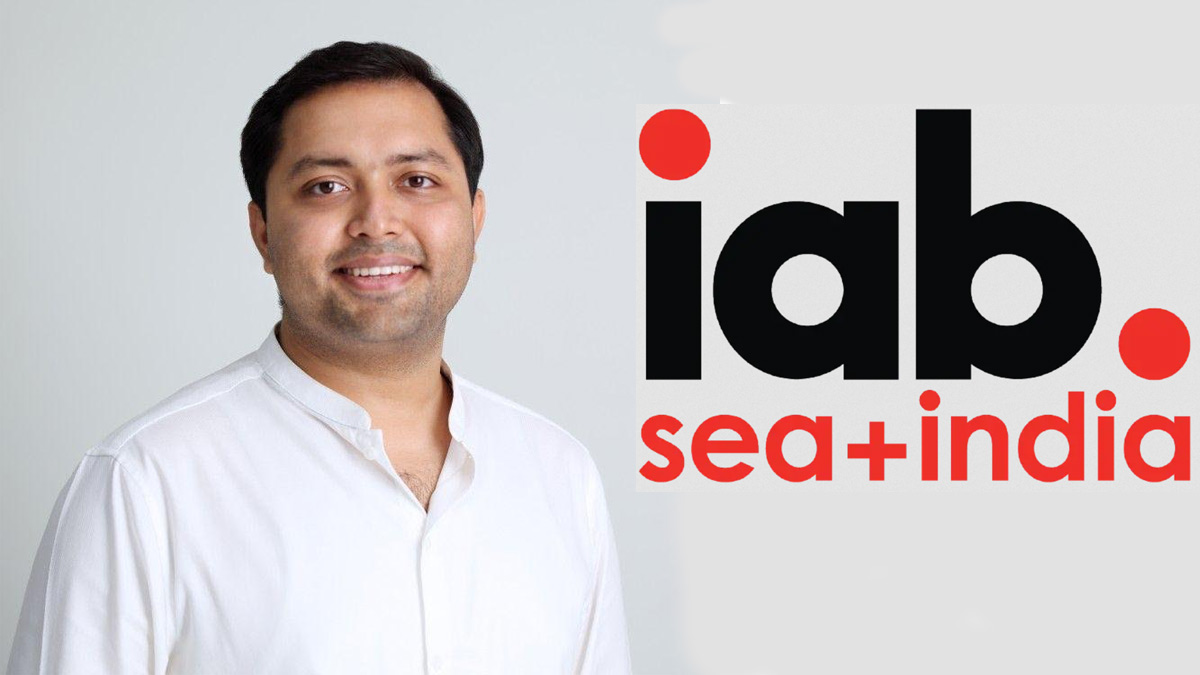
Inshorts Group chief Deepit Purkayastha joins IAB video council for Southeast Asia and India
The co-founder and chief executive of the short-form content platform has been inducted into the IAB SEA+India Video Council, giving India a stronger voice in shaping digital video frameworks
NOIDA: India has long been the world’s most chaotic, multilingual and mobile-first digital market. Now, one of its most prominent short-video executives is getting a seat at the table where the rules are written.
Deepit Purkayastha, co-founder and chief executive of Inshorts Group, has been selected as a member of the IAB SEA+India Video Council for 2026. Run by the Interactive Advertising Bureau, the council brings together senior leaders from Southeast Asia and India to shape standards, best practices and measurement frameworks for the fast-evolving video and digital advertising ecosystem.
The timing is pointed. According to the IAMAI-Kantar Internet in India Report 2025, over 588 million Indians are now consuming short-video content, with growth increasingly driven by rural and non-metro audiences. India’s active internet user base has crossed 950 million, with 57 per cent of users now coming from rural markets. Yet the frameworks that govern how video consumption is measured and monetised were largely designed for single-language, Western markets and have struggled to keep pace with the scale, diversity and complexity of India’s digital landscape.

Purkayastha is no stranger to these debates. He already serves on the AI Council at Marketing and Media Alliance India and as co-chair of the Digital Entertainment Committee at the Internet and Mobile Association of India. His induction into the IAB SEA+India Video Council extends that influence into the global video standards arena.
Inshorts Group sits squarely at the intersection of these forces. Its flagship product, Inshorts, India’s highest-rated short news app, reaches 12 million active users with 60-word news summaries. Its sister platform, Public App, reaches 80 million monthly active users across more than 700 districts and 12 languages, serving communities that most global platforms barely register.
Purkayastha said the opportunity was about building something more representative. “India today sits at the centre of the global video ecosystem, but the frameworks that define how value is created and measured have not always kept pace with the realities of our market,” he said. “Being part of the IAB SEA+India Video Council is an opportunity to contribute to a more representative and future-ready approach, one that accounts for diversity in language, context, and user intent.”
As a council member, Purkayastha will contribute to shaping regional standards across video advertising, measurement and platform governance, with a focus on frameworks that are native to India’s multilingual, mobile-first ecosystem rather than imported from global benchmarks designed elsewhere.
For years, India has been content to play by rules written for other markets. Purkayastha’s induction is a signal that it is done waiting to be consulted and ready to start writing them.