
TCHxVAM2026
TCH x VAM 2026: Regional content has stopped waiting for Hindi’s permission
Creators and OTT leaders say authentic local stories are reshaping Indian entertainment


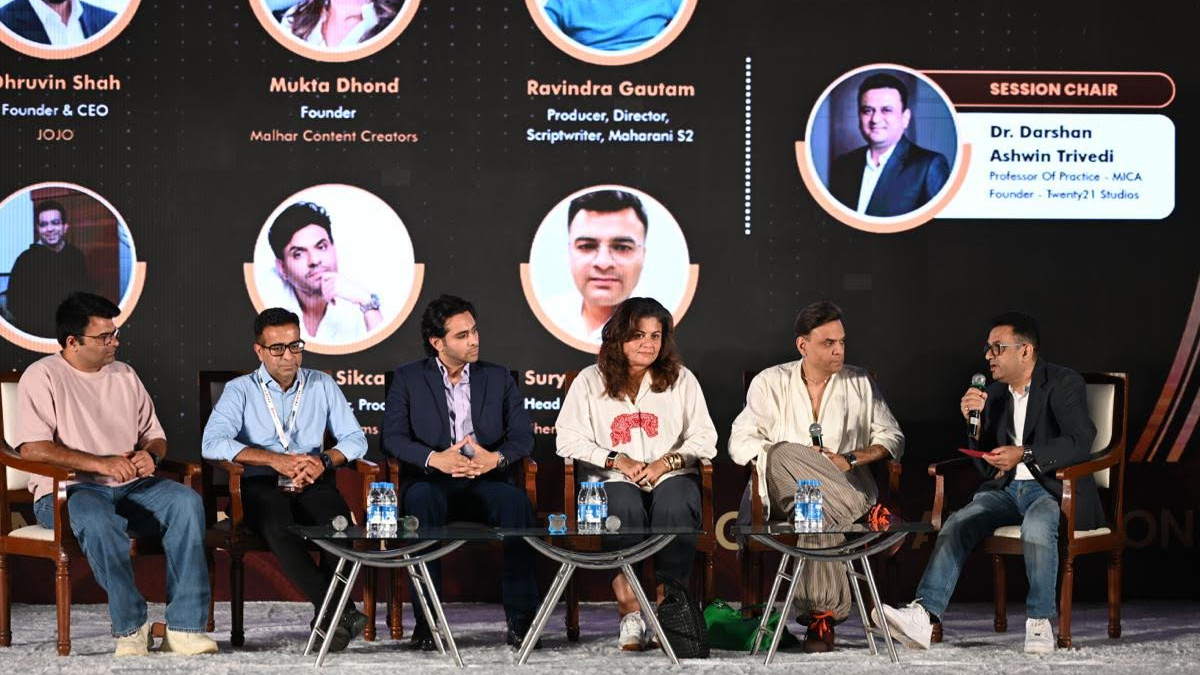
MUMBAI: India’s content story is no longer getting lost in translation. At The Content Hub x VAM & More Summit 2026, a lively panel titled “India is Flat: What Is Happening In Language Content?” made one thing clear: regional storytelling is no longer playing second fiddle to mainstream entertainment. It is driving the conversation, shaping audience behaviour and, increasingly, schooling Hindi entertainment on authenticity.
The session brought together JoJo founder & CEO Dhruvin Shah, Malhar Content Creators founder Mukta Dhond, Everest Entertainment founder & CEO Sanjay Chhabria, Sandiip Films director, writer and producer Sandiip Sikcand, and Shemaroo Entertainment head – Gujarati category Suryadeep Basiya. The discussion was chaired by MICA professor of practice and Twenty21 Studios founder Darshan Ashwin Trivedi.
What emerged from the conversation was a critique of mainstream Hindi content and a strong defence of hyper-local storytelling. Panellists argued that audiences have drifted towards language content because regional creators continue to tell rooted, emotionally resonant stories, while much of Hindi entertainment has become overly formulaic and data-driven.
Several speakers pointed to the pandemic as a turning point. Locked indoors and armed with streaming subscriptions, viewers began experimenting with stories from across states and languages. Subtitles and dubbing removed barriers, while OTT platforms widened access to content that previously stayed confined to local markets.
The consensus in the room was that audiences today care less about language and more about emotional truth. Panellists repeatedly stressed that stories anchored in local culture, dialects and lived experiences often travel better precisely because they feel authentic rather than manufactured for mass appeal.
There was also a strong pushback against the term “regional”, with speakers arguing that language content has moved beyond niche positioning. From Kannada and Tamil films to Gujarati cinema, panellists highlighted how local stories are now finding national and global audiences through streaming platforms and digital discovery.
The discussion repeatedly returned to the changing power equation between Hindi entertainment and other language industries. Speakers noted that many of today’s biggest Hindi television successes are adaptations of Bengali or South Indian originals, signalling a reversal of the old hierarchy where Hindi content was considered the default creative centre.
Adaptation itself became a talking point. While acknowledging the commercial logic behind remakes, some panellists lamented the decline of original storytelling in Hindi television and cinema. They argued that smaller language industries, operating with lower budgets and fewer pressures, are often more willing to experiment creatively and take narrative risks.
OTT platforms, meanwhile, were described as both disruptors and enablers. The ability to track viewer behaviour in detail has transformed how content is commissioned, distributed and marketed. Yet the panel warned against allowing analytics to overpower instinct. Data, they argued, can explain what worked yesterday, but cannot predict tomorrow’s cultural breakthrough.
That tension between creativity and metrics ran through the session. Speakers broadly agreed that data should function as a guide rather than a gatekeeper. Overdependence on audience research, they warned, risks creating repetitive, “optimised” content with little emotional depth.
Theatrical releases and satellite television were still acknowledged as foundational pillars of the entertainment business. However, OTT platforms were credited with democratising access and extending the life cycle of films and series beyond limited release windows. For creators, streaming has opened space for niche genres and unconventional narratives that might once have struggled to find buyers.
The panel also highlighted how language content is increasingly moving fluidly across formats and geographies. Television adaptations, subtitled streaming releases and dubbed theatrical runs are all contributing to what speakers described as a flattening of India’s entertainment map.
By the end of the discussion, one idea stood taller than the rest: audiences may be consuming content in dozens of languages, but the winning formula remains universal. In India’s rapidly evolving entertainment race, authenticity now speaks louder than any one language.






