Event Coverage
Entertainment and Media research: Viewing the viewer as a consumer

Lakshmi Seth, vice-president of Quantum Research, tried to explain the need to understand the need of the consumer and more specifically the movie consumer.
By citing extensive case studies (done for their client to find out the different types of movie consumption patterns among specific target audiences of regular movie goers between the age groups of 16 to 22 yrs) Seth detailed what she felt were some emerging changes in the consumer mindset. “It is not only the name of the star but other brands attached to it like who the producer is or who directed the film which makes a difference for the consumer.”
The study revealed how attitudinal differences can create segments among the consumers. “We have arrived at seven broad categories of consumers – obsessed, critical, timepass, etc and studied there responses towards films, the way they expressed it i.e. behavioral approach and the hidden needs that are fulfilled.”

“Now the film industry is treating viewers as consumers who have specific needs and around whom movies are tailored, says Seth. As movies become more and more like consumer products, other factors like branding, packaging and marketing are becoming increasingly important. “The segregation and understanding of the audience will not only help the filmmaker to know his target consumer, what their needs are and whether the film is providing that or not, but also make it fairly clear how to reach to them,” she says.
The survey has also revealed that both males and females showed the same mindset towards movies.
While elaborating more on qualitative research, Seema Khanvalkar of ORG-Marg, put forth the semiotic analysis which is the study of text used in media right from advertising to TV serials to the movies.
“Every text has got some hidden message, so it is important to decode it to understand what it is trying to convey,” says Khanvalkar. Cultural background and ideology has to be understood to know the impact of the text. She also stressed the need to understand the image, status attached to the particular product like a person going for an English movie has got some specific expectations while a person going for a Govinda movie has different expectations. One has to take into consideration all these things before making any product.
Media buying strategy was covered by Sam Balsara, chairman of Madison Media. “The mammoth growth in the advertising time on television from 20 million seconds two years ago to 50 million seconds today has increased the responsibility of the media buyer. There are around 70 channels catering to different segments of a vast population in India,” says Balsara.
Earlier, the belief of ‘bigger the agency, better the rate’ is no more relevant as there is something beyond mere rate that decides media buying. Astute media buying, strategic media planning and efficient media operations are the three things that will decide the return on media investment of the client.
So the onus is on the media buyers to choose the spots taking into consideration the type of the product as well as programme and depending on the target audience, media buying will be decided.
Tapan Pal, president and CEO, Zenith Media, went into details of the efficacy of the rating system. Citing the example of significant deviation between TAM and INTAM rating for the same programme, he suggested that both agencies should segregate areas among themselves and try to concentrate on that area which will widen its coverage. “The increase in numbers will give more realistic results.” High accuracy and the speed at a low cost is the very essence of data collection. As more and more channels come into the picture and audiences get further segregated, the need for accurate data will be needed as never before.
Meenakshi Madhvani, CEO Carat Media, stressed the need to make better use of available data by advertisers as well as media buyers for a better understanding of the market.
Pravin Tripathi, MD, Starcom, was the moderator of the discussion.
Session:Entertainment & Media Research
Moderator:Pravin Tripathi, MD, Starcom
Speakers:
Laxmi Seth, vice-president, Quantum Research – Understanding the Movie Consumers
Sam Balsara, chairman of Madison Media – Media buying strategy
Tapan Pal, president and CEO, Zenith Media – Efficacy of rating system
Meenakshi Madhvani, CEO Carat Media
Seema Khanvalkar and Indrani Vidyarthi,ORG-Marg – Qualitative Studies






Event Coverage
Anime India announces Amazon MX Player as co-presenting partner for Anime India Kolkata 2026
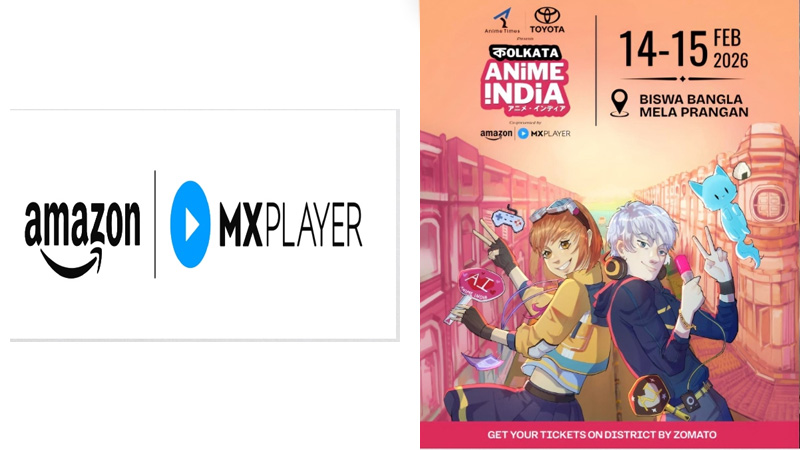
MUMBAI: Riding high on the success of its blockbuster Mumbai debut, Anime India is accelerating its nationwide expansion with the announcement of Amazon MX Player as the co-presenting partner for Anime India Kolkata. The partnership marks a significant step forward in the festival’s mission to deliver large-scale, accessible, and fan-first anime experiences across the country.
Scheduled for 14 and 15 February 2026 at the iconic Biswa Bangla Mela Prangan, Anime India Kolkata will launch the first regional chapter of what is set to be a year-long, multi-city tour. As the curtain-raiser for the 2026 circuit, the Kolkata edition aims to fuse the energy of global Japanese pop culture with India’s fast-growing community of anime, manga, and pop-culture fans.
A household name in digital entertainment, Amazon MX Player brings unmatched reach and cultural relevance to the Anime India platform. With its expanding focus on anime and youth-driven content, Amazon MX Player’s involvement as co-presenting partner reinforces Anime India’s vision of making anime culture more inclusive breaking barriers of language, geography, and accessibility to connect with fans nationwide.
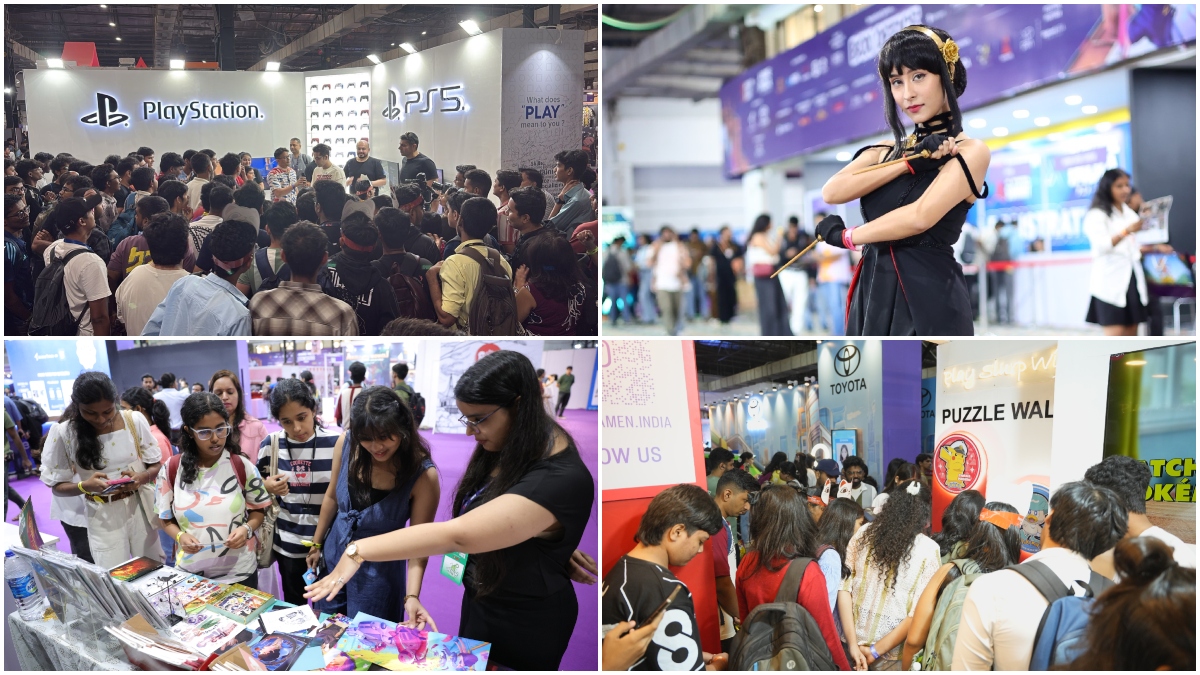
Anime India Kolkata 2026 will showcase cosplay competitions, interactive zones led by the Indian Gunpla Community, India-39 Vocaloid Community, The Japan Curry, and Adda-o-Otaku by The Otaku Guild. Fans can join tournaments across fighting games, Pokémon VGC, and more. Acclaimed Japanese director Susumu Mitsunaka (Haikyu!!) will attend as guest of honour, appearing in panels and live sessions. Positioned as an immersive celebration of fan culture and industry collaboration, the Kolkata edition marks the beginning of Anime India’s nationwide expansion.
Sharing their perspective on the partnership, Amazon MX Player director Aruna Daryanani expressed, “Anime in India has evolved from a niche interest into a mainstream cultural movement, driven by an increasingly engaged and passionate fanbase. At Amazon MX Player, our focus is on expanding access by bringing anime to audiences across the country for free and in multiple local languages. Our association with Anime India reflects our commitment to supporting the growth of anime in India and deepening connections with fans, while continuing to build Amazon MX Player as a trusted destination for free, high-quality entertainment.”
“Anime India Kolkata is a celebration of how anime has grown beyond entertainment into a powerful cultural and creative force. By bringing fans, creators, and industry leaders onto one shared platform, the festival is helping define the future of pop culture in India,” said Anime India co-founder and director Neha Mehta.
The debut edition of Anime India 2025 in Mumbai attracted over 29,000 fans, quickly cementing its status as a landmark celebration of anime and Japanese pop culture. Riding on this overwhelming response, the Kolkata chapter is projected to draw more than 40,000 visitors across two days, positioning it as one of the biggest anime conventions ever held in eastern India.
Anime India is focused on bringing together fans from across the country to create a truly pan-India celebration of anime, manga, cosplay, gaming, and Japanese culture. With plans to expand into four key metropolitan hubs in 2026—east (Kolkata), north (Delhi), west (Mumbai), and south (Hyderabad)—the festival seeks to deliver globally benchmarked experiences while supporting and uplifting creators, artists, and fan communities throughout India.






