Event Coverage
Address by Smt. Sushma Swaraj, Union I & B Minister

Address by Smt. Sushma Swaraj, Union Information & Broadcasting Minister, at FRAMES 2001 Global Convention On The Business Of Entertainment, March 30 and 31, 2001, in Mumbai. Other distinguished members on the dais included Mr Chhagan Bhujbal, Dy. Chief Minister Government of Maharashtra, Mr Amitabh Bachchan, Mr Chirayu R Amin, President, FICCI, Mr SK Chakrabarti, CMD, IDBI, Mr Lalit Modi, Chairman, Entertainment Committee, FICCI, Dr Amita Mitra, Secretary General, FICCI, Mr Bobby Bedi, Convener, FRAMES 2001, Mr Amit Khanna, Co-chairman, Entertainment Committee, FICCI. Over to Ms Swaraj:
I recall, with a sense of satisfaction, my visit to Mumbai in 1998, after taking over as the Information & Broadcasting Minister. It was then, perhaps, that the seed was sown when we declared film as an industry to be followed this year by a formal recognition of the Entertainment Sector, including films, by the IDBI for making this industry eligible for finance. Further, in the last two years or so, focussed attention has been given by creating an enabling environment and policy framework to provide impetus for growth to industry in general including the entertainment business. A lot more needs to be done and I will touch on this aspect a little later. Not only satisfaction, I also have a feeling of pride, when I see the future scenario of the Entertainment Business which you, the experts have envisaged. If this is achievable, then certainly, the impact of such growth rates will make us all proud to be partners in this endeavour. Before I proceed further, I must place on record my appreciation of the efforts made by FICCI and its Entertainment Committee to conceptualise and actually bring together a total perspective of the Entertainment Sector today and how it is to shape in the future. The reports which have been prepared form very valuable documents and in a way act as a broad road map charting the course of the entertainment business in the future. My only worry is, that our figures should not turn out to be over-estimates, in particular because of a lack of encouragement from us or a lack of concerted effort by all the leaders of the Entertainment Business.
THE STATUS AND THE FUTURE OF THE ENTERTAINMENT INDUSTRY: It would be interesting to see whether in the last one year there has been any change in our perceptions and what has been the actual growth achieved in the year 2000-2001 towards the target of potential envisaged for the year 2005. The various concurrent sessions today and tomorrow cover a whole range including Indian cinema; marketing and entertainment; financing aspects, both debt and equity, of entertainment business; regional cinema; media research; TV and radio; the business of event management, multiplexes; technological aspects of broad band and convergence as also the regulatory framework and the legal and copyright issues. A number of distinguished men and women will share their perceptions and views during these con-current sessions. I look forward to reading the conclusions of the deliberations from which, I hope, will emerge actionable points for the Government.

CINEMA, TELEVISION, MUSIC AND EVENT ARE INTERSECTORAL LINKAGES: And at times of a symbiotic nature, and at times where the market share of one increases at the cost of the other sector. The growth of the industry as a whole, however, is sufficient to increase the size of the cake for all sectors and the growth of any particular segment is more likely to also fuel the growth of other sectors. There are also immense forward and backward linkages within each sector. All these businesses are areas, where technology is playing a very important role. Apart from the vast local market, which is fast becoming more and more discerning and demanding, we also have a vast and expanding export market, whether of Indians settled abroad or from foreigners in love with the Indian entertainment product. Technology impacts by increasing the product variations in each sector as also for advances in content creation and carriage. Thus cinema can be viewed in a traditional theatre, multiplex theatre, on television and on the Internet. Music can be heard on radio, through cassettes, by CDs, in TV music programmes, in dedicated music channels, on the Internet, and live, in various shows. Thanks to the talent and technological options available as never before, many of these product variations have become feasible and have increased the choices available for the consumer. The entire carriage aspect is being transformed by the convergence phenomenon. For television we have the additional exciting possibilities of DTH and DTT. While guidelines for DTH platforms have been issued by the Government already, we are in the process of examining the digital terrestrial telecast possibility for India. DTH exploitation may not be limited only to Broadcasting. We have the exciting digital cinema, which reduces manifold the cost vis-a-vis conventional films. All such technology driven advances impact on each and every aspect of the entertainment sector. Digital cinema, for example, makes making of films much cheaper, it encourages a lot more younger directors to dabble in films, it even opens the possibility of pilot films being made for showing to financial institutions based on which larger amounts of funds can be committed by the said institutions. Government is aware of the exciting possibilities which the new technologies are offering. While the industry has to find new and innovative ways of harnessing the technology, and this is also mandated by the competitive environment, the Government has also to be constantly on its toes to ensure that the policy, legislative and regulatory environment is technology friendly and pragmatic. As you are aware, the Government is responding to the needs of the time and it is your prerogative, my dear friends, to keep us on our toes.
GOVERNMENT HAS TAKEN A POSITIVE STEP IN INSURANCE AND FINANCE: While going through the proceedings of the last Conference, I noted number of impediments towards Entertainment Sector growth, which have been identified. Lack of corporatisation; problems of finance and insurance; listing and foreign neutralisation norms; unrealistic tax laws, inadequate infrastructure and problems with the copyright laws and their implementation are some of the major road blocks and bottlenecks which have been identified. What is the Government doing about this, is a natural question? In so far as insurance and finance are concerned, the Government certainly has taken positive steps. The IDBI Chief has already spoken and I need not reiterate the positive work done by the IDBI. However, IDBI will need to frame policies where even the small filmmaker can get finance. I understand insurance cover is now provided for certain films. We need to strengthen these initial efforts and make insurance and finance packages customer friendly. The industry on its part must take effective steps for corporatisation and we on the part of Government are duty bound to give the required incentives which make corporatisation worthwhile. The demand that Entertainment Sector should be treated at par with the IT and Communication Sectors is very valid. We must be able to organise the various stakeholders of the Entertainment Industry and have a dialogue with the concerned Ministries so that the Entertainment Sector is viewed in the correct perspective. For such an exercise,, an umbrella organisation such as FICCI can be more useful. The doors of my Ministry are always open for any help, assistance or advice, as may be necessary. We treat the I&B Ministry as a parent Ministry for the entire Entertainment Sector. This point I have repeatedly emphasised. In fact, before the Budget presentation this year, I had requested the Industry to come up with concrete suggestions so that we could go to the Finance Minister and convince him of the changes which are required to make the Entertainment Sector realise its potential in India. I am hopeful that as more and more companies and investors get interested in the Entertainment Sector, we will also see the evolution of the required institutional organisations and structures to articulate the viewpoint of the Entertainment Industry as a whole. In a democracy, investments in such organised efforts pay rich dividend.





Event Coverage
Anime India announces Amazon MX Player as co-presenting partner for Anime India Kolkata 2026
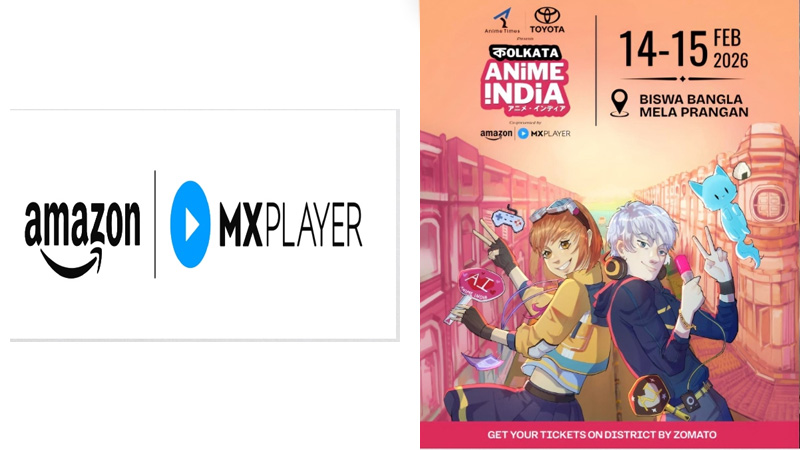
MUMBAI: Riding high on the success of its blockbuster Mumbai debut, Anime India is accelerating its nationwide expansion with the announcement of Amazon MX Player as the co-presenting partner for Anime India Kolkata. The partnership marks a significant step forward in the festival’s mission to deliver large-scale, accessible, and fan-first anime experiences across the country.
Scheduled for 14 and 15 February 2026 at the iconic Biswa Bangla Mela Prangan, Anime India Kolkata will launch the first regional chapter of what is set to be a year-long, multi-city tour. As the curtain-raiser for the 2026 circuit, the Kolkata edition aims to fuse the energy of global Japanese pop culture with India’s fast-growing community of anime, manga, and pop-culture fans.
A household name in digital entertainment, Amazon MX Player brings unmatched reach and cultural relevance to the Anime India platform. With its expanding focus on anime and youth-driven content, Amazon MX Player’s involvement as co-presenting partner reinforces Anime India’s vision of making anime culture more inclusive breaking barriers of language, geography, and accessibility to connect with fans nationwide.
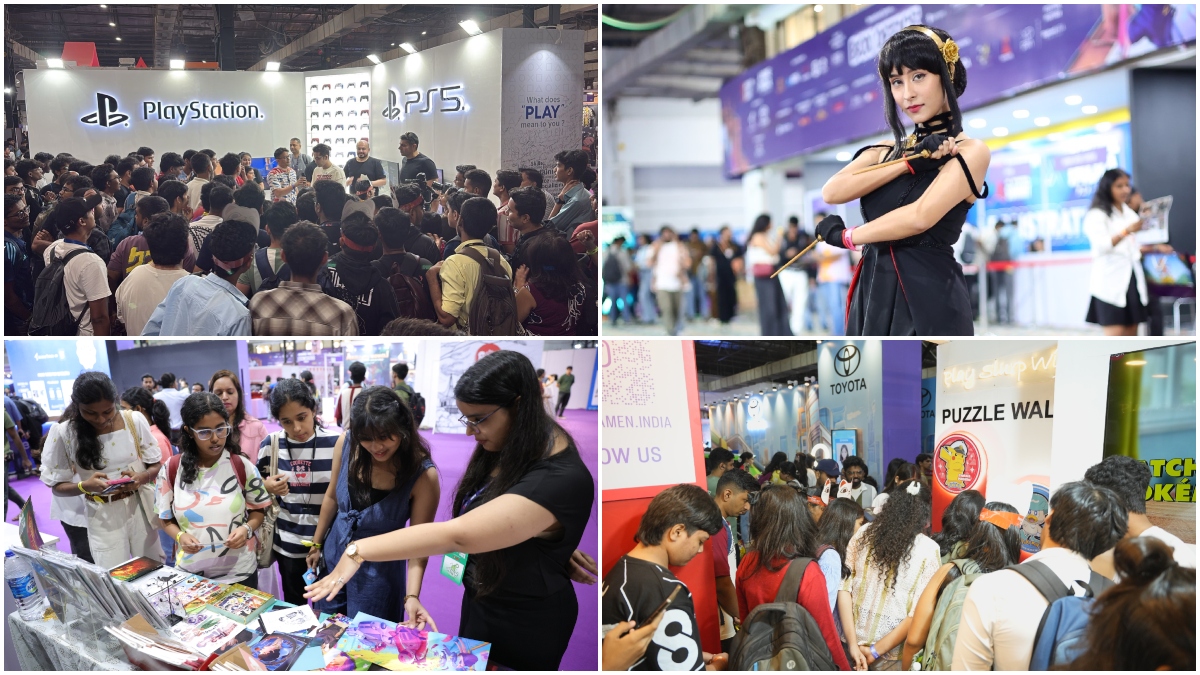
Anime India Kolkata 2026 will showcase cosplay competitions, interactive zones led by the Indian Gunpla Community, India-39 Vocaloid Community, The Japan Curry, and Adda-o-Otaku by The Otaku Guild. Fans can join tournaments across fighting games, Pokémon VGC, and more. Acclaimed Japanese director Susumu Mitsunaka (Haikyu!!) will attend as guest of honour, appearing in panels and live sessions. Positioned as an immersive celebration of fan culture and industry collaboration, the Kolkata edition marks the beginning of Anime India’s nationwide expansion.
Sharing their perspective on the partnership, Amazon MX Player director Aruna Daryanani expressed, “Anime in India has evolved from a niche interest into a mainstream cultural movement, driven by an increasingly engaged and passionate fanbase. At Amazon MX Player, our focus is on expanding access by bringing anime to audiences across the country for free and in multiple local languages. Our association with Anime India reflects our commitment to supporting the growth of anime in India and deepening connections with fans, while continuing to build Amazon MX Player as a trusted destination for free, high-quality entertainment.”
“Anime India Kolkata is a celebration of how anime has grown beyond entertainment into a powerful cultural and creative force. By bringing fans, creators, and industry leaders onto one shared platform, the festival is helping define the future of pop culture in India,” said Anime India co-founder and director Neha Mehta.
The debut edition of Anime India 2025 in Mumbai attracted over 29,000 fans, quickly cementing its status as a landmark celebration of anime and Japanese pop culture. Riding on this overwhelming response, the Kolkata chapter is projected to draw more than 40,000 visitors across two days, positioning it as one of the biggest anime conventions ever held in eastern India.
Anime India is focused on bringing together fans from across the country to create a truly pan-India celebration of anime, manga, cosplay, gaming, and Japanese culture. With plans to expand into four key metropolitan hubs in 2026—east (Kolkata), north (Delhi), west (Mumbai), and south (Hyderabad)—the festival seeks to deliver globally benchmarked experiences while supporting and uplifting creators, artists, and fan communities throughout India.