Satellites
TakeMe2Space to launch India’s first orbital computing satellite on SpaceX
MOI-1A will process AI data in orbit, with 23 customers signed for the mission


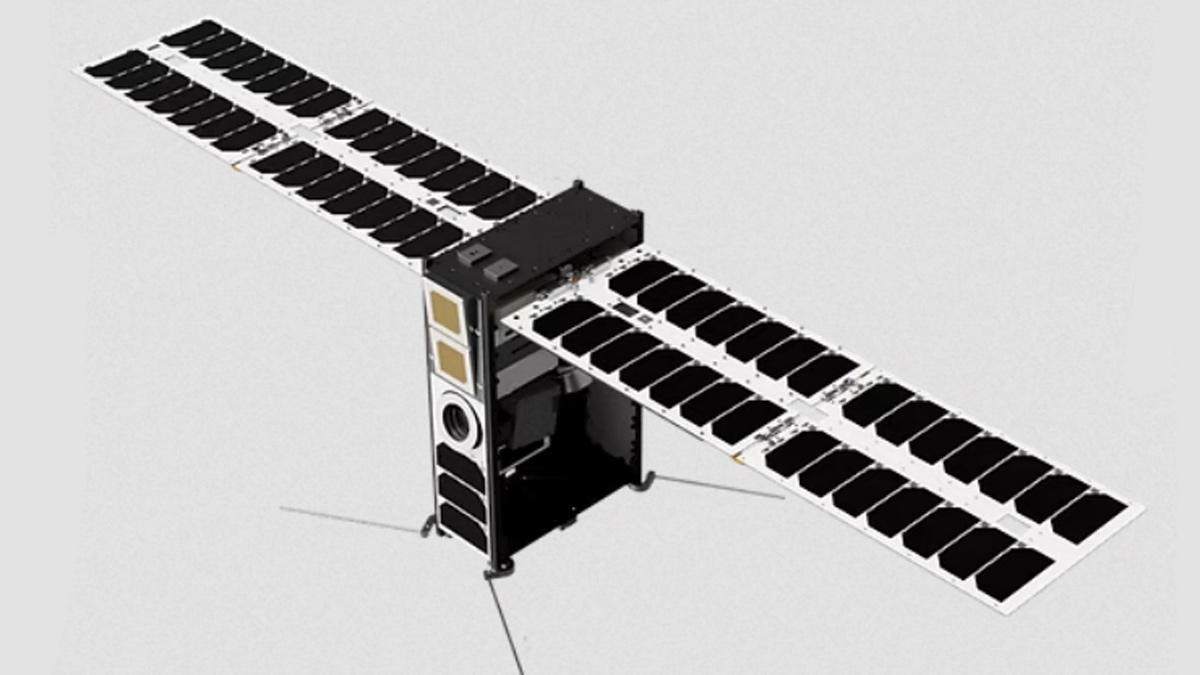
BENGALURU: The next computer room could be 500 kilometres above us. Indian space startup TakeMe2Space is preparing to send what it describes as India’s first orbital computing satellite into space on 1 October, aiming to process data in orbit rather than beam entire raw datasets back to Earth.
The company’s MOI-1A spacecraft is scheduled to fly aboard SpaceX’s Transporter-18 rideshare mission. The Falcon 9 mission is currently scheduled to lift off from Vandenberg Space Force Base in California on 1 October.
Weighing less than 50 kg, MOI-1A carries Nvidia Orin NX edge-computing processors. TakeMe2Space says the spacecraft will allow customers to upload AI models, process data while the satellite passes over a specified region and transmit the resulting analysis to Earth instead of downloading the entire underlying dataset.
The approach could reduce the amount of information that needs to be transmitted from orbit. Earth-observation satellites can generate large volumes of data, but sending all of it to ground stations for processing requires significant bandwidth and infrastructure.
TakeMe2Space founder and CEO Ronak Samantray told Reuters that the economics are built around avoiding those data-download costs. “The reduction in the cost of not downloading it offsets the premium they pay for compute in orbit,” Samantray said.
The company has signed 23 customers for the mission, including geographic information system companies and educational institutions. Commercial users span agriculture, mining, supply-chain management and insurance, while US-based space data analytics company Little Place Labs is also among the customers.
The spacecraft is a 6U CubeSat measuring 226.3 x 100 x 366 mm, with 2TB of onboard storage, nine-band multispectral imaging and a peak power capacity of 120 watts, according to the company information provided for the mission.
MOI-1A follows TakeMe2Space’s earlier technology demonstration mission in late 2024. That mission tested the ability to upload applications, run AI inference in orbit and download the resulting outputs.
The company’s subsequent MOI-1 satellite was lost in January 2026 after the third stage of the ISRO PSLV-C62 launch vehicle failed. MOI-1A now represents the startup’s move from demonstrating the technology to putting it into commercial use.
TakeMe2Space is already looking beyond the upcoming launch. The startup plans to develop larger, networked satellites from 2027 to increase orbital computing capacity and bring down costs. It is also exploring orbital cold storage for critical data, with financial services and defence among the sectors being targeted.
The company designs and manufactures most of its satellite subsystems in India, while sourcing components including chips, solar cells and propulsion systems externally.
If MOI-1A performs as planned, TakeMe2Space’s pitch is straightforward: instead of bringing mountains of space data down to Earth before making sense of it, make the satellite do the thinking first.