
Satellite Operators
India Space Congress 2026 to spotlight next phase of space growth
Over 600 delegates from 25 plus countries to discuss India’s space future.


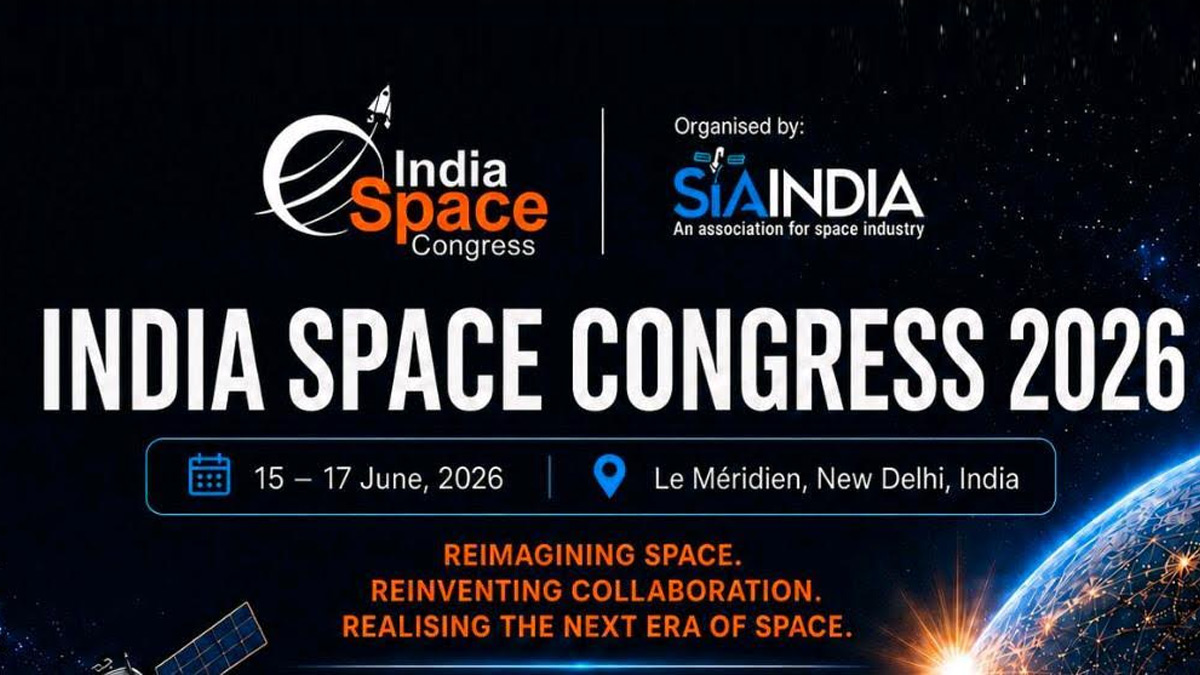
MUMBAI: India’s space ambitions are preparing for lift-off once again but this time, the conversation is as much about capital, policy and collaboration as it is about rockets and satellites. The Space Industry Association of India (SIA-India) will host the India Space Congress (ISC) 2026 from 15-17 June in New Delhi, bringing together policymakers, global space agencies, defence leaders, investors, diplomats, researchers, startups and industry executives to chart the next chapter of India’s rapidly evolving space economy.
Held at Le Meridien, New Delhi, the three-day event will be organised under the theme, “Reimagining Space, Reinventing Collaboration, Realising the Next Era of Space”, and is expected to emerge as one of the region’s largest gatherings focused on the space sector.
The Congress is expected to attract more than 600 participants, including over 200 speakers and moderators, with representation from more than 25 countries. Attendees will include government agencies, international organisations, private companies, research institutions and strategic stakeholders from across the global space ecosystem.
Among the prominent names expected at the event are Dr Pawan Goenka, Chairman of IN-SPACe; Christian Biever, Ambassador of Luxembourg to India; Ambassador Rakesh Sood, former Ambassador and Special Envoy for Space Affairs; and Dr Shailesh Nayak, Director of NIAS and former Secretary, Ministry of Earth Sciences.
Spread across three days and more than 60 sessions, ISC 2026 will examine a wide range of topics, including satellite communications, Direct-to-Device connectivity, Earth observation, geospatial intelligence, launch systems, navigation, in-orbit servicing, defence space, cybersecurity, artificial intelligence, manufacturing, sustainability and international cooperation.
The discussions arrive at a pivotal moment for the industry. While the global space economy is edging towards the trillion-dollar mark, India has set an ambitious target of building a USD 44 billion space economy by 2033. As a result, the focus is increasingly shifting from technology development to market creation, investment mobilisation, industrial scale-up and global competitiveness.
A key feature of the Congress will be the release of several industry reports examining issues such as Direct-to-Device satellite regulation, space infrastructure, investment readiness, strategic resilience and the development of India’s in-orbit servicing and refuelling ecosystem.
The event will also witness the launch of the Indian Space Industry E-Catalog Platform, a digital directory designed to improve visibility, collaboration and business opportunities across the sector.
Beyond policy and industry discussions, ISC 2026 is placing a strong emphasis on talent development. The Congress will host the India Space Policy Ideathon, organised with the Space Generation Advisory Council (SGAC), aimed at nurturing future leaders in space policy, climate intelligence and Earth observation. Winners of the national Call for Papers Programme, conducted in partnership with the Centre of Excellence SpaceTech Foundation, will also be recognised during the SIA Space Excellence Awards.
According to SIA-India leadership, the industry’s next phase will depend on balancing regulation with growth. Discussions are expected to explore whether space infrastructure should be formally recognised as critical infrastructure, a move supporters believe could unlock long-term financing, boost investor confidence and accelerate commercial development.
With participation from global space agencies, satellite operators, launch companies, defence organisations, investors, manufacturers and startups, ISC 2026 is set to become a major platform for shaping India’s role in an increasingly competitive global space economy.
As satellites, connectivity and space-based services become deeply embedded in everyday life, the Congress reflects a broader reality: the future of the space race may be decided as much in boardrooms and policy forums as on launch pads.






