Resources
SimplifyGenAI releases AI film starring its own founders to show brands what the technology can do
SimplifyGenAI’s 111-second multi-genre spectacle is the most direct proof yet that AI video has crossed from novelty to production-grade creative tool


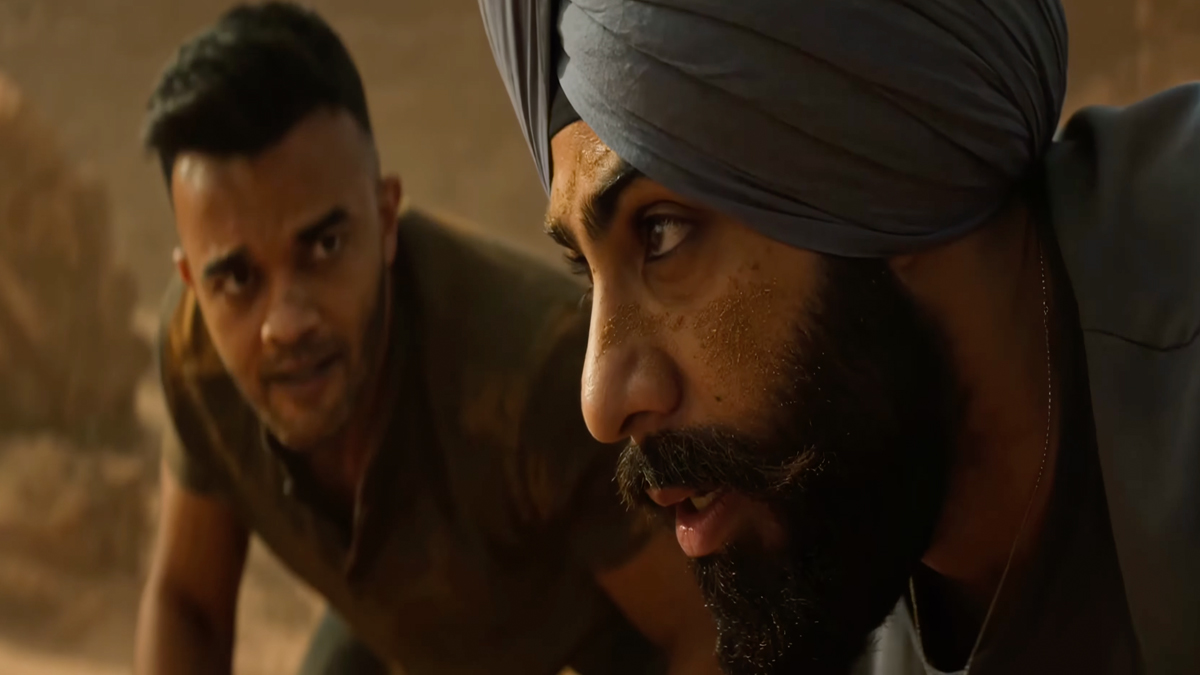
NEW DELHI: Space dogfights. Desert sword fights. Anime forest duels. A bioluminescent whale. A T-Rex. And two startup founders at the centre of all of it. SimplifyGenAI, a New Delhi-based generative AI content studio, has released a 111-second short film starring its own co-founders, Gurleen Khurana and Daksh Sharma, built entirely with AI video generation tools, without a production crew, without a studio budget, and without a single frame of conventional cinematography.
The result has been circulating quietly through marketing and advertising circles, not as a stunt but as a demonstration. The question the industry keeps asking about AI video is whether it can hold up at a standard that actually matters for brands. SimplifyGenAI’s answer was to stop putting it in a deck and put it in a film.
The film opens on a desert battle in armour, cuts to a rebel spacecraft cockpit mid-dogfight, pivots to a watercolour-style anime forest, dives underwater, and ends in a boardroom where a water bottle slides down a conference table and lands a joke. The tonal range is deliberate. Khurana and Sharma appear throughout as the leads, not as avatars or animated characters but as themselves, dropped into worlds that have no equivalent in Indian commercial production.
“The brief we keep getting is: show us what’s actually possible, not what’s coming,” said Khurana. “So we stopped putting it in a deck and started putting it in a film. We used ourselves as the cast because we wanted the proof to be as direct as possible.”
For brand teams evaluating AI as a production tool rather than merely a planning aid, the film is a meaningful data point. AI-generated video has existed in some form for years, but much of it has remained visibly experimental, credible for mood boards and concept reels, less convincing as finished creative. What the film represents is a step-change in that conversation. The visual quality across its genres — action, sci-fi, anime, naturalistic — is competitive with content that would typically require significant production infrastructure.
There is a side effect worth noting, without overstating it. The film incidentally puts a Sikh man in a turban at the centre of a Hollywood-scale action piece, treated with the same visual authority as any genre hero. This was not the brief. It was a consequence of the founders casting themselves, which was only possible because AI production removes the gatekeeping that has historically made such casting unlikely in commercial work.
Sharma is characteristically direct about what the technology now means for the industry: “The gap between idea and execution has collapsed. What used to be a six-week production is now an iteration cycle. That changes how creative teams should be thinking about content volume, personalisation, and campaign speed.”
It is a bold claim. The film, at least, makes it hard to dismiss.