Regulators
TRAI tightens anti spam rules with AI based enforcement
New rules cut complaint trigger to 3 and impose Rs 0.05 per minute on A2P calls


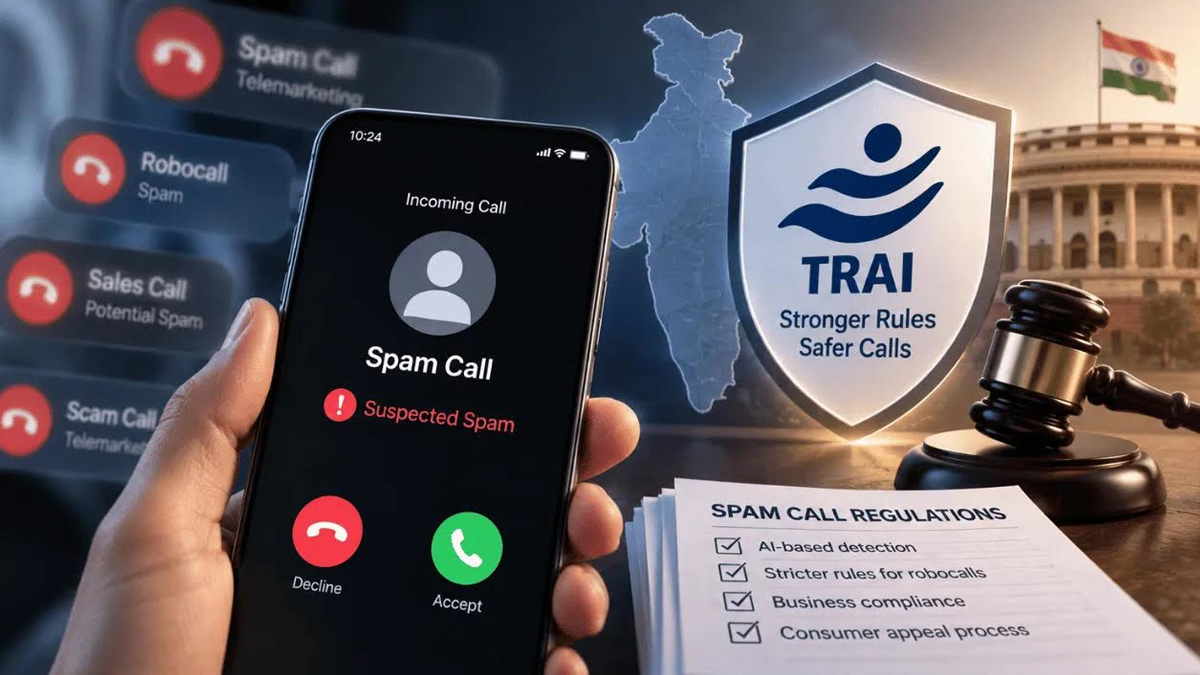
MUMBAI: Spam callers may soon find the line getting a little less friendly, with TRAI tightening its rules around unsolicited commercial communications and putting AI, stricter complaint thresholds and financial deterrents into the fight.
The Telecom Regulatory Authority of India (TRAI) on 18 September 2026 amended the Telecom Commercial Communications Customer Preference Regulations, 2018 (TCCCPR, 2018), introducing a technology-led framework aimed at identifying suspected spam faster and holding senders and telemarketers more accountable.
A major change is the formal use of AI/ML-based detection in enforcement. Under new Regulation 21A, telecom service providers (TSPs) will identify Customer Line Identifications (CLIs) with a high probability of being used for unsolicited commercial communications and share the information with other TSPs. If five or more CLIs linked to a sender are flagged within 10 days, access providers can initiate graded action, including KYC re-verification, physical verification, barring outgoing services and, in repeat cases, disconnection of telecom resources.
TRAI has also put automated calling under the regulatory microscope. Application-to-Person (A2P) calls, including autodialled, robocalls and calls using pre-recorded or artificial voices, must now be declared in advance by entities to their TSPs along with the CLIs they intend to use. Undeclared A2P calls will be treated as unsolicited commercial communications. A termination charge of up to Rs 0.05 per minute has also been introduced for such calls, although regulated commercial calling series and Authority-authorised calls are exempt.
For consumers, the complaint mechanism is also getting sharper. Earlier, five or more unique complaints within 10 days could trigger action against a sender. Under the amended framework, action can begin with three or more unique complaints within 10 days when the sender’s CLI is also flagged by an AI/ML system as suspected of sending unsolicited commercial communications.
Consumers will also get a formal right to appeal the resolution of their unsolicited communication complaints. An appeal can be filed within 15 days before the Appellate Authority through the TRAI DND App, a TSP app or portal, or by calling or sending an SMS to 1909, alongside other prescribed channels.
The rules also draw a clearer line between genuine customer interest and unwanted marketing. Where a consumer has made an inquiry about goods, products or services, commercial communication based on that inquiry can be sent for only seven days from the date of the inquiry. The inquiry must be made in writing or digitally and retained by the sender in a verifiable form, with the provision primarily intended to facilitate e-commerce and e-service platforms.
TRAI has simultaneously expanded the definition of explicit consent to include certain legacy consents already held by entities. These will be recognised only if obtained through verifiable means and subsequently registered on the TSP’s digital platform.
Misuse of headers and content templates is another area facing tighter controls. Originating access providers must suspend misused headers or templates within six hours of becoming aware of the misuse and notify the concerned sender. Where a telemarketer is responsible, its telecom resources across TSPs can be disconnected for one year, alongside blacklisting.
The amendments also allow TRAI to prescribe mandatory conditions in agreements between access providers and senders or telemarketers. In addition, senders can be classified into different categories based on factors such as their sector, scale, economic importance, use of telecom resources and the potential consumer impact of suspending their services, with differentiated enforcement measures possible for different categories.
Call-management applications have not been left out. Such applications are prohibited from blanket blocking, filtering or spam-tagging calls from regulator- or government-designated commercial communication series, including 1600xx, 1601xx and 140xx. Individual consumers, however, retain the ability to block or filter calls on their own devices. Call-management applications must also send reports of unsolicited commercial communications to the DLT platform if they provide such reporting functionality.
The framework further requires network service operators to provide virtual network operators with a real-time digital interface to the DLT platform and other systems needed to fulfil their regulatory obligations. TRAI said the move is intended to address operational difficulties faced by VNOs in accessing the platform.
The amendments follow TRAI’s consultation process that began with a draft Third Amendment Regulations in March 2026. Stakeholders submitted comments until 19 April, counter-comments until 4 May, and an Open House Discussion was held on 3 June before the final regulations were introduced on 18 September.
The regulator said the changes are aimed at strengthening consumer confidence in the commercial communications ecosystem, increasing accountability among stakeholders and enabling faster action against misuse of telecom resources by spammers.





