Regulators
Supreme Court seeks Centre’s response on plea to restrict children’s social media access
Emerald Heights International School seeks age based restrictions and safeguards against online exploitation, cyberbullying and mental health risks


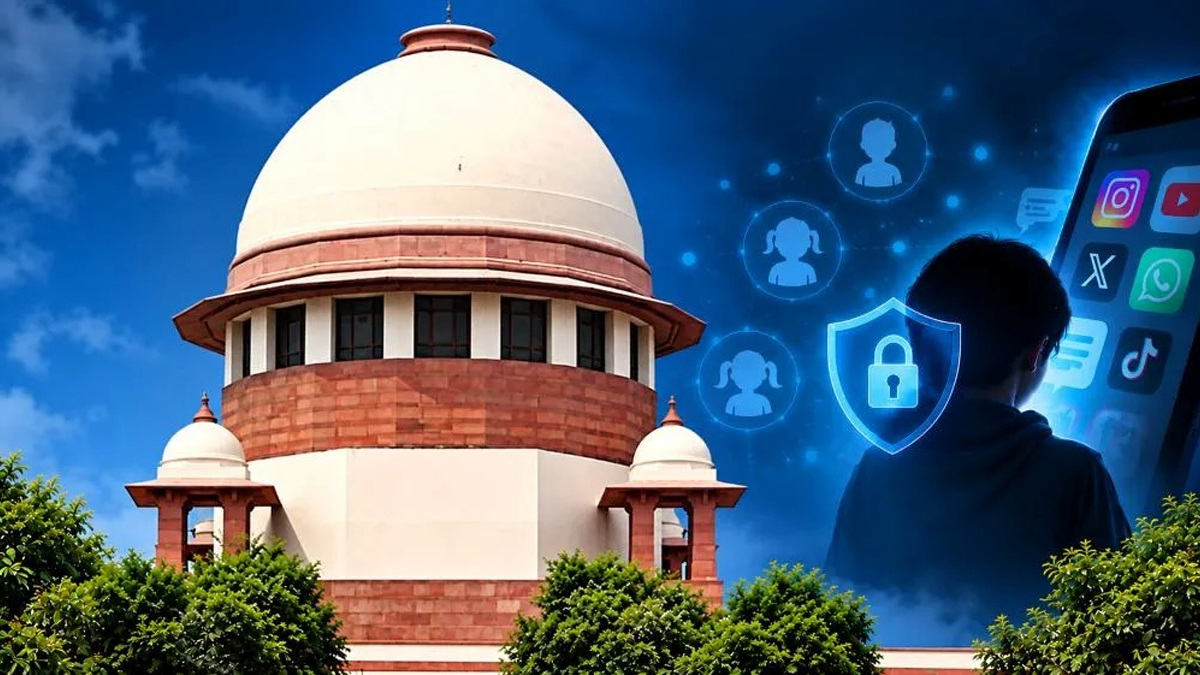
MUMBAI: As children scroll through social media, concerns about what scrolls back are reaching India’s highest court. The Supreme Court on Friday sought a response from the Central government on a petition seeking legal safeguards to limit children’s access to social media platforms, with the case raising questions about online safety, mental health and the responsibilities of technology companies.
According to Bar and Bench, a Bench comprising Chief Justice of India Surya Kant and Justice Joymalya Bagchi scheduled the next hearing for 7 December. The petition has been filed by Indore-based Emerald Heights International School and its director, Siddharth Singh, seeking a comprehensive regulatory framework to address risks associated with children’s use of social media.
The respondents named in the petition include the Centre, the Ministry of Women and Child Development, the Ministry of Law and Justice, and the National Commission for Protection of Child Rights. The court’s decision to seek the government’s response brings the question of safeguards for young users into a legal debate that extends beyond parental supervision to the role of public policy.
At the heart of the petition is a demand for age-based restrictions on social media access. The petitioners have called for a prohibition on access for children below a specified age, alongside rules governing how minors can create, maintain and use social media accounts.
The plea argues that children face a range of risks online, including grooming, sexual exploitation, cyberbullying and exposure to material unsuitable for their age. It also flags potential mental health concerns associated with social media use, such as anxiety, depression, body-image issues, disordered eating, sleep disruption and social comparison.
These concerns extend beyond the content children encounter. The petition also raises questions about the circulation or coercive use of intimate images and exposure to violent, sexually explicit, self-harm and suicide-related material. The petitioners argue that such risks can have consequences that are not immediately visible to parents, schools or other caregivers.
Another area of concern is behavioural profiling, through which platforms analyse users’ activity and behaviour. The plea also questions design features that may encourage compulsive engagement with digital services, raising a broader issue about how platforms are built to attract and retain attention.
The petitioners contend that voluntary safety measures, assurances from social media companies and parental controls are not sufficient on their own to address these challenges. They are seeking a more comprehensive framework that establishes clear, enforceable safeguards for minors rather than leaving protection largely to individual families or the policies of individual platforms.
The school and its director have also sought a declaration that the government’s alleged failure to adequately protect children from these risks is arbitrary and infringes their fundamental rights. The rights cited in the plea include equality, life and personal liberty, and education.
The petition therefore places two related questions before the legal system: what safeguards should govern children’s access to social media, and what responsibility does the government have to ensure that young users are adequately protected? The petitioners’ requests are yet to be adjudicated, and the court’s seeking of a response does not mean that it has accepted the allegations or granted the restrictions sought.
The case comes amid wider legal scrutiny of social media platforms over their effects on young users. Questions around age limits, parental oversight, platform design and the handling of harmful content have become central to debates over how digital services should operate when children are among their users.
A recent US case has added to that scrutiny. In August 2026, a court in New Mexico ordered Meta to pay a total of $942 million in a case concerning claims that its Facebook and Instagram platforms endangered young users. The amount comprised a $567 million award linked to youth mental health harms and $375 million in civil penalties imposed earlier by a jury, according to the cited report.
The US case is separate from the Indian petition, and its outcome does not determine how the Supreme Court will approach the matter before it. However, it illustrates the growing legal attention being paid to the relationship between social media platforms, young users and the potential consequences of platform design and content exposure.
In India, the petition could bring renewed attention to the balance between protecting children and regulating access to digital services. Any age-based restrictions or wider safeguards would raise practical questions about how age is verified, how rules are enforced, what role parents and schools should play, and how platforms should respond when minors attempt to access restricted services.
The petition also highlights the limitations of treating online safety solely as a matter of individual choice. While parental controls and platform policies can form part of the response, the petitioners argue that these measures need to be supported by a broader legal framework.
For now, the Supreme Court has sought the Centre’s response, with the next hearing scheduled for 7 December. The proceedings will determine how the court considers the petitioners’ demands for age-based access restrictions and stronger protections against online harms. The larger question is whether India’s approach to children’s digital lives will rely primarily on existing safeguards or move towards a more formal regulatory framework.