I&B Ministry
MIB steps up Centre-State push for media and creative economy growth
RoW, WAVES 2027 and single-window film permissions take centre stage


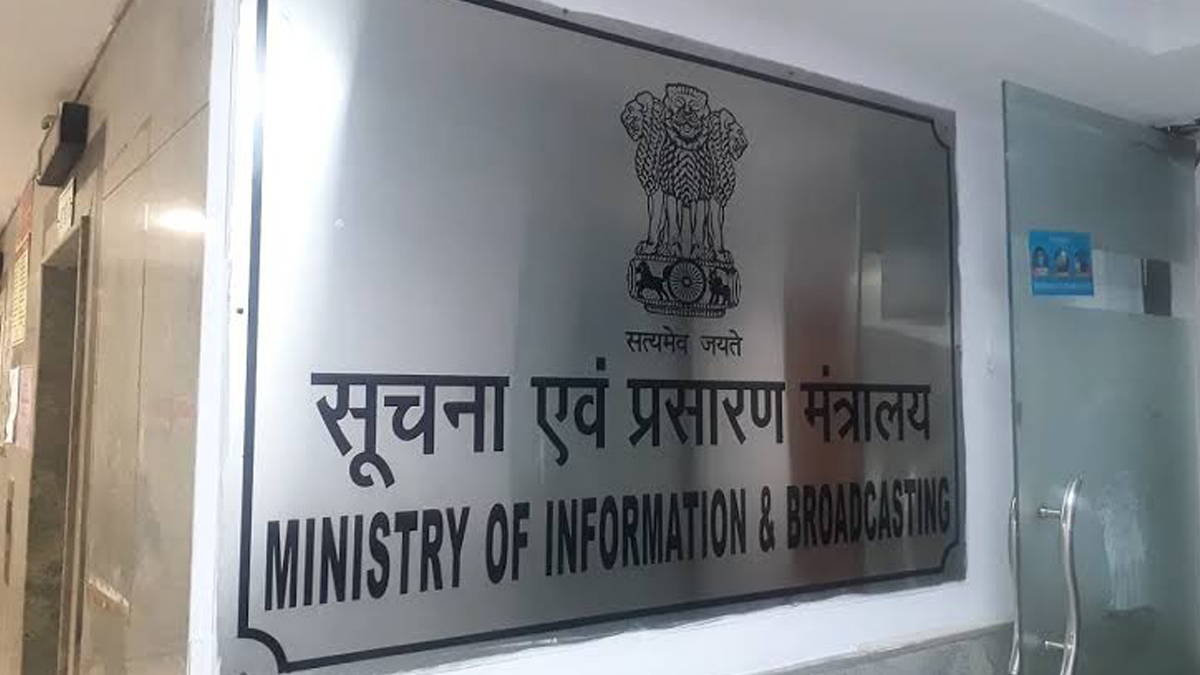
NEW DELHI: The Ministry of Information and Broadcasting (MIB) is looking to deepen Centre-State coordination across India’s media, broadcasting and creative economy sectors, with cable network permissions, preparations for WAVES 2027 and a single-window system for film and live-event permissions emerging as key areas of focus.
The Ministry held a National Conference of Secretaries of Information and Public Relations Departments of States and Union Territories in New Delhi on Tuesday, bringing together senior officials to discuss the implementation of central initiatives and ways to strengthen State-level participation in India’s growing creative economy.
MIB secretary Chanchal Kumar chaired the conference and called for stronger and more structured cooperation between the Centre and States to harness India’s creative potential, strengthen public communication and build regional creative ecosystems.
The discussions come as the government increasingly positions the creative economy, or Orange Economy, as a contributor to employment, investment, entrepreneurship and India’s global soft power.
One of the key issues discussed was the implementation of the Right of Way (RoW) mechanism for cable operators by State governments.
RoW permissions are important for laying and maintaining cable television infrastructure. Greater coordination between State and central authorities could help reduce procedural bottlenecks and make network deployment more predictable for operators.
The issue also assumes importance as broadcasting infrastructure increasingly overlaps with the wider digital connectivity ecosystem. Streamlining State-level permissions could improve the ease of doing business while supporting the expansion and modernisation of cable distribution networks.
The roadmap for WAVES 2027 was another major area of discussion, with the Ministry seeking greater participation from States and Union Territories in the initiative aimed at building a global platform for India’s media, entertainment and creative industries.
The Ministry also discussed strengthening WAVES Bazaar and expanding market access for creators, startups and other participants in the creative economy.
National platforms including WAVES 2027, WAVES Bazaar, WaveX and the Create in India Challenges are expected to connect creators and startups with markets, investors, technology and international partnerships.
Kumar stressed that there cannot be a single model for developing India’s creative economy, given the different cultural strengths, institutional capabilities and regional talent across States and Union Territories.
The Centre is therefore looking to work with States on infrastructure, ease of doing business, capacity building, regional content and local creative ecosystems.
The adoption of the Indian Cine Hub (ICH) as a single-window platform for film shooting and live-event permissions was also discussed.
The Ministry examined two-way integration between ICH and the Film Facilitation Office (FFO) portals, with the aim of improving coordination between systems and making the permissions process more efficient for producers and event organisers.
A streamlined permissions framework could help India attract more domestic and international productions while supporting the expansion of its live-events sector. State and local authorities remain critical to the process because many permissions required for shoots and events are administered at these levels.
Public Service Broadcasting was another major focus of the conference, with discussions covering infrastructure expansion, content co-production, State-specific programming and public outreach.
The Ministry called for closer coordination between PIB Regional Offices, State Information and Public Relations departments, and regional units of Doordarshan and Akashvani.
The aim is to create more State-specific content and improve the reach of public communication, particularly in a media environment where regional languages and local cultural identities play a significant role in audience engagement.
The conference also discussed promoting user-generated creative content on the Waves OTT platform, potentially opening another avenue for individual creators and regional talent to reach audiences.
The live-events sector featured prominently in the discussions, with officials examining ways to strengthen the ecosystem and reduce administrative complexity. A single-window mechanism through ICH could help simplify the process of obtaining multiple permissions for large-scale events.
The Ministry also reviewed the transition to the digital framework under the Press and Registration of Periodicals Act, 2023, through the Press Sewa Portal, as part of efforts to modernise registration and regulatory processes for periodicals.
Capacity building for State Information and Public Relations officials was another area of focus, with training through facilities of the Indian Institute of Mass Communication (IIMC) being discussed.
The conference also covered strengthening libraries through the supply of books to State governments under the Samagra Shiksha framework.
Officials from States and Union Territories shared their experiences and concerns around implementing various Ministry initiatives. Capacity building emerged as a key requirement, with States seeking greater support through regular engagement, improved communication and more frequent conferences.
Kumar highlighted the potential of the creative economy, bringing together culture, creativity and commerce, to generate jobs, attract investment and strengthen India’s global influence.
The conference signals a broader attempt to link national media and creative-economy initiatives with State-level infrastructure, talent and administrative systems. The next test will be turning that coordination into implementation, particularly across film permissions, cable infrastructure, public broadcasting and market access for creators.