
Regulators
Digital India powers wider access with 144 crore Aadhaar IDs and 55 crore UPI users
Government says digital public infrastructure is expanding financial inclusion and last-mile services


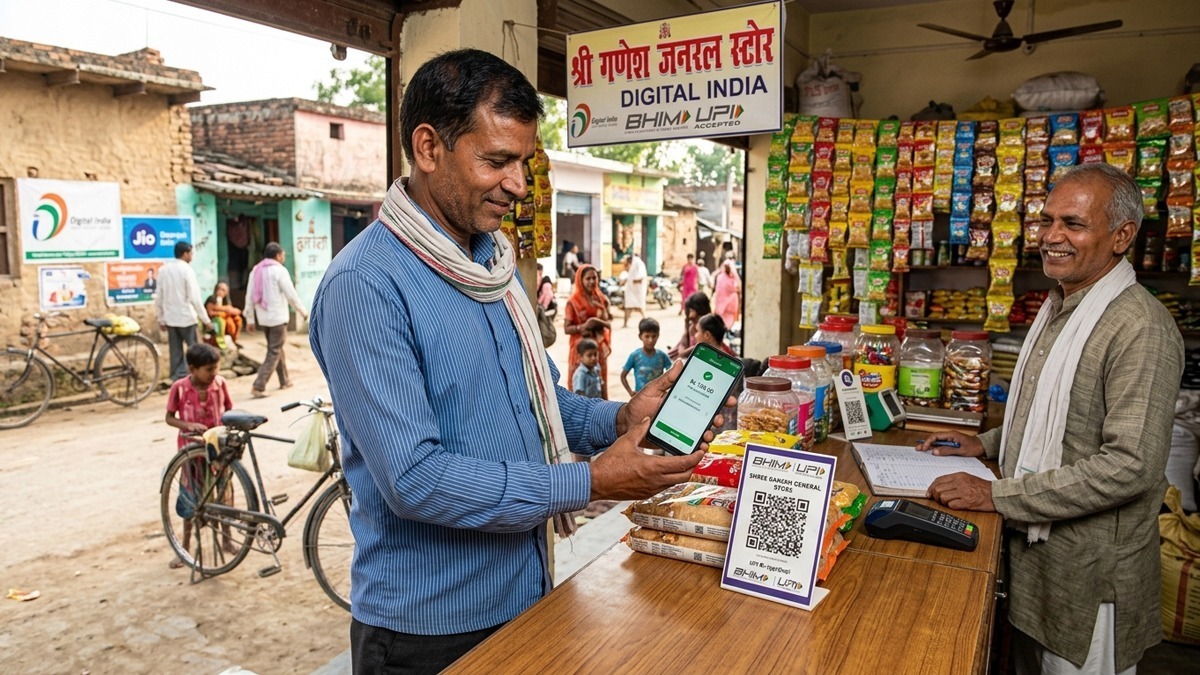
New Delhi: India’s digital transformation is no longer just clicking along, it is connecting hundreds of millions of people every day. From Aadhaar authentication and instant UPI payments to digital document storage and rural broadband, the government’s Digital Public Infrastructure (DPI) ecosystem has grown into one of the world’s largest technology networks for delivering public services at scale.
Fresh data tabled in the Lok Sabha by Jitin Prasada shows that India has issued more than 144 crore Aadhaar identities, while the country’s digital payments network now serves over 55.49 crore users and 6.5 crore merchants across 731 banks. UPI currently accounts for 85 per cent of India’s digital payments and nearly half of all real-time digital payments globally.
The figures underline the scale of the government’s Digital India initiative, which has focused on creating open and interoperable digital platforms to improve governance, financial inclusion and public service delivery across urban and rural India.
At the heart of the ecosystem is Aadhaar, which remains the world’s largest biometric digital identity programme. It is widely used for beneficiary verification across welfare schemes, banking, healthcare, education and agriculture, reducing duplication while streamlining access to government services.
Digital payments have also expanded rapidly through the Unified Payments Interface, enabling millions of individuals and small businesses to transfer money instantly at minimal cost. The government says the platform has become a key driver of financial inclusion, particularly in rural and underserved regions.
India’s digital document ecosystem has grown alongside payments. The DigiLocker platform now has more than 71.66 crore registered users and stores over 936 crore digitally issued documents from 2,822 organisations. Nearly 18 crore users joined the platform during the past year alone.
Government services have also become increasingly accessible through the UMANG app, which now offers more than 2,575 services from 241 departments. Over the past year, another 374 services were added to the platform, while citizens completed more than 186 crore transactions.
Behind the scenes, platforms such as API Setu and Meri Pehchaan are helping departments share data securely and simplify citizen access. API Setu currently hosts 8,904 APIs from central and state government departments, while Meri Pehchaan allows users to access multiple government services through a single authentication system.
To make digital services more accessible across India’s linguistic diversity, the government has also expanded BHASHINI, a public platform designed to break language barriers and improve access to digital services in Indian languages.
The government has simultaneously continued investing in physical digital infrastructure. As of June 2026, more than 2.21 lakh gram panchayats have been made service-ready under the BharatNet programme, while over 80,000 BharatNet points of presence are operational. Telephone connections have risen from 93.3 crore in 2014 to more than 133 crore, while internet subscribers have climbed to 109.27 crore.
Supporting this infrastructure is an extensive network of Common Services Centres. More than 5.01 lakh centres are now operational nationwide, including 3.91 lakh at the gram panchayat level, delivering over 800 government and business services through local village entrepreneurs.
The government has also prioritised digital literacy alongside connectivity. More than 6.39 crore people have been trained under the Pradhan Mantri Gramin Digital Saksharta Abhiyan, while newer programmes such as FutureSkills Prime and the IndiaAI Mission are preparing learners for emerging technologies including artificial intelligence, cybersecurity, blockchain and data analytics.
Educational platforms are also expanding their reach. The DIKSHA portal now hosts more than 3.67 lakh pieces of multilingual educational content and has recorded over 579 crore learning sessions. Meanwhile, the National Institute of Electronics and Information Technology continues to provide digital literacy and technology training through 56 centres and more than 9,000 partner institutes across the country.
Taken together, the government’s latest numbers paint a picture of a digital ecosystem that extends well beyond online convenience. From broadband connectivity and digital identity to payments, education and public services, India’s digital public infrastructure is increasingly becoming the backbone of everyday governance, with the next phase likely to focus on deeper inclusion, regional language access and AI-enabled citizen services.






