
High Court
Delhi HC restrains Beco ad campaign over HUL product safety claims
Court stops campaign linking Surf Excel and Vim to skin irritation and allergies


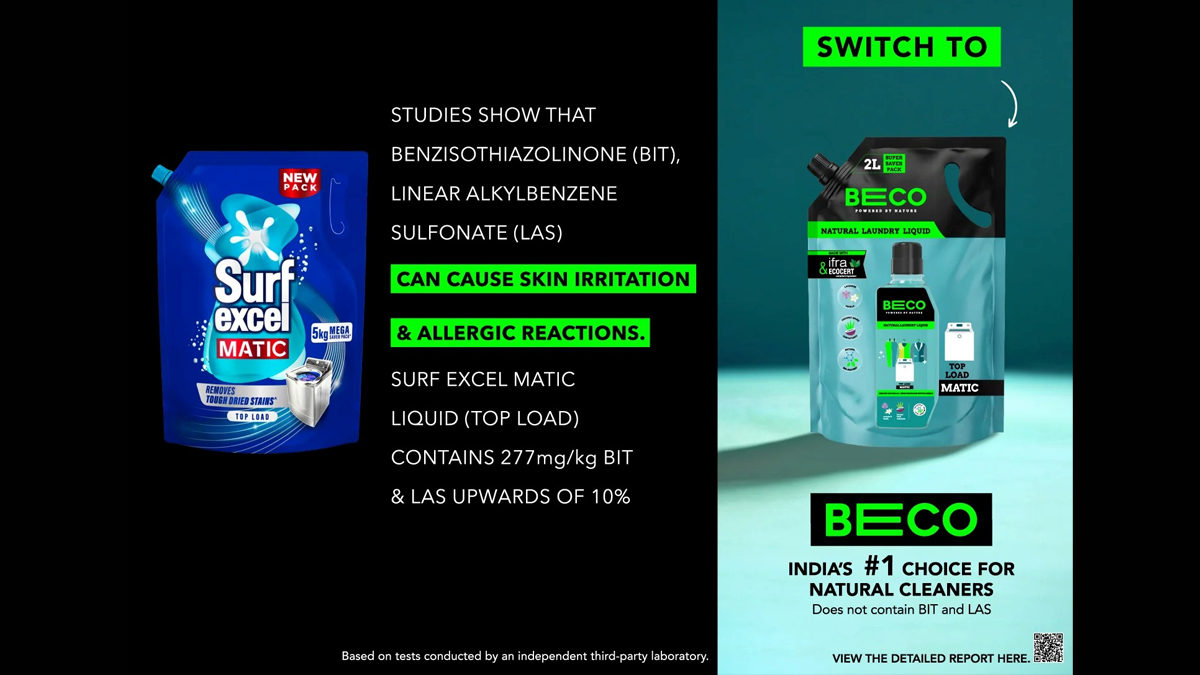
MUMBAI: Beco’s ad war has hit a legal roadblock, with the Delhi High Court temporarily stopping a campaign that linked Hindustan Unilever Ltd’s (HUL) Surf Excel and Vim products to skin irritation and allergic reactions.
Justice Anup Jairam Bhambhani orally directed Kwick Living (I) Private Limited, which operates the Beco brand, to halt the advertising campaign, saying, “I am injuncting your ad campaign.”
The direction came after nearly a month of proceedings in HUL’s disparagement case against Kwick Living over Beco’s comparative advertising campaign. Beco had promoted its ‘#WarOnWhatsHidden’ campaign across YouTube, Instagram, its website and outdoor hoardings in several cities.
The campaign specifically named HUL products and highlighted ingredients including Benzisothiazolinone (BIT) and Linear Alkylbenzene Sulfonate (LAS), while encouraging consumers to switch to Beco products.
HUL challenged the campaign as disparaging, arguing that while brands can compare their products with competitors, they cannot portray a rival’s products as harmful or unsafe.
Senior Advocate Amit Sibal, appearing for HUL, told the court that comparative advertising allows a company to highlight the advantages of its own products but does not extend to making unsubstantiated claims that competing products cause harm.
HUL also questioned the basis of Beco’s claims. According to its case, testing established the presence of certain ingredients but did not examine the finished Surf Excel and Vim products to establish whether they actually caused the alleged skin reactions.
Sibal further argued that the ingredients cited in the campaign are widely used across the industry, while Beco had specifically targeted HUL’s products.
Kwick Living, represented by Senior Advocate Chander M Lall, defended the campaign as legitimate comparative advertising and consumer awareness. Lall argued that the claims were truthful and maintained that their accuracy should ultimately be determined at trial rather than at the interim stage.
The dispute therefore goes beyond one advertising campaign, raising the familiar question of where a brand’s right to compare ends and disparagement begins.
For now, the court has put Beco’s campaign on pause, leaving the larger question of whether its claims amount to legitimate consumer communication or impermissible disparagement to be determined in the proceedings.






