News Broadcasting
Titans of journalism ratchet up pressure on Egypt to #FreeAJStaff


MUMBAI: Journalists from across the world commemorate the 100th day imprisonment of Al Jazeera English journalists.
At the historic Paley Center in New York City, Al Jazeera English’s Executive Producer for Newsgathering in the Americas, Owen Watson, opened the press release with strong calls for the immediate release of Al Jazeera journalists in Egypt. Colleagues from the Associated Press, ABC News and The New York Times, Committee to Protect Journalists and sister-channel, Al Jazeera Arabic, joined him in solidarity.

Jon Williams, Foreign Editor of ABC News, stated, “This is not Al Jazeera’s fight. This is our fight as journalists.”
Abderrahim Foukara, Al Jazeera Arabic’s Washington, D.C. Bureau Chief, made note of fellow colleague Abdullah al-Shami who has been detained since August of last year with no charges pressed. Al-Shami is currently on this 78th day hunger strike.
The press conference concluded with an announcement of the International Documentary Association’s letter of support.
At Columbia School of Journalism, a Freedom of Press Symposium was held in partnership with the Dart Center, the Columbia Global Freedom of Expression and Information Project and the Columbia Global Centers l Middle East. The event highlighted the imprisonment of Al Jazeera journalists while reflecting on the changing geo-political landscape across the Middle East as well as press freedom.
In London, Heather Allan, Al Jazeera English Head of Newsgathering participated in the BBC’s Safety of Journalists Symposium, hosted by BBC Global News and CFOM, the Centre for Freedom of the Media at the University of Sheffield, in cooperation with the BBC College of Journalism.
Participants endorsed a statement which called for increased safety and protection of journalists, but also called on the release of the Al Jazeera staff: “Today also marks 100 days since the arrest and detention in Egypt of three respected and highly professional Al Jazeera journalists, Peter Greste, Mohamed Fahmy and Baher Mohamed. No credible evidence has been produced to justify their imprisonment and prosecution. A number of other journalists have also been held in Egypt for extended periods without adequate access to justice. We call for the release of all those individuals and the freeing of more than 200 other journalists around the world who are now held behind bars only because they were doing their jobs. Journalism is not a crime; it is essential for a free and open society.
Journalists across the BBC also took part in the social media #FreeAJStaff campaign, posting photos and messages of support for all four arrested Al Jazeera staff.
Al Anstey, Managing Director of Al Jazeera English welcomed the support: “We are very grateful for the immense support of our staff to mark 100 days in prison, and from right around the world since they were detained in Egypt. The response has been amazing from the one minute silence outside New Broadcasting House organised by the BBC, to the press conference in New York. The response to their detention has been outstanding. Over 40,000 people have been actively involved in the campaign, events have been held in over 30 countries and in every continent, there have been over 900 million impressions of the FreeAJStaff hashtag, and there have been repeated calls for an end to the detention of our journalists from governments as well as media organisations from all corners of the globe. The campaign is focussed on the release of our four staff, but is fundamentally a stand in the defence of journalism itself, and a call for people everywhere to have a right to be heard and the right to know what is really going on in their world,” said Anstey.
Since December 29th 2013 there have been calls for the release of all Al Jazeera staff detained in Egypt from the White House, the British Foreign and Commonwealth Office and the European Union. Similarly public calls of support for the #FreeAJStaff campaign have been made from prominent media personalities like Christiane Amanpour from CNN, ITN’s Mark Austin, Channel Seven Australia’s Mark Ferguson, SKY news correspondent Sam Kiley and the BBC’s Lyse Doucet. Various media freedom and human rights groups have issued statements ranging from the Committee to Protect Journalist, the International Press Institute, Amnesty International and Foreign Correspondents’ Association of East Africa.





News Broadcasting
CNN-News18 to host Fury in the Gulf conclave on West Asia crisis
Three-hour summit to unpack geopolitical fallout and impact on India
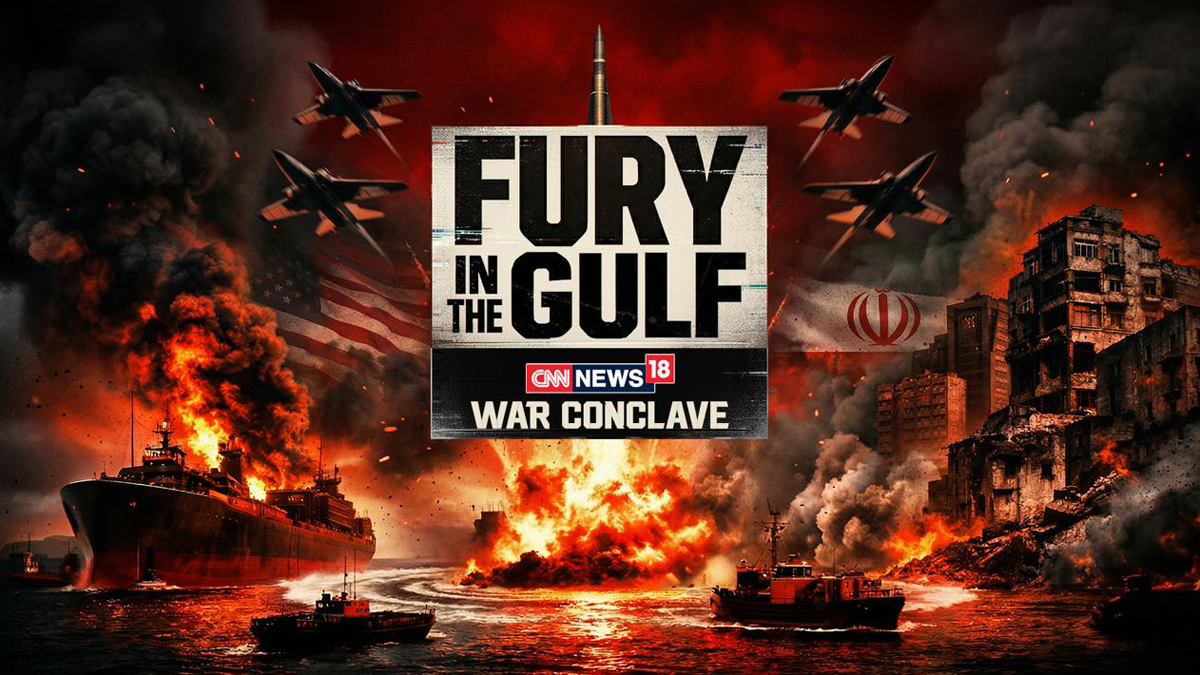
MUMBAI: CNN-News18 is set to host a special three-hour broadcast, Fury in the Gulf – War Conclave, on April 7, aiming to decode the escalating West Asia crisis and its far-reaching implications for India.
Scheduled from 4:00 PM to 7:00 PM, the conclave comes at a time when tensions between Iran and the United States are reshaping global geopolitics and triggering economic uncertainty. With India’s deep energy ties, trade links and large diaspora in the Gulf, the developments carry significant domestic relevance.
Built around the theme ‘Conflict, Consequences, and The Future,’ the programme will feature six curated sessions combining one-on-one interviews and panel discussions. The focus is to cut through the clutter and offer viewers a clearer understanding of the fast-evolving situation.
Key sessions include ‘Diplomacy in Times of War’ featuring Shashi Tharoor, and ‘World After the Iran Conflict’ with voices such as Ram Madhav, Reuven Azar, representatives from the European Union and the Iranian Deputy Envoy. Another session titled ‘Another Dunkirk?’ will bring together K. J. S. Dhillon and Jitin Prasada among others.
CNN-News18 editorial affairs director Rahul Shivshankar said, “In times of war, clarity becomes the most powerful tool. Fury in the Gulf – War Conclave brings together credible voices to address the questions and confusion that arise amid an overwhelming influx of information.”
He added that the initiative is aimed at delivering “facts, perspective, and insight” at a time when misinformation can easily cloud public understanding.
Echoing the sentiment, CNN-News18 CEO– English and business news Smriti Mehra said the conflict marks a defining global moment, with consequences that extend well beyond the region. She noted that the conclave seeks to present the crisis with “depth, nuance and responsibility” so audiences can better grasp its real-world impact.
As geopolitical tensions continue to dominate headlines, the conclave positions itself as an attempt to bring order to the noise, offering viewers a structured, insight-led look at a complex and rapidly shifting global situation.






