Hollywood
‘The Hobbit: The Desolation of Smaug’ climbs to more than $800 million worldwide

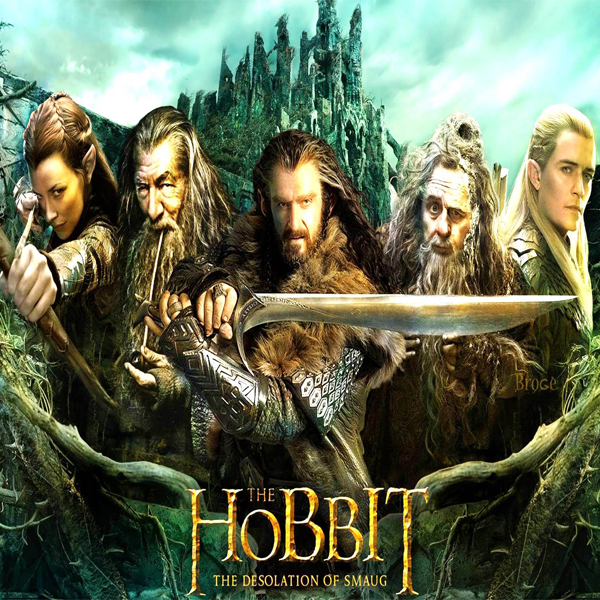
BURBANK: The Hobbit: The Desolation of Smaug has crossed $800 million at the worldwide box office, with markets still to open. The film, a production of New Line Cinema and Metro-Goldwyn-Mayer Pictures (MGM), has thus far grossed an estimated $242.2 million domestically and $566 million internationally, for a worldwide estimated total of $808.2 million to date.
The joint announcement was made today by Gary Barber, Chairman and Chief Executive Officer, Metro-Goldwyn-Mayer Studios; Toby Emmerich, President and Chief Operating Officer, New Line Cinema; Sue Kroll, President of Worldwide Marketing and International Distribution, Warner Bros. Pictures; Dan Fellman, President of Domestic Distribution, Warner Bros. Pictures; and Veronika Kwan Vandenberg, President of International Distribution, Warner Bros. Pictures.
“The Hobbit: The Desolation of Smaug” is the second film in Oscar®-winning filmmaker Peter Jackson’s epic “The Hobbit” Trilogy, based on the timeless novel by J.R.R. Tolkien. The first film, “The Hobbit: An Unexpected Journey,” was released on December 14, 2012, and went on to become a billion dollar success at the worldwide box office. Now in its fourth week in release, the film remains in the top five in the U.S. and continues to ranked #1 internationally across 62 territories, with China releasing February 21, followed by Japan on February 28.
In making the announcement, Fellman said, “Peter Jackson has once again proven to be the perfect guide for an adventure through Middle-earth. As ‘The Hobbit: The Desolation of Smaug’ continues to delight audiences in the New Year, we congratulate him and everyone involved in the film on another box office milestone.”
Kwan Vandenberg added, “This is a film that has resonated with moviegoers around the globe in a big way. We look forward to bringing ‘Smaug’ to China and Japan in February.”
From Academy Award®-winning filmmaker Peter Jackson comes “The Hobbit: The Desolation of Smaug,” the second in a trilogy of films adapting the enduringly popular masterpiece The Hobbit, by J.R.R. Tolkien.
Ian McKellen returns as Gandalf the Grey, with Martin Freeman in the central role of Bilbo Baggins, and Richard Armitage as Thorin Oakenshield. The international ensemble cast is led by Benedict Cumberbatch, Evangeline Lilly, Lee Pace, Luke Evans, Stephen Fry, Ken Stott, James Nesbitt, and Orlando Bloom as Legolas. The film also stars Mikael Persbrandt, Sylvester McCoy, Aidan Turner, Dean O’Gorman, Graham McTavish, Adam Brown, Peter Hambleton, John Callen, Mark Hadlow, Jed Brophy, William Kircher, Stephen Hunter, Ryan Gage, John Bell, Manu Bennett and Lawrence Makoare.
The screenplay for “The Hobbit: The Desolation of Smaug” is by Fran Walsh & Philippa Boyens & Peter Jackson & Guillermo del Toro based on the novel by J.R.R. Tolkien. Jackson also produced the film, together with Carolynne Cunningham, Zane Weiner and Fran Walsh. The executive producers are Alan Horn, Toby Emmerich, Ken Kamins and Carolyn Blackwood, with Philippa Boyens and Eileen Moran serving as co-producers.
New Line Cinema and Metro-Goldwyn-Mayer Pictures Present a WingNut Films Production, “The Hobbit: The Desolation of Smaug.” The film is a production of New Line Cinema and Metro-Goldwyn-Mayer Pictures (MGM), with New Line managing production. Warner Bros. Pictures is handling worldwide theatrical distribution, with select international territories as well as all international television distribution being handled by MGM.