News Broadcasting
Out of times: Does Men22+ AB TG matter to TV news advertisers anymore?


Mumbai: India’s rapid growth in the last decade or so has made advertisers look at data sets beyond the conventional ones that were the market standards during the 90s.
With the gender gap diminishing and India’s millennial and Gen Z generations getting more savvy even in smaller towns, advertisers now prefer to target a broader set of audiences, especially when it comes to the English TV news genre.
Maximum growth of consumer durables, electronics and cars is now happening in the towns that have less than 10 lakh population and the age group pushing these sales is fairly young with both men and women participating in equal numbers.

As per a media planner, “The new India now exists beyond 10 L + towns. So, the advertisers now want to put in their money on TV news channels that provide a wider reach. They look at a broad based TG when they’re doing media planning. Smaller cuts like Men 22+AB or only mega cities don’t make any sense now. Even from the data stability point of view broader cuts are preferred. A broad based TG ensures stability of data and is the true test of leadership and not just convenient cuts of data.”
These indicators do not matter on digital at all.
As per the BARC data for the last 54 weeks, CNN-News18 has captured 35.3% market share.
“The reach and audiences of CNN-News18 give unparalleled results to advertisers as compared to the other channels. As elections approach, our monies would solidly be on the industry leader. The broader cut of TG provides a lot more data stability,” an advertiser said on the condition of anonymity.
On the digital front, CNN-News18 has captured a whopping 1.4 billion views on YouTube, surpassing all of its competitors. (Source: Socialblade)





News Broadcasting
CNN-News18 to host Fury in the Gulf conclave on West Asia crisis
Three-hour summit to unpack geopolitical fallout and impact on India
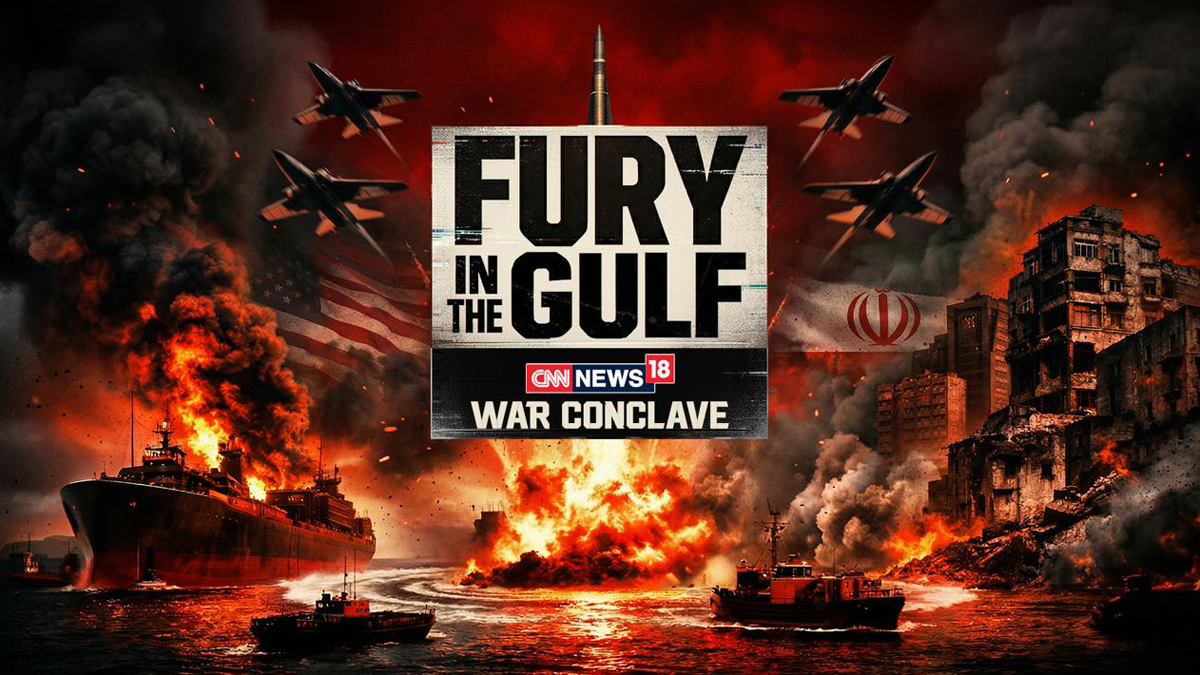
MUMBAI: CNN-News18 is set to host a special three-hour broadcast, Fury in the Gulf – War Conclave, on April 7, aiming to decode the escalating West Asia crisis and its far-reaching implications for India.
Scheduled from 4:00 PM to 7:00 PM, the conclave comes at a time when tensions between Iran and the United States are reshaping global geopolitics and triggering economic uncertainty. With India’s deep energy ties, trade links and large diaspora in the Gulf, the developments carry significant domestic relevance.
Built around the theme ‘Conflict, Consequences, and The Future,’ the programme will feature six curated sessions combining one-on-one interviews and panel discussions. The focus is to cut through the clutter and offer viewers a clearer understanding of the fast-evolving situation.
Key sessions include ‘Diplomacy in Times of War’ featuring Shashi Tharoor, and ‘World After the Iran Conflict’ with voices such as Ram Madhav, Reuven Azar, representatives from the European Union and the Iranian Deputy Envoy. Another session titled ‘Another Dunkirk?’ will bring together K. J. S. Dhillon and Jitin Prasada among others.
CNN-News18 editorial affairs director Rahul Shivshankar said, “In times of war, clarity becomes the most powerful tool. Fury in the Gulf – War Conclave brings together credible voices to address the questions and confusion that arise amid an overwhelming influx of information.”
He added that the initiative is aimed at delivering “facts, perspective, and insight” at a time when misinformation can easily cloud public understanding.
Echoing the sentiment, CNN-News18 CEO– English and business news Smriti Mehra said the conflict marks a defining global moment, with consequences that extend well beyond the region. She noted that the conclave seeks to present the crisis with “depth, nuance and responsibility” so audiences can better grasp its real-world impact.
As geopolitical tensions continue to dominate headlines, the conclave positions itself as an attempt to bring order to the noise, offering viewers a structured, insight-led look at a complex and rapidly shifting global situation.






