English Entertainment
Lights, camera, action! Turkish Airlines launches new inflight safety video in partnership with Warner Bros. and The LEGO(R) Movie franchise.

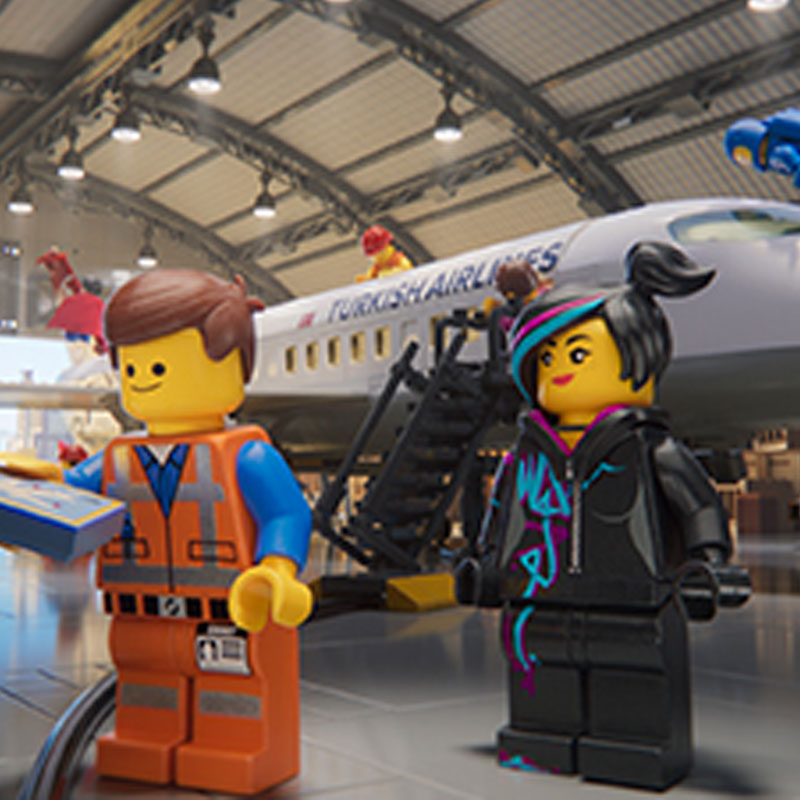
MUMBAI: Turkish Airlines, the airline that flies to more countries and international destinations than any other airline, launches a new animated safety video, complete with familiar LEGO® minifigures in surprising new roles. The custom-animated safety video for Turkish Airlines was created by the teams who assembled “The LEGO Movie”, “The LEGO Batman Movie”, “The LEGO NINJAGO® Movie” and the highly anticipated sequel “The LEGO Movie 2” due in cinemas beginning February 2019, which reunites the heroes of the first film in an all new action-packed adventure. In partnership with Warner Bros. and featuring the popular characters from The LEGO Movie franchise, the safety video will be shown on all flights starting today and will also debut online.
The safety video, which is the first LEGO safety video ever made, demonstrates step-by-step safety procedures to passengers in a fun, unique style – complete with sensible airline-approved humor, celebrity cameos and an unforgettable song and dance number. Turkish Airlines is proud to have one of the youngest fleets in the world and strives to achieve the best in aviation safety standards. Whether frequent travellers or first-time fliers, the video aims to inform and entertain passengers, alongside an extensive selection of movies, TV shows, music and games available in different languages on the in-flight entertainment system.
The safety video will kick off the “biggest partnership with the smallest cast ever assembled”, hinting there is much more to come from the Turkish Airlines and LEGO Movie franchise alliance. Leading up to the worldwide release of “The LEGO Movie 2”, Turkish Airlines will roll-out a global TV campaign, film themed wrapped airplanes, in-flight and in-airport activations and even a second safety video. A partnership sure to entertain and delight!

Blair Rich, President, Worldwide Marketing, Warner Bros. Pictures Group and Warner Bros. Home Entertainment said; “We are thrilled to be working with Turkish Airlines again and “widening their world” to include that of our colorful LEGO Movie universe. The partnership showcases the best of two different brands converging in a clever and imaginative way, connecting to consumers and entertaining them.”
The LEGO Movie franchise-inspired safety video was brought to life by a 16-strong production team consisting of 2 concept artists, 3 layout artists, 7 animators and 4 lighting technicians. Lasting more than 950 days from beginning to end, the specialists used 2,938,840 LEGO bricks to animate the LEGO action. A total of 9,658,631 CPU hours (Central Processing Units) were used to generate 973 versions of animation. 30 different versions of the new safety video were created, both in English and Turkish, to cover the safety particulars of the 15 different airplane models in the Turkish Airlines fleet.




English Entertainment
ZEE5 UK partners Narrative Entertainment to add UK channels
Six FAST channels added as platform sharpens hybrid play in Britain
LONDON: ZEE5 UK struck a first-of-its-kind deal with Narrative Entertainment, bringing mainstream UK television channels onto an Indian streaming platform as it pushes to deepen its footprint in a crowded, mature market.
The partnership adds six of Narrative’s FAST channels to the service, including Great! Movies, Great! Romance, Great! Mystery and kids brands POP, Tiny Pop and POP UP, widening ZEE5 UK’s appeal across genres and age groups.
The move reflects a clear shift in strategy. ZEE5 UK is betting on a hybrid model that blends on-demand content with curated, always-on channels to drive discovery and increase time spent on the platform.
“This partnership represents a meaningful evolution in how we serve audiences in mature markets like the UK, where viewers are defined by habits, convenience and choice rather than geography or language alone,” said Parul Goel, territory head, Europe, Zee Entertainment. “By bringing trusted mainstream UK channels together with our premium originals, movies and kids’ content, we are building a more consumer-centric platform that simplifies viewing while increasing depth and relevance.”
Fateha Begum, commercial director, Narrative Entertainment, said the tie-up would fuel growth for both sides. “Our portfolio of quality programming, with such wide and enduring appeal, is a perfect complement to ZEE5 UK. This is a strong partnership that will support growth for both parties, and we share Zee Entertainment’s vision of an increasingly partnership-led future for the industry.”
ZEE5’s global library spans over 4,000 films and more than 500 originals, with over 130 new titles added annually. The addition of Narrative’s channels strengthens its kids offering and introduces genre-led linear experiences alongside its on-demand catalogue.
The deal also gives Narrative access to ZEE5 UK’s fast-growing user base, extending reach without diluting brand identity, while reinforcing ZEE5 UK’s network of more than 40 live channels.
As streaming wars intensify, ZEE5 UK is widening its playbook, blending content, convenience and partnerships in a bid to win screen time in one of the world’s toughest markets.







