News Broadcasting
Life OK’s Shapath series Super Cops V/s Super Villains sets a new trend for weekends

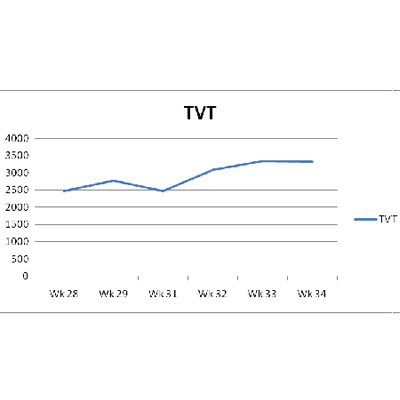
Mumbai: Life OK’s Shapath series Super Cops V/s Super Villains has recorded a new high. The supernatural series that airs on weekends on Life OK, India’s fastest growing General Entertainment Channel, has pushed past the competition to record an upsurge in TVTs starting Week 31. Being the only fiction show on the weekend 9 PM prime time slot, the show is now proving to be a tough competition to the other Talent based reality shows in the same time slot.
The CG heavy series that focuses on a new super villain every weekend has provided the extra push to Life OK to climb the success charts.

Commenting on the growth trajectory for Shapath, Mr. Pratik Seal, Marketing Head, Life OK, says, “We are extremely happy that the Shapath series of Super Cops Vs Super Villains has been widely appreciated by our audiences and the current ratings are a measure of its success. The series has carved a niche for itself, especially considering the presence of Bollywood celebrities on competing shows. For anyone who does not want to watch reality based shows.”
Moving on from its first season names Hum ne Li hai Shapath, a Crime Investigation series, to Shapath Super cops v/s Super villains, a Supernatural series, the show has received wider acceptance since the revamp. The fiction series has made a distinctive mark for itself amongst the competitive star studded reality shows. The weekends series of Shapath Super Cops Vs Super Villains airs every Saturday and Sunday at 9 PM.




News Broadcasting
Network18 channels lead YouTube news viewership in March 2026
CNN-News18, News18 India and CNBC channels top categories with record views

MUMBAI: When the world hit refresh on breaking news, Network18’s channels were already streaming ahead. As geopolitical tensions and war-driven headlines fuelled a surge in global news consumption, the network’s digital playbook delivered big clocking record Youtube viewership across English, Hindi and business news categories in March 2026.
At the forefront was CNN-News18, which emerged as the clear leader in the English news segment with 130 million live and video-on-demand views. The channel edged past competitors such as Times of India (126.5 million), Times Now (101.1 million), India Today (88.2 million) and NDTV (77.5 million), according to Databeings data for March.
In the Hindi news arena, News18 India delivered a commanding performance, racking up a staggering 3,297 million views on YouTube. The channel comfortably outpaced NDTV India, which recorded 3,119 million views, underlining its deep reach and consistent engagement with mass audiences, as per Playboard data.
The network’s dominance wasn’t confined to general news. In the Hindi business segment, CNBC Awaaz topped the charts with 92 million views, narrowly ahead of Zee Business (90 million) and well ahead of ET Now Swadesh (57 million). Meanwhile, its English counterpart CNBC-TV18 posted a strong 58 million views, reinforcing the network’s cross-category strength.
The spike in viewership reflects a broader shift in audience behaviour, with viewers increasingly turning to digital platforms particularly Youtube for real-time updates and in-depth coverage during high-intensity news cycles. For Network18, the numbers signal more than just scale; they underline the effectiveness of a multi-platform strategy that blends speed, credibility and continuous coverage.
In a month where the news never paused, it seems viewers chose to stay tuned where the stream never stopped.






